How is Assam Boosting Healthcare for Tea Garden Workers?
Synopsis
In a groundbreaking initiative, Assam's government has launched the 'Swasthaban Shramik Yojana' to provide essential healthcare services for tea garden workers. This program aims to address chronic health issues prevalent in these communities, ensuring better health outcomes and well-being.
Key Takeaways
Launch of the 'Swasthaban Shramik Yojana' to enhance tea garden workers' healthcare.
Focus on early detection and treatment of health issues.
Mobile medical units will provide on-site health services .
Community health assessments will identify risks.
Health ambassadors will raise awareness about preventive care.
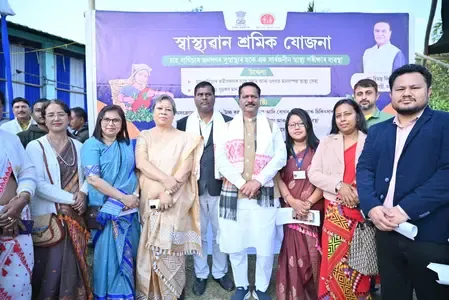
Dibrugarh, Dec 27 (NationPress) In a significant move to enhance healthcare services for the tea garden community, Assam Health Minister Ashok Singhal unveiled the state-level pilot project of the “Swasthaban Shramik Yojana” at Jutlibari Tea Estate located in Dibrugarh district on Saturday.
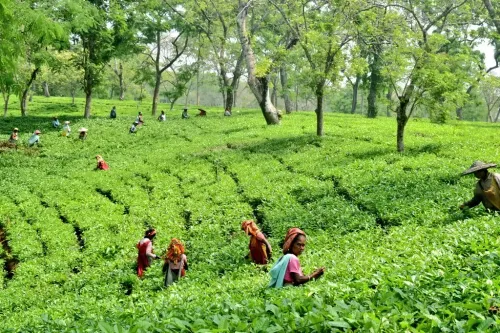
This initiative, sanctioned in the Assam Budget 2025-26, aims to deliver universal, structured, and high-quality health screening services to tea plantation workers, who represent nearly 20 percent of the state's overall population. The initial phase will be rolled out across 20 selected tea estates, including locations in Moran, Sessa, and Ghagrajan, with plans for a statewide expansion.
In his address to the attendees, Singhal emphasized that the tea industry is integral to Assam's economy, and the well-being of the tea garden workforce is a primary concern for the state government. He pointed out that the scheme is tailored to tackle long-standing health issues faced by the tea community through early detection, prompt treatment, and ongoing awareness.
Research has consistently indicated a high incidence of both communicable and non-communicable diseases among tea garden workers, such as anaemia, hypertension, diabetes, tuberculosis, and leprosy. The Swasthaban Shramik Yojana aims to address these challenges with a comprehensive, community-focused approach.
The program will see ASHA workers conducting door-to-door visits and filling out the Community-Based Assessment Checklist (C-BAC) to identify health risks among participants. Mobile Medical Units (MMUs) will be dispatched to tea estates to offer on-site diagnostic services, medical consultations, and follow-up care, minimizing the need for workers to travel long distances for treatment.
A vital aspect of the initiative is the appointment of Women’s Health and Wellness Ambassadors from within the tea gardens, who will lead awareness campaigns on nutrition, hygiene, and preventive healthcare. Furthermore, Health Choupals will be organized to educate workers about the detrimental effects of tobacco and alcohol consumption, habits that often start at a young age in these areas.
The Rashtriya Bal Swasthya Karyakram (RBSK) teams will also be integrated into this effort to ensure comprehensive health coverage for children and adolescents, focusing on malnutrition, developmental delays, and early childhood diseases.
Officials have stated that the pilot project will undergo close monitoring, and feedback from this initial phase will inform the refinement and broader implementation of the scheme across Assam’s tea-growing regions.
Point of View
This initiative by Assam's government reflects a growing recognition of the healthcare needs of marginalized communities, especially those contributing significantly to the economy. Ensuring health equity among tea garden workers is not just a welfare measure; it's a step towards sustainable development and social justice.
NationPress
17 Oct 2026
Frequently Asked Questions
What is the 'Swasthaban Shramik Yojana'?
The 'Swasthaban Shramik Yojana' is a pilot project launched by the Assam government aimed at providing comprehensive healthcare services to tea garden workers.
How will the program address health issues?
The program will conduct door-to-door health assessments, offer mobile medical services, and appoint health ambassadors to raise awareness on nutrition and preventive care.
Where is the initiative being implemented?
The pilot phase is being implemented across 20 selected tea estates in Assam, including regions like Moran, Sessa, and Ghagrajan.
What is the target population of this initiative?
The initiative aims to serve the tea garden workers, who make up approximately 20% of Assam's total population.
How will the success of the pilot project be assessed?
The pilot project will be closely monitored, with feedback from participants used to refine and expand the initiative across Assam's tea-growing regions.