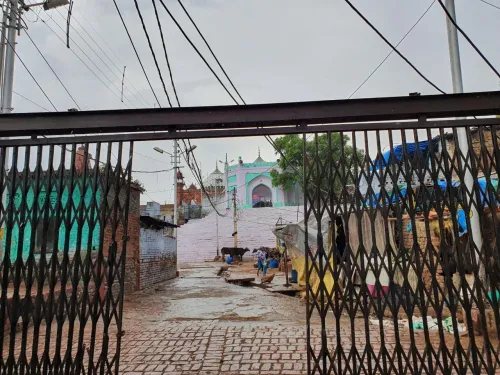
Ayodhya seers back Pasi community over Kasmandi Mosque dispute in Malihabad

Synopsis
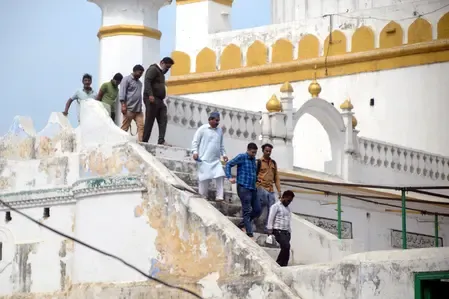
Ayodhya's religious leaders have waded into a heritage dispute in Malihabad, backing the Pasi community's claim that the Kasmandi site — currently a mosque and graveyard — sits atop an ancient fort linked to Raja Kans and a Shiva temple. With the UP government yet to respond and no enquiry ordered, the dispute is drawing wider attention.
Key Takeaways
The Pasi community claims the Kasmandi site in Malihabad, Lucknow district , was historically part of a fort linked to Raja Kans and contained a Shiva temple .
The site is currently identified as a mosque and graveyard .
Community representatives have cited English gazetteers and local oral histories to support their claim.
Seers including Paramhans Acharya and Sitaram Das from Ayodhya have publicly backed the community's demand for an official enquiry.
Lucknow authorities have not yet issued a formal statement; no enquiry has been announced by the Uttar Pradesh government as of 25 May .
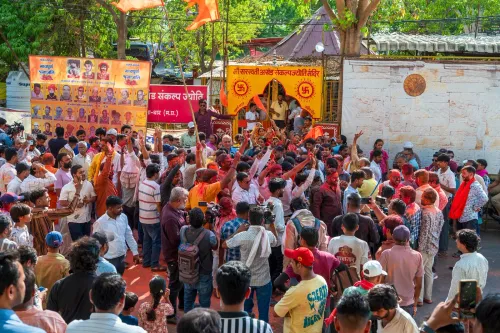
Religious leaders from Ayodhya have extended support to members of the Pasi community amid a growing dispute over the Kasmandi site in Malihabad, Lucknow district, where the community claims the area — currently identified as a mosque and graveyard — was historically part of an ancient fort linked to Raja Kans and once housed a Shiva temple. The seers have backed calls for a formal government enquiry into the site's historical and legal status.
The Community's Claim
Sections of the Pasi community allege that the Kasmandi site was originally part of an old fort associated with Raja Kans, and that a Shiva temple once stood within the complex. To support their claim, community representatives have cited references from English gazetteers and local oral histories. They have reportedly urged the Uttar Pradesh government to order a detailed enquiry into the site's historical status.
The dispute has drawn attention from local community groups and political observers across the region, adding to a broader pattern of heritage-identity claims that have surfaced at multiple sites in Uttar Pradesh in recent years.
What Ayodhya's Seers Said
Sitaram Das, associated with Saket Bhavan Temple in Ayodhya, said: 'This incident in Lucknow and Malihabad reflects the awareness of the Pasi community. One should always remain alert to protect their heritage, culture, and national heritage. Due to certain issues in previous governments, people were not as aware as they are today. Now they have become more conscious and alert, and I express my gratitude for that.'
Paramhans Acharya, Peethadheeshwar of Tapasvi Chhawani, stated: 'The Pasi community has demanded its rights. They have raised their voice for their rights because India's culture is rooted in Vedic traditions of the Vedas and Puranas, which existed long before the emergence of Islam. The Pasi community's demands have support from the sant community. We are fully committed — physically, mentally, and financially — to supporting the Pasi community. Their demands are being seen as important for the entire country.'
Jyotishacharya Rakesh Tripathi of Jyotish Bhawan, Ayodhya, added: 'Lucknow is associated with the Pasi community, as there were several Pasi kings in history. This is also believed to be a Pasi fort, and many remains of the fort still exist. Therefore, no religious activity such as namaz, puja, or any other ritual should be held on someone's private property without permission.'
Official Response and Current Status
Authorities in Lucknow have not yet issued a detailed statement on the community's claims. No formal enquiry has been announced by the Uttar Pradesh government as of 25 May. Community leaders continue to press for an official investigation into the historical and legal status of the site.
Broader Context
The Pasi community is a historically significant Scheduled Caste group in Uttar Pradesh, with documented associations to several forts and territorial holdings in the Lucknow region. This is not the first time heritage claims tied to pre-Islamic structures have sparked public debate in the state. The involvement of Ayodhya's religious figures lends the dispute a wider symbolic weight, coming months after the consecration of the Ram Mandir intensified focus on religious and cultural heritage across the region.
Whether the state government will order an archaeological or administrative enquiry into the Kasmandi site remains the central question going forward.
Point of View
With Ayodhya's sant community amplifying the demand. What distinguishes this case is the Pasi angle — a community that has historically been marginalised and is now asserting territorial and cultural memory simultaneously. The UP government's silence so far is telling; ordering an enquiry risks inflaming communal tensions, while refusing one risks alienating a politically significant Scheduled Caste constituency ahead of future elections. The invocation of gazetteers as evidence also signals a more legally-aware form of heritage activism that authorities will find harder to dismiss.
NationPress
19 Sept 2026
Frequently Asked Questions
What is the Kasmandi site dispute in Malihabad?
The Kasmandi site in Malihabad, Lucknow district, is currently identified as a mosque and graveyard. The Pasi community claims it was historically part of an ancient fort linked to Raja Kans and that a Shiva temple once existed within the complex. They have cited English gazetteers and oral histories to support the claim and have urged the Uttar Pradesh government to order a formal enquiry.
Why have Ayodhya seers got involved in the Malihabad dispute?
Several religious figures from Ayodhya, including Paramhans Acharya and Sitaram Das, have voiced support for the Pasi community's demand for an official enquiry, framing it as a matter of heritage protection and cultural identity. Their involvement has added a wider symbolic dimension to what began as a local community dispute.
Has the Uttar Pradesh government responded to the Pasi community's demands?
As of 25 May, Lucknow authorities had not issued a detailed statement on the claims, and no formal enquiry had been announced by the Uttar Pradesh government. Community leaders continue to press for an official investigation into the site's historical and legal status.
Who are the Pasi community and what is their historical connection to Lucknow?
The Pasi community is a Scheduled Caste group historically associated with several forts and territorial holdings in the Lucknow region. Jyotishacharya Rakesh Tripathi noted that multiple Pasi kings are part of the region's documented history, and that remnants of Pasi forts are said to still exist in the area.
What evidence has the Pasi community cited for its claim?
The community has cited references from English gazetteers — colonial-era administrative records — as well as local oral histories to argue that the Kasmandi site was historically a Pasi fort containing a Shiva temple. No independent archaeological assessment has been reported as of the latest available information.