Why Are China and Pakistan Supporting Jamaat Despite the BNP's Rise?
Synopsis
As Bangladesh gears up for elections, the BNP appears poised for victory, but support from China and Pakistan for the Jamaat-e-Islami hints at underlying geopolitical tensions. Discover how this dynamic may affect the region's stability.
Key Takeaways
Bangladesh elections are imminent, with BNP leading in polls.
China and Pakistan continue to support Jamaat-e-Islami.
The Jamaat serves as a counterweight to India's influence.
Political instability may be a tactic employed by foreign powers.
India must prepare for potential unrest.
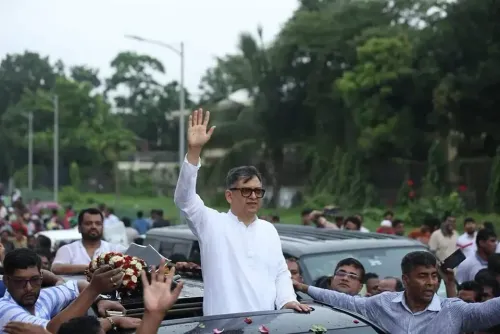
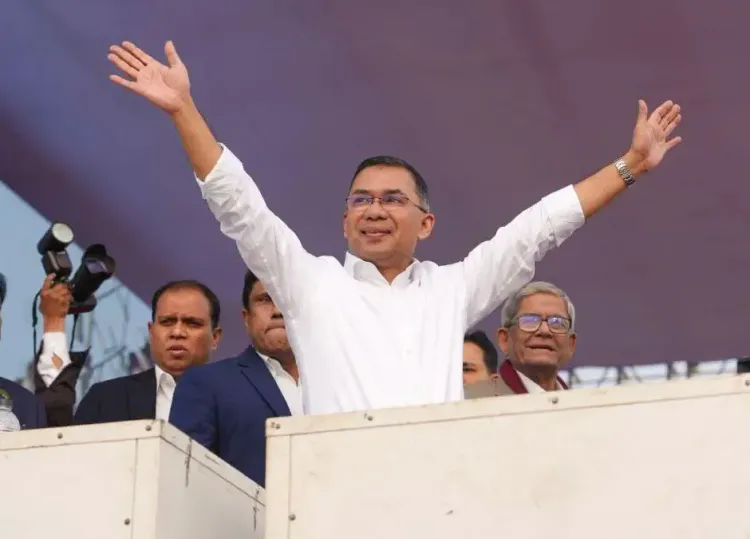
New Delhi, Jan 13 (NationPress) With the Bangladesh elections approaching in a month, recent opinion polls indicate a decisive lead for the Bangladesh Nationalist Party (BNP), led by Tarique Rahman. Both Pakistan and China, who have significantly invested in Bangladesh, recognize the BNP's anticipated victory while forecasting the Jamaat-e-Islami to secure second place and remain in opposition. Yet, both nations continue to foster strong ties with the Jamaat.
For these countries, the Jamaat holds strategic importance even when not in power, serving as a counterbalance to India's influence in Bangladesh.
Pakistani officials have maintained ongoing communication with the Jamaat, while Indian agencies monitor these interactions closely, especially after a meeting between Chinese Ambassador to Bangladesh, Yao Wen, and Jamaat-e-Islami Ameer Shafiqur Rahman.
Observers of Bangladesh politics note that the Chinese are acutely aware of the Jamaat's continued relevance and strength, even if it does not secure election victory, due to its substantial manpower and institutional influence.
Moreover, the Jamaat is capable of inciting unrest aimed at undermining Indian interests in Bangladesh.
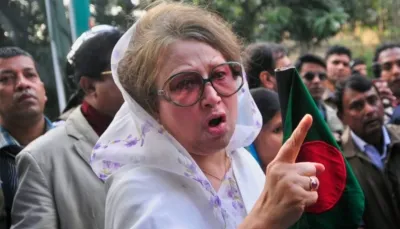
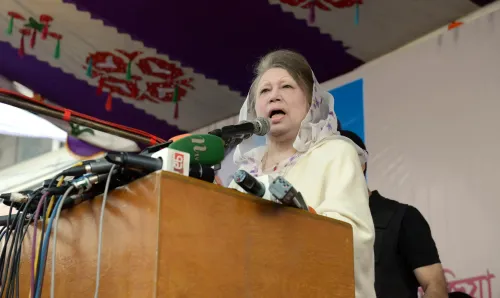
These developments coincide with India's increasing engagement with BNP leaders, including External Affairs Minister Dr. S. Jaishankar, who recently attended the funeral of BNP founder Khaleda Zia and conveyed condolences from Prime Minister Narendra Modi.
This realignment of ties has not been well-received by either Pakistan or China, who plan to engage the Jamaat in political protests to maintain ongoing instability in Bangladesh.
A politically unstable Bangladesh poses challenges for India, particularly in border regions, as it heightens the risk of infiltrations and terror incidents, according to officials.
An Intelligence Bureau source suggests that the Jamaat could be mobilized to create turmoil whenever Indian investments or diplomatic initiatives arise. The Jamaat's considerable street power aligns with the interests of nations wishing to prevent post-election stability.
The Jamaat also wields influence over student unions and maintains loyal personnel within the military and police, further bolstering anti-India sentiments.
As Pakistan and China have heavily invested through the Belt and Road Initiative (BRI), Beijing seeks guarantees from the Jamaat to avoid any violence that may jeopardize their investments.
Authorities anticipate significant unrest leading up to and following the elections, with both China and Pakistan relying on the Jamaat to mitigate any adverse effects on their financial commitments.
In their discussions with Jamaat leadership, both countries are signaling to the BNP that failure to adhere to their interests may lead to the mobilization of the Jamaat to incite instability.
Both China and Pakistan prefer the BNP's foreign policy to remain antagonistic towards India, particularly under the leadership of Muhammad Yunus, amid a significant decline in India-Bangladesh relations.
Point of View
The ongoing dynamics in Bangladesh's electoral landscape underscore the complexities of regional politics. It's crucial for India to monitor these developments and strategize accordingly to safeguard its interests.
NationPress
25 Sept 2026
Frequently Asked Questions
Why are China and Pakistan supporting Jamaat-e-Islami?
China and Pakistan see Jamaat-e-Islami as a counterbalance to India's influence in Bangladesh, making it a strategic ally despite its opposition status.
What impact could the Jamaat have on Bangladesh's political stability?
The Jamaat's influence can incite unrest and instability, particularly if it aligns with foreign interests opposed to India.
How does the BNP's rise affect India's interests?
The BNP's potential victory may shift Bangladesh's foreign policy towards India, which could alter regional dynamics and impact security.
What role does the Belt and Road Initiative play in this context?
China's investments under the Belt and Road Initiative make it crucial for them to ensure stability in Bangladesh to protect their financial interests.
What are the implications of the upcoming elections for India?
The elections could redefine India-Bangladesh relations, especially if political volatility increases following the polls.