Bank of Baroda ex-manager gets 4 years in CBI bribery case from 2015
Synopsis
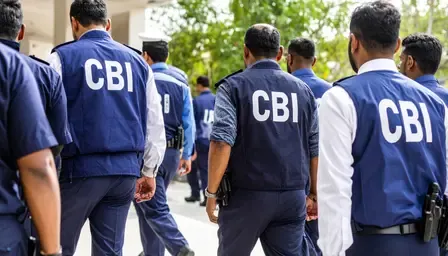
A Lucknow CBI court has sentenced former Bank of Baroda branch manager Subodh Kumar Rastogi to four years of rigorous imprisonment for demanding bribes from a small solar-business borrower — a case registered back in 2015 that took over 11 years to reach a verdict, highlighting both the persistence of branch-level banking corruption and the slow grind of India's financial crime courts.
Key Takeaways
Subodh Kumar Rastogi , former branch manager of Bank of Baroda's Balrampur branch , was convicted by a CBI special court in Lucknow on 2 November 2026 .
He was sentenced to four years of rigorous imprisonment and fined ₹30,000 .
The case dates to 26 October 2015 , when the CBI registered it after a complaint from a businessman with a ₹5 lakh solar business loan.
Rastogi allegedly collected ₹25,000 in disguised fees during disbursement and demanded a further ₹25,000 bribe, threatening to close the borrower's account.
The CBI caught him red-handed accepting ₹10,000 in a trap and filed a charge sheet on 18 December 2015 .
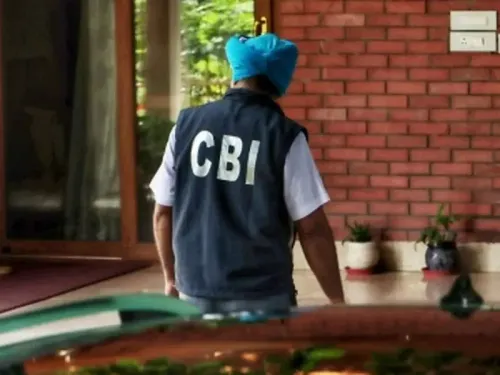
A Central Bureau of Investigation (CBI) special court in Lucknow has convicted former Bank of Baroda branch manager Subodh Kumar Rastogi and sentenced him to four years of rigorous imprisonment, along with a fine of ₹30,000, in a bribery case that originated in 2015. The judgment was delivered on 2 November 2026, bringing a decade-old corruption case to a close.
Background of the Case
Rastogi was serving as the Branch Manager of the Bank of Baroda Balrampur branch in Uttar Pradesh at the time of the alleged offence. The CBI registered the case on 26 October 2015, following a complaint from a local businessman who had obtained a loan of ₹5 lakh from the bank to expand his solar lights business.
According to the CBI, while disbursing an initial term loan instalment of ₹1.25 lakh, Rastogi allegedly collected approximately ₹25,000 from the borrower under the guise of chartered accountant fees, stamp paper charges, and file processing expenses.
The Demand and the Trap
The complainant further alleged that after a cash credit limit of ₹3.75 lakh was sanctioned, Rastogi demanded an additional bribe of ₹25,000 and reportedly threatened to close the borrower's account if the payment was not made. Acting on the complaint, the CBI laid a trap and caught Rastogi red-handed while allegedly accepting ₹10,000 as illegal gratification from the complainant.
This sequence — a coercive demand backed by a threat to the borrower's financial lifeline — is a pattern the CBI has flagged repeatedly in public sector bank bribery cases involving loan disbursements to small businesses.
Charge Sheet and Trial
Following the investigation, the agency filed a charge sheet against Rastogi on 18 December 2015. The trial proceeded through examination of evidence and arguments from both sides before the CBI court concluded the proceedings and delivered its verdict.
Notably, the borrower in this case was a small entrepreneur seeking finance for a solar lights business — a segment the government has actively promoted under various renewable energy schemes. The alleged extortion targeted a borrower with a modest ₹5 lakh loan, underscoring how corruption at the branch level can disproportionately harm micro and small enterprises.
Significance of the Verdict
The conviction closes a case that took over 11 years from registration to sentencing — a timeline that reflects both the complexity of financial crime trials and the backlog in India's special courts. The CBI has, in recent years, intensified its focus on public sector bank officials accused of exploiting loan disbursement processes for personal gain. This verdict adds to a growing body of precedents aimed at deterring branch-level corruption in state-owned banks.
The sentenced ex-manager's case will now be subject to standard appellate processes, and observers will watch whether the conviction is challenged at the higher courts.
Point of View
The offence was old enough to have been largely forgotten. The case, involving a paltry ₹25,000 initial demand from a micro-entrepreneur, illustrates how branch-level corruption systematically squeezes small borrowers who cannot afford to push back. India's CBI courts are stretched, but the greater risk is that delayed justice emboldens similar behaviour. The conviction matters less as a punishment and more as a data point: the CBI needs faster special court resolution if financial crime convictions are to carry meaningful deterrence.
NationPress
3 Nov 2026
Frequently Asked Questions
Who is Subodh Kumar Rastogi and what was he convicted for?
Subodh Kumar Rastogi is a former branch manager of the Bank of Baroda's Balrampur branch in Uttar Pradesh, convicted by a CBI special court in Lucknow on 2 November 2026 for demanding and accepting illegal bribes from a borrower. He was sentenced to four years of rigorous imprisonment and fined ₹30,000.
What was the bribery amount involved in the Bank of Baroda case?
According to the CBI, Rastogi collected approximately ₹25,000 from a borrower under the guise of chartered accountant fees and processing charges, and later demanded an additional ₹25,000. The CBI trap caught him accepting ₹10,000 in cash as illegal gratification.
When was the CBI case against Rastogi registered?
The CBI registered the case on 26 October 2015, based on a complaint from a businessman who had taken a ₹5 lakh loan from the Balrampur branch to expand his solar lights business. A charge sheet was filed on 18 December 2015.
Why did the case take over 11 years to conclude?
The case involved examination of financial evidence and arguments from both sides in a CBI special court, a process that is often time-consuming given the backlog in India's special courts handling financial crime. The verdict was finally delivered on 2 November 2026, more than 11 years after the case was registered.
What happens next after the conviction?
Rastogi has been sentenced and fined by the CBI court, but the verdict is subject to standard appellate processes under Indian law, meaning the conviction could be challenged at a higher court. The case is now considered closed at the trial court level.