Will the 2026 Bengal Assembly Elections Be Held in Fewer Phases?
Synopsis
The 2026 Bengal Assembly elections could undergo a significant transformation with fewer phases than previous elections. This decision hinges on the Election Commission's acceptance of recommendations from the Chief Electoral Officer's office, which aims to streamline the electoral process. Learn more about the potential implications for political mobilization and voter intimidation.
Key Takeaways
2026 Bengal Assembly elections may occur in 1 or 2 phases .
Decision depends on the Election Commission of India meeting on January 5.
Reducing phases could limit political mobilization and voter intimidation.
Challenges include the need for increased security deployment.
Final voters' list will be published on February 14.
Kolkata, Dec 24 (NationPress) The upcoming Assembly elections in West Bengal, set for next year, are anticipated to require significantly fewer phases than the last two elections held in 2016 and 2021. This potential change is contingent upon the Election Commission of India (ECI) agreeing to recommendations from the Chief Electoral Officer's (CEO) office in West Bengal.
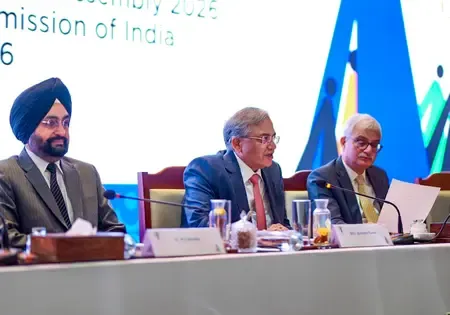
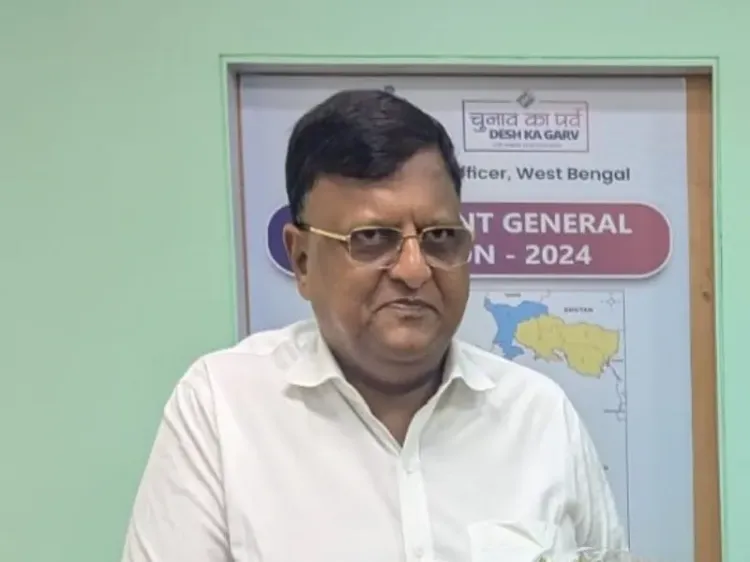
A pivotal decision regarding this matter may be reached during an important meeting of the Commission on January 5, which will include West Bengal CEO Manoj Kumar Agarwal and several senior officials from his team.
Insider sources from the CEO's office have indicated that the proposal is to conduct the elections in a single phase. If this is not feasible, the elections may occur in a maximum of two phases, but certainly not more.
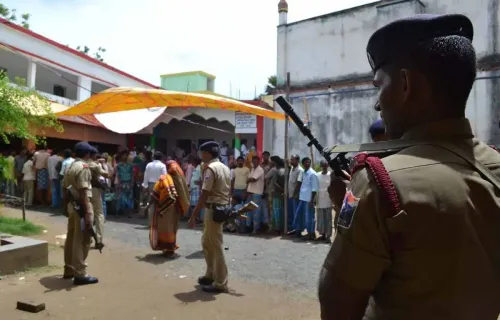
This meeting has been organized to discuss the logistics, particularly concerning the deployment of the Central Armed Police Force (CAPF), which would be essential for a single or two-phase election.
In the 2021 elections, West Bengal saw eight phases, starting on March 27 and concluding on April 29. By comparison, the 2016 elections were conducted over six phases, with the first phase spread over two days, effectively turning it into a seven-phase process.
While opposition parties have generally supported the multi-phase approach, the ruling Trinamool Congress has consistently opposed it.
CEO office sources assert that conducting the elections in one or two phases could bring both benefits and challenges.
The benefits include limiting the ability of political parties to mobilize their supporters from one phase to another, thereby addressing the long-standing issue of outsider influence on polling day or the day before, which can intimidate voters.
However, a single or two-phase election would necessitate a larger deployment of CAPF, particularly on the election day.
If the Commission is able to ensure adequate arrangements, the prospect of a single-phase or two-phase election appears quite viable, according to the sources.
In related news, the sessions for claims and objections on the draft voters' list in West Bengal will commence tomorrow. A training session for the 4,600 micro-observers appointed to oversee these sessions is scheduled for Wednesday at Nazrul Manch in South Kolkata.
These micro-observers are primarily Central government employees or staff from central public sector undertakings and banks, mainly from Group B, with some from Group A.
The final voters' list for West Bengal is slated to be published on February 14 next year. Following this, the ECI will announce the dates for the significant Assembly elections in the state.
Point of View
It is essential to recognize the evolving dynamics of the electoral process in West Bengal. The potential shift towards fewer phases in the upcoming Assembly elections reflects an attempt to balance security and accessibility. We stand by the importance of a fair and transparent electoral process, ensuring that every voice is heard and that democracy prevails.
NationPress
3 Oct 2026
Frequently Asked Questions
Why might the number of phases be reduced for the 2026 Bengal Assembly elections?
The reduction in phases is being proposed to streamline the electoral process and minimize the impact of political mobilization on polling day, potentially leading to a fairer election.
What is the significance of the January 5 meeting?
The January 5 meeting will be crucial in determining whether the Election Commission of India will accept the CEO's recommendations regarding the election phases.
What challenges could arise from a single or two-phase election?
While fewer phases may reduce voter intimidation, it will require significant deployment of security forces on polling days to maintain order.