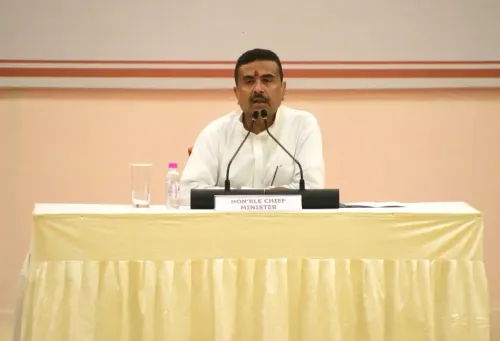
West Bengal bans repeated contract extensions, orders fresh tenders 3 months before expiry

Synopsis
West Bengal has drawn a hard line on contract renewals: departments can no longer extend agreements with the same agency — ever. Chief Secretary Manoj Kumar Agarwal's circular mandates fresh tenders three months before expiry and holds department heads personally liable for non-compliance. It is a rare, sweeping procurement reform that reaches down to panchayats and state PSUs.
Key Takeaways
West Bengal has banned repeated contract extensions with the same agencies across all government departments, local bodies, and PSUs.
Chief Secretary Manoj Kumar Agarwal issued the circular on or before 15 July 2025 .
Fresh tenders must be floated no later than 3 months before an existing contract expires.
Heads of Departments are personally responsible for compliance and must conduct monthly reviews of all active contracts.
Unauthorised extensions or delayed tenders will be treated as a serious breach of financial discipline.
The rule applies to panchayats , municipalities , State PSUs , statutory bodies, and all parastatals.
The West Bengal government has directed all departments, local bodies, and state-owned enterprises to halt the practice of repeatedly extending contracts with the same agencies, instead mandating that fresh tenders be floated no later than three months before an existing contract expires. The directive, issued on 15 July 2025, marks a significant tightening of financial discipline in state procurement.
Key Directive and Its Scope
Chief Secretary Manoj Kumar Agarwal issued a formal circular earlier this week, making the new rule binding on all government departments, panchayats, municipalities, State Public Sector Undertakings (PSUs), statutory bodies, and other parastatals. Heads of departments have been made personally responsible for compliance within their jurisdictions.
The circular states that proposals for extension or renewal of existing contracts 'will not be entertained under any circumstances and cannot be fait accompli due to lack of timely due diligence.' Any unauthorised extension or delay in initiating fresh tenders will be treated as a serious breach of financial discipline.
What Prompted the Crackdown
Officials said the government had observed a growing trend of departments repeatedly extending contracts with the same agencies — often forwarding files to the Finance Department at the last moment for approval. In several instances, departments had extended contracts on their own without prior clearance from the Finance Department, a practice the circular now explicitly prohibits.
The circular noted: 'It has been observed that Government Departments and Offices under their administrative control repeatedly seek approvals from the Finance Department for extensions of contracts with agencies engaged by them for various purposes. Some authorities have even been approving these extensions without prior consultation with the Finance Department. Such practices constitute a violation of established financial discipline and compromise the integrity of the competitive bidding process.'
New Compliance Mechanism
Under the revised framework, Heads of Departments are required to conduct monthly reviews of all existing contracts. A consolidated list of contracts must be shared with the Finance Department on a regular basis. The three-month advance tender window is designed to eliminate last-minute extensions that have historically bypassed competitive bidding norms.
According to a section of the administration, repeatedly awarding work to the same organisation defeats the core purpose of competitive tendering — raising questions about work quality and shutting out other eligible vendors from participating in government contracts.
Impact on Government Functioning
The directive is expected to accelerate procurement timelines, reduce discretionary approvals, and open state contracts to a wider pool of bidders. It applies uniformly across the state machinery, from large infrastructure departments to grassroots-level local bodies.
With departments now on notice for personal accountability, the government's move signals a shift toward systemic enforcement rather than ad hoc compliance. How strictly the rule is implemented — particularly at the panchayat and PSU level — will determine its real-world impact.
Point of View
Sometimes without even informing the Finance Department. What makes this directive notable is the personal accountability clause: holding Heads of Departments liable shifts responsibility from institutional inertia to named officials. The real test, however, will come at the panchayat and PSU level, where oversight is thinner and enforcement historically weaker. A rule is only as strong as the audit trail that backs it.
NationPress
14 Oct 2026
Frequently Asked Questions
What has the West Bengal government decided about contract extensions?
The West Bengal government has banned repeated extensions of contracts with the same agencies. All departments, local bodies, and PSUs must now float fresh tenders at least three months before an existing contract expires, with no exceptions for renewals or extensions.
Who issued the circular and when does it take effect?
Chief Secretary Manoj Kumar Agarwal issued the circular earlier in the week of 15 July 2025. It takes effect immediately and applies to all government departments, panchayats, municipalities, State PSUs, and statutory bodies.
Why did the West Bengal government introduce this rule?
The government observed that departments were repeatedly extending contracts with the same agencies, often sending files to the Finance Department at the last minute or approving extensions without prior clearance. This practice was seen as violating financial discipline and undermining competitive bidding.
Who is responsible for ensuring compliance with the new directive?
Heads of Departments and Subordinate Offices are personally responsible for compliance within their jurisdictions. They must also conduct monthly reviews of all existing contracts and share a list of contracts with the Finance Department.
What happens if a department violates the new contract extension rule?
Any unauthorised extension of a contract or delay in initiating fresh tenders will be treated as a serious breach of financial discipline and dealt with accordingly, according to the circular.