Bengal govt moves SC against Delhi HC remission order for 1993 Bowbazar blast convict
Synopsis
West Bengal has rushed to the Supreme Court to block the release of Md. Rashid Khan, convicted in the 1993 Bowbazar bomb blast and imprisoned for over 33 years. The Delhi High Court's reformative-theory ruling — which found his conduct 'very very good' and recurrence risk 'very low' — now faces a direct state challenge, setting up a rare judicial contest over whether TADA-era convicts can access standard remission frameworks.
Key Takeaways
The West Bengal government moved the Supreme Court on 18 June against a Delhi HC order releasing Md.
CJI Surya Kant assured an early hearing on the state's special leave petition.
Justice Neena Bansal Krishna ordered Khan's release on 5 June , citing over 33 years of imprisonment and 'very very good' prison conduct.
Khan was convicted under the IPC , Explosive Substances Act , and TADA for the 1993 Bowbazar bomb blast .
The State Sentence Review Board had first recommended his release in March 2015 , but the proposal was later withdrawn over TADA remission uncertainties.
West Bengal argues Khan was the mastermind and that police authorities opposed his release.
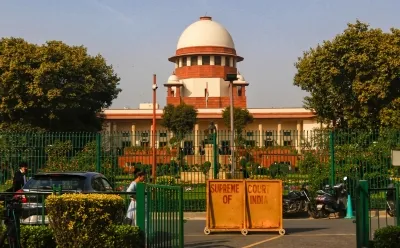
The West Bengal government on Thursday, 18 June moved the Supreme Court challenging a Delhi High Court order that granted remission and directed the release of Md. Rashid Khan, a life convict in the 1993 Bowbazar bomb blast case. The matter was mentioned before Chief Justice of India (CJI) Surya Kant, who assured that the special leave petition (SLP) filed by the state would be considered for an early hearing.
Background: The Delhi High Court Order
In a judgment delivered on 5 June, a single-judge bench of Justice Neena Bansal Krishna of the Delhi High Court held that Khan, who has spent more than 33 years in prison, was entitled to premature release on the basis of the reformative theory of punishment and his conduct during incarceration.
Allowing Khan's writ petition, the court observed: 'To keep the petitioner in jail, when he has already spent over 33 years in prison, may not be fruitful in any manner.' It further noted that his jail record and reports 'clearly indicate a reformed person, entitled to a reformative approach.'
Key Findings of the High Court
The Delhi High Court recorded that Khan's prison conduct was assessed as 'very very good', that he had returned to custody on time after being released on parole on multiple occasions, and that there was a 'very low likelihood of the recurrence of offence' given his advanced age and medical condition.
The court also took note of the fact that co-convict Pannalal Jaysoara had earlier been granted remission. It observed that while parity cannot be claimed as a matter of right, the gravity of the offence alone could not be used to deny remission if other criteria were satisfied.
West Bengal Government's Stand
The West Bengal government has challenged the High Court's direction in its SLP, contending that Khan was the mastermind of the blast, that the offence had a deep societal impact, and that police authorities had objected to his premature release. Khan was convicted under the Indian Penal Code, the Explosive Substances Act, and the Terrorist and Disruptive Activities (Prevention) Act (TADA).
Notably, the State Sentence Review Board had initially recommended Khan's premature release in March 2015, but the proposal was subsequently withdrawn amid legal uncertainties regarding remission powers in TADA cases.
What Happens Next
The Supreme Court is yet to schedule a formal hearing date on the SLP. The Delhi High Court had directed that Khan be released forthwith if not required in any other case, concluding that after more than three decades of incarceration, the objectives of punishment had been sufficiently served. The Supreme Court's decision on the urgency plea will determine whether that release order is stayed pending further proceedings.
Point of View
The State Sentence Review Board itself recommended release back in 2015; the state's current opposition sits in awkward contrast to that earlier position. The Supreme Court's response to the urgency plea will signal how far reformative jurisprudence has travelled in cases where the original offence carried a terrorism tag.
NationPress
19 Sept 2026
Frequently Asked Questions
Why has the West Bengal government moved the Supreme Court over the Bowbazar blast case?
West Bengal has challenged the Delhi High Court's 5 June order directing the premature release of Md. Rashid Khan, a life convict in the 1993 Bowbazar bomb blast case. The state argues Khan was the mastermind of the blast, the offence had deep societal impact, and police authorities had opposed his release.
Who is Md. Rashid Khan and what was the 1993 Bowbazar blast?
Md. Rashid Khan is a life convict who has been in custody since March 1993 in connection with the Bowbazar bomb blast case in Kolkata. He was convicted under the IPC, the Explosive Substances Act, and TADA, and has spent more than 33 years in prison.
What did the Delhi High Court say in its remission order?
Justice Neena Bansal Krishna of the Delhi High Court held on 5 June that Khan was entitled to premature release under the reformative theory of punishment. The court cited his 'very very good' prison conduct, timely return from parole, advanced age, medical condition, and a 'very low likelihood of recurrence of offence.'
What is the current status of Md. Rashid Khan's release?
The Delhi High Court directed Khan's immediate release, but West Bengal's Supreme Court petition could result in a stay on that order pending the court's hearing. CJI Surya Kant has assured the state's SLP will be considered for an early date.
Why was Khan's earlier release recommendation withdrawn?
The State Sentence Review Board had recommended Khan's premature release in March 2015, but the proposal was withdrawn due to legal uncertainties surrounding remission powers in cases convicted under TADA, a now-lapsed anti-terrorism law.