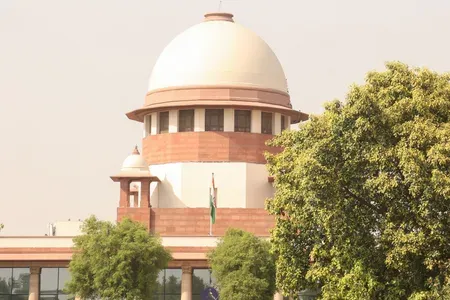
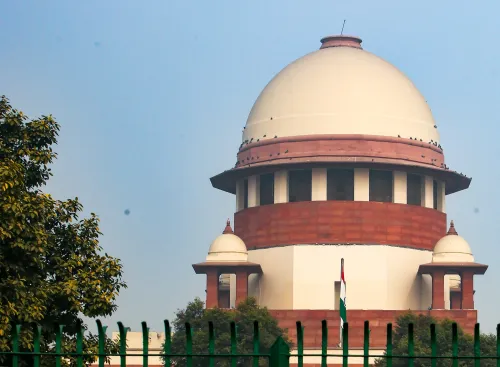
Supreme Court grants bail in 43-year-old Kanpur fratricide case, notices Allahabad HC
Synopsis
Four decades after a fatal shooting in Kanpur's Beconganj, the Supreme Court has stepped in — granting bail to the convicted man and calling for trial records. With hostile witnesses, contested ballistic evidence, and a life sentence on the line, the case tests how Indian courts weigh the passage of time against the finality of conviction.
Key Takeaways
The Supreme Court granted bail to Vijay Singh on 10 June , convicted for the 1983 murder of his brother Ajay Singh in Kanpur .
The Allahabad High Court had upheld his conviction and life sentence under Section 302 IPC on 9 February .
Three civilian witnesses, including family members, turned hostile during the original trial; the conviction rested on testimony of two police constables .
Singh reportedly spent only about 3 months as an undertrial prisoner, having been on bail for most of the 43-year proceedings.
The apex court has summoned trial court records; the matter will be relisted once they are received.
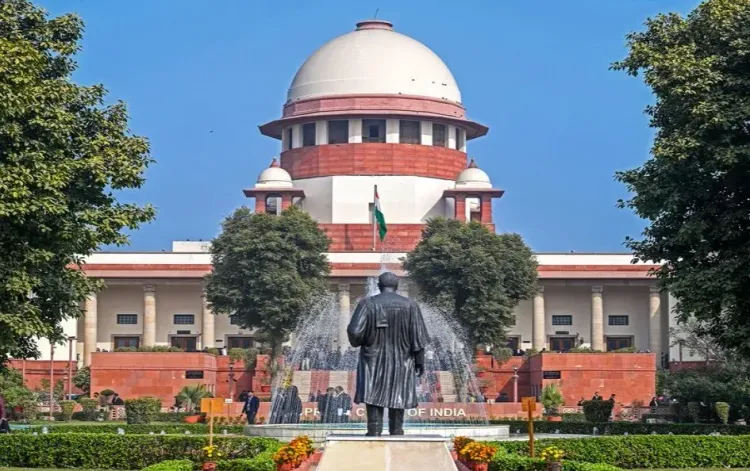
The Supreme Court has granted bail to Vijay Singh, a Uttar Pradesh resident convicted of murdering his younger brother in 1983, while issuing notice on his plea challenging the Allahabad High Court judgment that upheld his conviction and life sentence earlier this year. The order was passed on 10 June by a Bench of Justices Prashant Kumar Mishra and Atul S. Chandurkar.
Background of the Case
The incident dates to the evening of 4 November 1983, when Singh allegedly opened fire on his younger brother Ajay Singh with a licensed pistol following an altercation in Kanpur's Beconganj area. The prosecution alleged the dispute was triggered by a woman residing with Vijay Singh. A trial court convicted him under Section 302 of the Indian Penal Code (IPC) in 1985, sentencing him to life imprisonment.
Three civilian witnesses — including the deceased's brother and sister-in-law — turned hostile during the trial. The prosecution built its case primarily on the testimony of two police constables who claimed to have witnessed the shooting and pursued the accused immediately after.
Allahabad High Court's Ruling
A Division Bench of Justices Siddharth and Jai Krishna Upadhyay dismissed Singh's criminal appeal on 9 February, affirming the 1985 conviction. The High Court observed that family witnesses had likely retracted their statements over time to protect the surviving member.
'In the cases where a close family member causes the murder of another close family member, with the passage of time, other family members, who are witnesses to the crime, often resign themselves to fate and turn hostile before the court to save the surviving member,' the High Court had noted. It also rejected challenges based on alleged inconsistencies in ballistic evidence, absence of fingerprint examination, and non-conduct of a test identification parade.
Following the verdict, the High Court cancelled Singh's bail bonds and directed him to surrender. On a modification application, it granted him 30 days to do so. The Supreme Court, on 27 April, had further granted him eight weeks to surrender solely to facilitate listing before the appropriate Bench.
Supreme Court's Order
Senior advocate Siddhartha Dave, appearing for Singh, submitted that the incident occurred nearly 43 years ago and that his client had remained on bail throughout the proceedings, barring approximately three months spent as an undertrial prisoner.
The apex court ordered that trial court records be summoned and directed that digitised copies be supplied to counsel for both sides. It ordered Singh's release on bail in connection with FIR No. 251 dated 04.11.1983, registered at Police Station Beconganj, District Kanpur, on terms and conditions to be imposed by the trial court.
What Happens Next
The Uttar Pradesh government, represented by advocate Yasharth Kant, accepted notice, following which the Supreme Court dispensed with its formal issuance. The matter will be listed again once the trial court records are received. This is a case that has traversed the Indian judicial system for four decades — its final resolution will hinge on the apex court's assessment of the evidentiary record.
Point of View
The evidentiary weight shifts almost entirely to police testimony — a reliance the Supreme Court has historically scrutinised. The Allahabad High Court's observation that family members 'resign themselves to fate' is legally sound but also underscores how the passage of time erodes accountability. The deeper question the apex court must now answer is whether a conviction built substantially on two constables' accounts, with contested forensics and no fingerprint examination, meets the 'beyond reasonable doubt' threshold — especially when the convict has spent nearly his entire post-conviction period on bail rather than in prison.
NationPress
19 Sept 2026
Frequently Asked Questions
Why did the Supreme Court grant bail to Vijay Singh?
The Supreme Court granted bail to Vijay Singh on 10 June while hearing his special leave petition challenging the Allahabad High Court's verdict that upheld his 1983 murder conviction. The court noted that the incident occurred nearly 43 years ago and that Singh had spent only about three months in custody as an undertrial, remaining on bail for most of the proceedings.
What was Vijay Singh convicted of?
Vijay Singh was convicted under Section 302 of the Indian Penal Code for the murder of his younger brother Ajay Singh on 4 November 1983 in Kanpur's Beconganj area. A trial court sentenced him to life imprisonment in 1985, a verdict the Allahabad High Court affirmed in February this year.
Why did civilian witnesses turn hostile in this case?
Three civilian witnesses, including the deceased's brother and sister-in-law, retracted their earlier statements during trial. The Allahabad High Court observed that in cases of intra-family violence, relatives often turn hostile over time to protect the surviving family member.
What did the Allahabad High Court rule in February?
A Division Bench of Justices Siddharth and Jai Krishna Upadhyay dismissed Singh's criminal appeal on 9 February, affirming the 1985 conviction and life sentence. The court also cancelled his bail bonds and directed him to surrender, later granting 30 days for compliance on a modification application.
What is the Supreme Court expected to examine next?
The Supreme Court has summoned the original trial court records and directed digitised copies to be shared with both sides. The case will be relisted once those records are received, when the court is expected to examine the evidentiary basis of the conviction, including the reliance on police testimony and the contested forensic evidence.