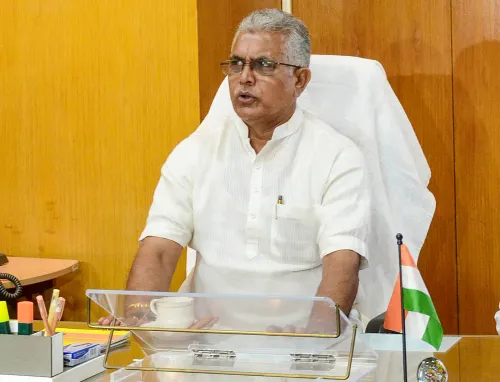
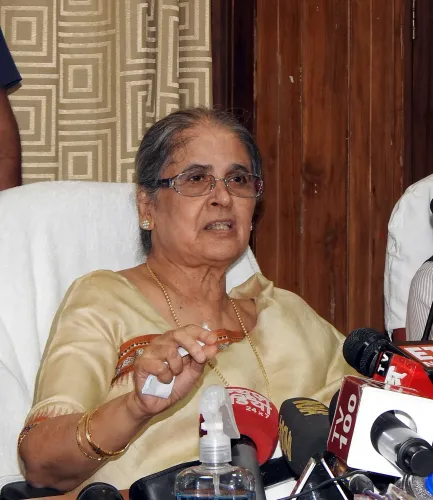
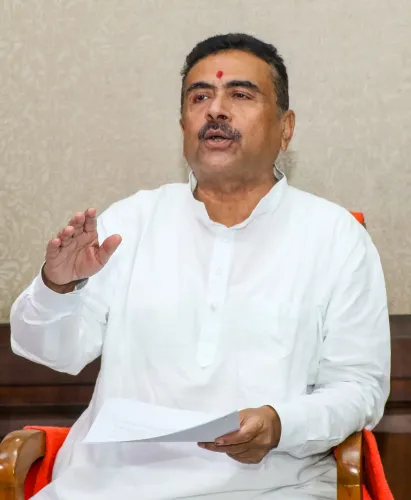
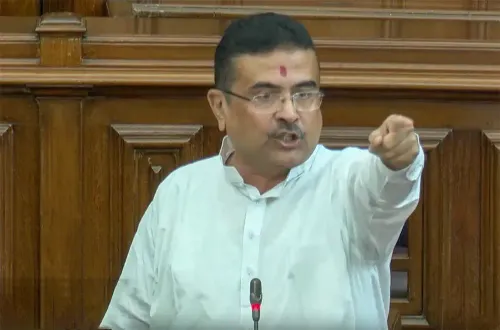
West Bengal Cabinet clears UCC draft Bill 2026, CM Adhikari orders cost crackdown
Synopsis
West Bengal has cleared the draft UCC Bill 2026 in cabinet — a move that would make it India's fourth state to enact a uniform civil code. With a Supreme Court-judge-led panel set to report in four weeks and an Assembly tabling planned for August, the political and legal clock is now ticking in a state with one of India's most complex religious demographics.
Key Takeaways
The West Bengal cabinet cleared the draft Uniform Civil Code (UCC), West Bengal, 2026 on 2 July 2026 , chaired by CM Suvendu Adhikari .
The draft goes to a committee headed by Justice Ranjana Prakash Desai (retired) , with recommendations due in four weeks ; the final Bill is to be tabled in the Assembly in August 2026 .
Tribals, indigenous communities, and Kurmis will be exempt from the UCC, following the Uttarakhand and Gujarat model.
West Bengal is set to become the fourth Indian state to implement UCC, after Gujarat, Uttarakhand, and Assam .
The cabinet also approved nine additional fast-track courts across nine districts and 35 new posts .
CM Adhikari ordered strict cost-control measures and directed plugging of revenue leakages in stone quarry and sand mining sectors.
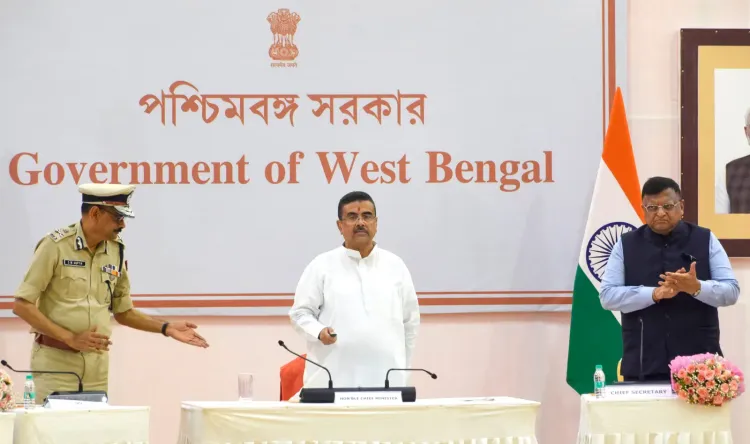
The West Bengal state cabinet on Thursday, 2 July 2026, cleared the draft Uniform Civil Code (UCC), West Bengal, 2026 — a landmark move that, if enacted, would make the state the fourth in India to implement such legislation. The meeting was chaired by Chief Minister Suvendu Adhikari, who also issued sweeping directives on fiscal discipline and revenue leakage.
What Happens Next with the UCC Draft
According to a state cabinet insider, the draft Bill will now be forwarded to a newly constituted high-powered committee headed by Justice Ranjana Prakash Desai (retired), former judge of the Supreme Court of India. The committee is expected to submit its recommendations within four weeks, after which the final Bill will be drafted and tabled on the floor of the West Bengal Legislative Assembly in August 2026.
Who Is Exempt and Why
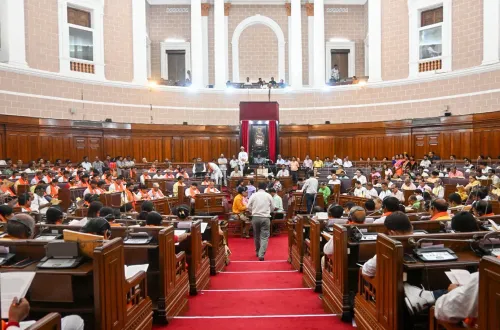
Chief Minister Adhikari, addressing the Assembly on 29 June 2026, had already signalled that tribals, indigenous communities, Kurmis, and other recognised ancient tribal communities would be kept outside the purview of the proposed law. He clarified that this exemption follows the model adopted by Uttarakhand and Gujarat — the two states that pioneered UCC implementation at the state level. Assam has since joined them, and West Bengal is now positioned to become the fourth.
The core objective of the Bill is to replace separate religion-based personal laws with a single, uniform civil code governing matters such as marriage, divorce, inheritance, and adoption across the state.
Fiscal Discipline and Cost Control
Beyond the UCC, the cabinet meeting was marked by firm directives on financial governance. Chief Minister Adhikari instructed all state departments to implement strict cost-control measures and eliminate avoidable expenditure. A cabinet insider said the Chief Minister specifically ordered that non-eligible beneficiaries be immediately removed from social welfare schemes to reduce fiscal drag and improve programme efficiency.
Sources also indicated that Adhikari directed departments to plug revenue leakages — particularly in stone quarry and sand mining sectors, areas where, according to sources, leakage was reportedly at its worst during the previous All India Trinamool Congress (TMC) government due to what sources described as rampant corruption.
Land Transfer for Border Forces and Fast-Track Courts
The cabinet approved two additional proposals of administrative significance. First, it cleared the perpetual transfer of government-vested land across multiple districts to the Border Security Force (BSF) and Sashastra Seema Bal (SSB) for border infrastructure — including outposts, fencing, and road construction along sensitive frontier zones.
Second, the cabinet approved the creation of nine additional fast-track courts across nine districts of the state, along with 35 new posts to staff them — a move aimed at reducing the backlog of pending cases in the state judiciary.
Significance and What to Watch
West Bengal's UCC move carries considerable political weight. The state has a large and diverse religious demographic, and the legislation — if passed — would represent one of the most consequential policy shifts in the state's recent history. The Justice Desai committee's report, expected by early August, will be closely watched for how it balances uniformity with the constitutionally protected rights of tribal communities. The Assembly session in August will be the definitive test of whether the Bill commands the numbers to pass.
Point of View
But it also sets up a contested boundary: who qualifies, and who decides, will likely be litigated. The real test is August — whether the numbers hold in the Assembly and whether the Justice Desai committee's report provides the legal cover needed to withstand constitutional challenge. The cost-control directives, buried beneath the UCC headline, may prove equally consequential: they signal a government under fiscal pressure, and the sand-mining and quarry crackdown is a pointed rebuke of the previous regime that will resonate with voters even if enforcement remains uncertain.
NationPress
1 Oct 2026
Frequently Asked Questions
What is the Uniform Civil Code (UCC) Bill cleared by the West Bengal cabinet?
The West Bengal cabinet on 2 July 2026 cleared the draft Uniform Civil Code, West Bengal, 2026 — a legislation aimed at replacing separate religion-based personal laws with a single civil code governing marriage, divorce, inheritance, and adoption. If enacted, West Bengal will become the fourth Indian state to implement UCC, after Gujarat, Uttarakhand, and Assam.
When will the West Bengal UCC Bill be tabled in the Assembly?
The draft Bill has been referred to a high-powered committee headed by Justice Ranjana Prakash Desai (retired), which is expected to submit recommendations within four weeks. The final Bill is slated to be tabled in the West Bengal Legislative Assembly in August 2026.
Who is exempt from the West Bengal UCC?
Tribals, indigenous communities, Kurmis, and other recognised ancient tribal communities will be kept outside the purview of the proposed UCC. Chief Minister Adhikari said this exemption follows the model adopted by Uttarakhand and Gujarat.
What other decisions did the West Bengal cabinet take on 2 July 2026?
The cabinet approved the perpetual transfer of government-vested land to the Border Security Force (BSF) and Sashastra Seema Bal (SSB) for border infrastructure. It also cleared the creation of nine additional fast-track courts across nine districts and 35 new posts to staff them.
Why did CM Adhikari order cost-control measures at the cabinet meeting?
Chief Minister Suvendu Adhikari directed all state departments to eliminate avoidable expenditure, remove non-eligible beneficiaries from welfare schemes, and plug revenue leakages — especially in stone quarry and sand mining sectors. Sources indicated these sectors saw significant revenue loss during the previous TMC government due to alleged corruption.