Bengal SMS campaign targets 22 lakh migrant workers to return under VG-RAM-G scheme
Synopsis
West Bengal is texting over 22 lakh registered migrant workers across India, urging them home with an offer of 125 days of work annually and wages up to ₹600 a day under the VG-RAM-G scheme. With ₹13,000 crore allocated and 31 lakh alleged fake job cards unearthed from the previous TMC regime, the campaign is as much a governance audit as a labour-welfare push.
Key Takeaways
West Bengal is sending SMS messages to 22,24,060 registered migrant workers urging them to return home.
Workers are being offered 125 days of employment annually under the VG-RAM-G scheme, with daily wages of ₹300 (unskilled) , ₹450 (semi-skilled) , and up to ₹600 (skilled) .
The state has earmarked more than ₹13,000 crore — ₹8,000 crore from the Centre and ₹5,000 crore from the state; the Centre has already released ₹1,200 crore .
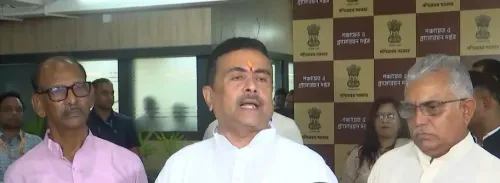
10 lakh new job cards have been issued and 65.62 lakh man-days created so far, according to Chief Minister Suvendu Adhikari .
Adhikari alleged that 31 lakh fake job card holders were identified from the previous TMC government's records during Aadhaar-linking.
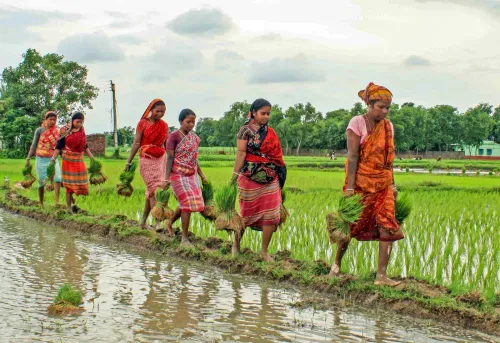
The West Bengal government has launched a large-scale outreach initiative, sending SMS messages to 22,24,060 registered migrant workers across the country, urging them to return to their villages and enrol under the Viksit Bharat–Guarantee for Rozgar and Ajeevika Mission (Gramin), or VG-RAM-G, scheme. The campaign, rolled out on 17 November 2026, is a joint effort by the state's Labour Department and the Panchayat Affairs and Rural Development Department.
How the Scheme Works
The VG-RAM-G programme promises 125 days of employment annually to eligible workers in rural areas. Daily wages are structured by skill level: unskilled workers will receive ₹300 per day, semi-skilled workers ₹450, and skilled workers up to ₹600. A senior official at the state secretariat Nabanna confirmed these wage rates, adding that eligible family members of registered migrant workers will also be covered under the scheme.
Job Cards and On-Ground Drive
Simultaneously, the Panchayat Affairs and Rural Development Department has launched a special drive to ensure that families of identified migrant workers receive rural employment guarantee cards — commonly known as job cards — without delay. The SMS messages themselves carry details of the scheme's benefits and eligibility criteria, serving as a direct information channel to workers currently based in other states.
Funding and Targets
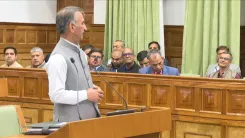
Earlier this month, Chief Minister Suvendu Adhikari announced that the state had earmarked more than ₹13,000 crore for implementing the programme. Of this, the Centre is contributing ₹8,000 crore and the state government approximately ₹5,000 crore. The Union government has already released ₹1,200 crore as the first instalment. Adhikari also stated that around 10 lakh new job cards had been issued and expressed confidence that the state would meet the employment targets set by the Centre. 'So far, we have been able to create 65.62 lakh man-days,' the Chief Minister said.
Fake Job Cards Row
Adhikari further alleged that around 31 lakh fake job card holders had been identified from the tenure of the previous Trinamool Congress (TMC) government led by Mamata Banerjee. According to Adhikari, these discrepancies surfaced during the process of linking job cards with Aadhaar numbers. He alleged that some of the identified fake card holders had also received payments under the employment programme, raising questions about the integrity of the earlier rolls.
Significance for Migrant Workers
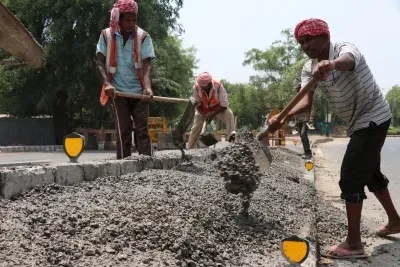
West Bengal is one of India's largest source states for interstate migrant labour, with workers concentrated in sectors such as construction, domestic services, and manufacturing in states like Kerala, Gujarat, and Tamil Nadu. This campaign marks a notable shift toward using digital outreach — rather than purely administrative channels — to draw workers back. Whether the wage rates on offer prove competitive against urban earnings in destination states will likely determine the scheme's uptake. The government's next milestone will be the rollout of job cards to all identified families and the disbursement of subsequent funding tranches from the Centre.
Point of View
Which raises a real question about whether economic incentives are strong enough to pull labour back. The scheme's success will hinge on how quickly job cards reach families on the ground — a process that has historically been prone to delays and local-level capture in rural Bengal. With assembly elections on the horizon, the optics of delivering 125 days of work to over 22 lakh households could prove as important to the BJP-led government as the scheme's development outcomes.
NationPress
17 Nov 2026
Frequently Asked Questions
What is the VG-RAM-G scheme in West Bengal?
The Viksit Bharat–Guarantee for Rozgar and Ajeevika Mission (Gramin), or VG-RAM-G, is a rural employment programme offering 125 days of work annually to eligible workers. Daily wages are ₹300 for unskilled, ₹450 for semi-skilled, and up to ₹600 for skilled workers.
How many migrant workers is West Bengal contacting?
The state is sending SMS messages to 22,24,060 workers currently registered with the state Labour Department. Family members of registered workers are also eligible to be covered under the scheme.
How much money has been allocated for the scheme?
Chief Minister Suvendu Adhikari announced an allocation of more than ₹13,000 crore, with the Centre contributing ₹8,000 crore and the state ₹5,000 crore. The Union government has released ₹1,200 crore as the first instalment.
What is the fake job card controversy about?
Chief Minister Adhikari alleged that around 31 lakh fake job card holders were identified from the records of the previous Trinamool Congress government led by Mamata Banerjee, discovered during the process of linking job cards with Aadhaar numbers. He claimed some of these holders had also received payments under the employment programme.
What happens after migrant workers receive the SMS?
Workers are being encouraged to return to their villages and register for employment under VG-RAM-G. The Panchayat Affairs and Rural Development Department is simultaneously running a drive to issue job cards to families of identified migrant workers without delay.