Kolkata Metro Orange Line Phase III track work done, electrical works next
Synopsis
Kolkata Metro has quietly crossed a pivotal threshold: track laying on Phase III of the Orange Line is done. With the Beleghata–IT Centre stretch now cleared for electrical works, the city's long-awaited direct south-to-airport-via-IT-hub corridor is within sight — and with a 130-km network target ahead, India's oldest metro is finally catching up.
Key Takeaways
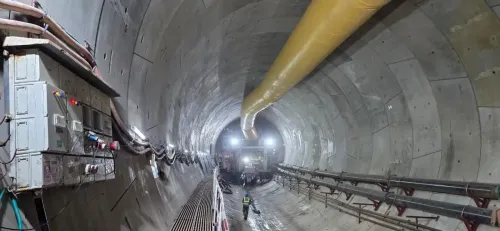
Metro Railway completed the first push trolley inspection on the Beleghata–IT Centre section on 20 September 2026 , marking the end of Phase III viaduct and ballastless track work on the Orange Line .
Electrical works — including third rail laying and signal installation — can now commence on the stretch.
The 32-km Kavi Subhash–Jai Hind Bimanbandar corridor was sanctioned in 2010 and is being built in five phases ; the first two are already operational.
Kolkata Municipal Corporation (KMC) has issued an NOC to shift a water pipeline under B.T.
Road , unblocking viaduct construction on the Baranagar–Barrackpore stretch.
Kolkata Metro carried 23.60 crore passengers in 2025–26 , averaging 6.5 lakh riders daily , with ridership expected to rise as the network targets 130 km .
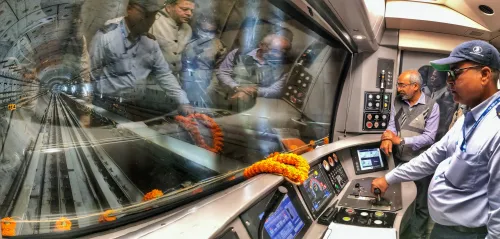
The Orange Line will be fitted with an auto train running system that prevents trains from overrunning red signals.
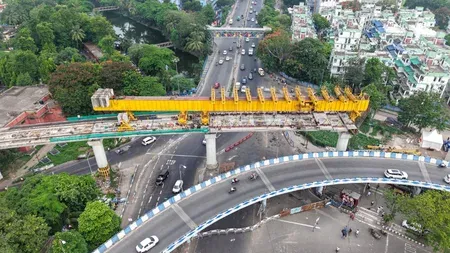
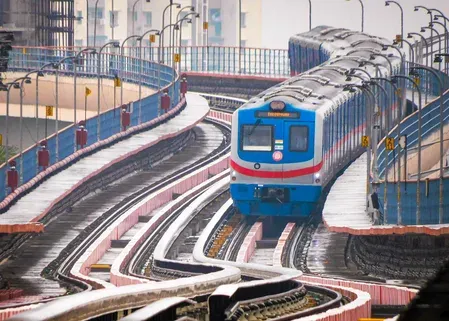
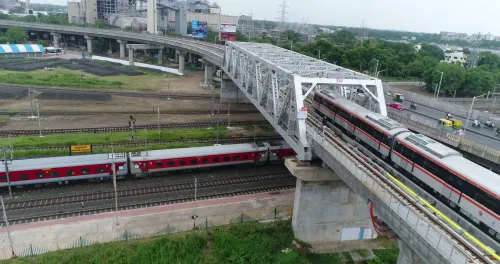
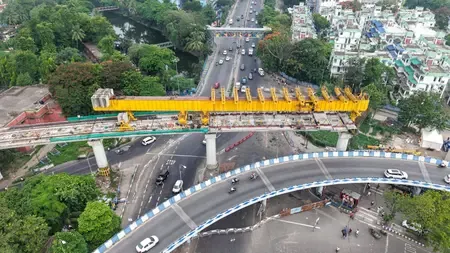
Kolkata Metro's Orange Line reached a significant construction milestone on 20 September 2026 as Metro Railway completed the first push trolley inspection on the Beleghata–IT Centre section — the third phase of the 32-km Kavi Subhash–Jai Hind Bimanbandar Metro Corridor. The inspection confirms that viaduct and ballastless track (BLT) works on this stretch are substantially done, clearing the path for the next round of electrical fitments.
What the Milestone Means
A push trolley inspection is the standard process used by Indian metro railways to verify that viaduct structures and track geometry are sound before heavier works begin. Completion of this check on the Beleghata–IT Centre stretch means crews can now move on to laying the third rail and installing signalling systems — both prerequisites before trial runs can be scheduled.
'The push trolley inspection of the third phase, from Beleghata to the IT Centre, indicates that substantial work has been completed. Once this phase gets operational, traffic will go up manifold as it will directly connect the city's IT hub to its southern neighbourhoods,' an official said.
The Broader Orange Line Project
The Kavi Subhash–Jai Hind Bimanbandar corridor, sanctioned in 2010, is being built in five phases. The first two — Kavi Subhash to Hemanta Mukhopadhyay and Hemanta Mukhopadhyay to Beleghata — have already been commissioned and are carrying passengers. When Phase III opens, the line will link Kolkata's southern residential neighbourhoods directly to the city's IT hub at New Town, Salt Lake, dramatically cutting commute times for tech-sector workers.
Notably, the Orange Line is also set to be equipped with an auto train running system — a safety mechanism that prevents trains from overrunning red signals even if the motorman is distracted, bringing the corridor in line with modern metro safety standards.
Kolkata Metro's Network Expansion Plans
Kolkata holds the distinction of being India's first metro city, with services dating back to 1984. However, its current network of roughly 73 km lags well behind systems in other Indian cities that launched later. Metro Railway is now targeting a network of at least 130 km over the next few years, addressing decades of under-investment.
Work is simultaneously progressing on the Purple Line (Joka to Esplanade), and construction of the Baranagar–Barrackpore stretch is expected to begin soon. A separate link from the airport to Barasat is also being revived, which would ease congestion on Jessore Road and offer a rail alternative for suburban commuters.
Pipeline Clearance Unblocks Baranagar–Barrackpore Stretch
One long-standing bottleneck on the expansion plan has been a water pipeline running beneath B.T. Road, owned by the Kolkata Municipal Corporation (KMC). After years of stalled negotiations that frustrated the Ministry of Railways, the KMC has now issued a No Objection Certificate (NOC) for the pipeline's relocation. Once the pipe is physically shifted, viaduct construction along B.T. Road can begin, removing the last structural obstacle on that alignment.
Ridership and Environmental Impact
In 2025–26, Kolkata Metro carried 23.60 crore passengers — an average of roughly 6.5 lakh riders per day. As the network grows, those numbers are expected to climb, with each additional corridor shifting commuters away from road transport and helping reduce the city's greenhouse gas emissions. The Orange Line's eventual full commissioning — connecting the city's south to the airport via the IT corridor — is expected to be among the biggest ridership drivers in the system's history.
Point of View
But it throws a spotlight on a broader paradox: India's oldest metro system, which pioneered urban rail in the country back in 1984, has fallen furthest behind in network scale. At 73 km, it is dwarfed by Delhi, Bengaluru and Hyderabad — cities that started far later. The KMC NOC saga over a single water pipeline, holding up a major stretch for years despite Ministry of Railways pressure, is a case study in inter-agency coordination failures that repeatedly stall Indian urban infrastructure. The 130-km target is achievable, but only if the pipeline-style bottlenecks are resolved faster — not on decade-long timescales.
NationPress
20 Sept 2026
Frequently Asked Questions
What was completed on the Kolkata Metro Orange Line on 20 September 2026?
Metro Railway completed the first push trolley inspection on the Beleghata–IT Centre section of the Orange Line, confirming that viaduct and ballastless track works for Phase III are done. This clears the way for electrical works including third rail laying and signal installation.
When will the Kolkata Metro Orange Line Phase III open for passengers?
No official opening date has been announced yet. Electrical fitments — third rail and signalling systems — still need to be installed before trial runs and eventual commissioning can take place.
What is the Kavi Subhash–Jai Hind Bimanbandar Metro Corridor?
It is a 32-km metro corridor, also called the Orange Line, that will connect Kolkata's extreme south to Netaji Subhas Chandra Bose International Airport via the IT hub at New Town, Salt Lake. Sanctioned in 2010, it is being built in five phases, two of which are already operational.
What is blocking the Baranagar–Barrackpore metro stretch?
A water pipeline beneath B.T. Road had held up viaduct construction for years. The Kolkata Municipal Corporation has now issued a No Objection Certificate for its relocation, and construction is expected to begin once the pipeline is physically shifted.
How many passengers does Kolkata Metro currently carry?
Kolkata Metro carried 23.60 crore passengers in 2025–26, averaging roughly 6.5 lakh riders per day. Ridership is expected to grow significantly as the network expands toward a target of at least 130 km.