Vaishnaw: Kolkata Metro Orange Line viaduct gap bridged at Chingrighata
Synopsis
Union Minister Ashwini Vaishnaw announced the closure of a 62-metre viaduct gap on Kolkata Metro's Orange Line at Chingrighata on 25 May 2026, ending a stall he attributed to TMC's refusal of traffic diversion permissions despite High Court and Supreme Court clearances.
Key Takeaways
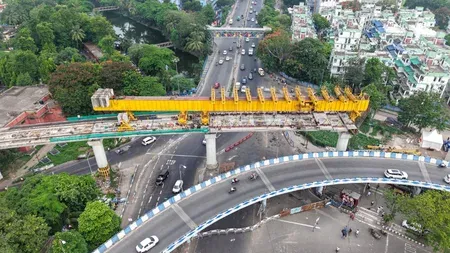
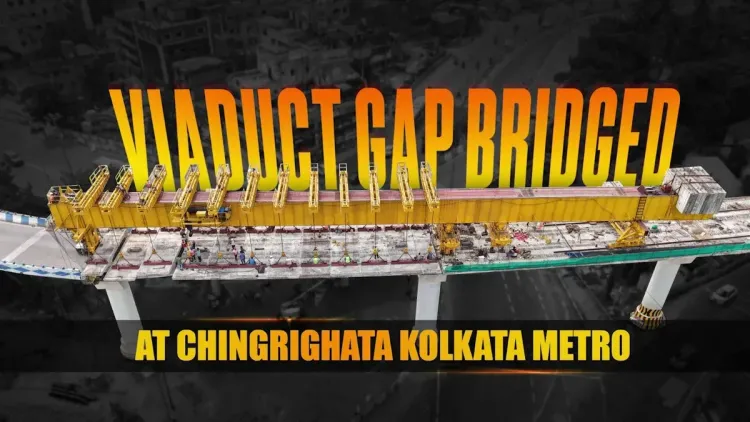
A 62-metre viaduct gap on Kolkata Metro's Orange Line at Chingrighata has been successfully bridged, Union Minister Ashwini Vaishnaw announced on 25 May 2026 .
The minister stated that TMC had blocked progress 'for years' by refusing basic traffic diversion permissions, even after High Court and Supreme Court clearances.
Work was completed using night traffic blockades over two successive weekends , a time-bound urban construction method increasingly used for congested metro stretches.
The busy crossing road at Chingrighata was reopened three hours ahead of schedule following completion of the viaduct work.
The East-West Metro Corridor (Orange Line) was sanctioned in 2008 and its completion has been delayed by recurring Centre-state disputes in West Bengal .
The operationalisation timeline for remaining Orange Line sections and future Union Budget funding for Kolkata Metro extensions are the key milestones to watch.
Union Minister Ashwini Vaishnaw announced on Monday, 25 May 2026 that a critical 62-metre viaduct gap on Kolkata Metro's Orange Line has been successfully closed at Chingrighata, completing a stretch that had remained stalled for years amid a prolonged Centre-state standoff over traffic diversion permissions.
Context
The minister posted on X that the Trinamool Congress (TMC)-led West Bengal government had kept the project stalled 'for years by refusing basic traffic diversion permissions.' He noted that even after both the High Court and the Supreme Court of India cleared the project, work did not advance on the ground. The completion was eventually achieved through night traffic blockades over two successive weekends, with the busy crossing road reopened three hours ahead of schedule.
Chingrighata is a densely trafficked locality in eastern Kolkata where the elevated metro alignment required bridging a gap over an active road corridor — a logistically complex task in an urban setting with high daily traffic volumes.
Policy Backdrop
The East-West Metro Corridor, designated the Orange Line, received in-principle sanction from the Union government in 2008 as part of Kolkata's urban rail expansion plan. Kolkata Metro itself has a long operational history, with Phase 1 services commencing in 1984, and successive corridor approvals have followed under national infrastructure plans over the decades.
Centre-state friction over metro and rail projects in West Bengal has been a recurring feature, with disputes spanning land acquisition, traffic management permissions, and coordination between the Union Railways Ministry and the state administration. The Union government has increasingly relied on court interventions and time-bound, night-construction methods to advance stalled urban rail works in congested stretches across the country.
Stakeholders and Impact
Kolkata commuters stand to benefit most directly from the viaduct closure, which removes a structural gap that had interrupted the continuity of the elevated corridor. Completion of this link is a prerequisite for operationalising the affected section of the Orange Line for passenger services.
West Bengal urban development agencies and the broader metro construction ecosystem are also affected, as the resolution of this bottleneck signals that remaining civil works on the corridor may now proceed with fewer procedural obstructions. The reopening of the crossing road ahead of schedule is likely to ease public inconvenience concerns that typically accompany large-scale night construction blocks in busy urban areas.
What's Next
Attention will now shift to the operationalisation timeline for the remaining sections of the Orange Line and whether the resolution at Chingrighata accelerates the broader project schedule. Any fresh funding commitments for Kolkata Metro extensions in the next Union Budget will be closely watched by urban planners and commuters alike.
The Centre's use of court orders and compressed night-work windows to overcome local administrative resistance may set a precedent for how other stalled urban rail projects in opposition-governed states are handled going forward.
Point of View
Vaishnaw is building a public record of accountability ahead of any future disputes on remaining Orange Line sections. The use of compressed night-work windows to complete a long-stalled urban rail task reflects a broader Railways Ministry playbook of bypassing procedural gridlock through time-bound execution. For the BJP, tangible metro progress in Kolkata carries electoral symbolism in a city where the party has invested heavily in expanding its urban footprint.
NationPress
14 Sept 2026
Frequently Asked Questions
What is the Kolkata Metro Orange Line?
The Orange Line refers to the East-West Metro Corridor in Kolkata, sanctioned by the Union government in 2008 to connect key areas of the city through a combination of underground and elevated rail sections.
What happened at Chingrighata on the Kolkata Metro project?
A critical 62-metre viaduct gap on the Orange Line at Chingrighata in eastern Kolkata was successfully bridged in May 2026 using night traffic blockades over two successive weekends, with the crossing road reopened three hours ahead of schedule.
Why was the Kolkata Metro Orange Line delayed?
Union Minister Ashwini Vaishnaw stated that the TMC-led West Bengal government refused basic traffic diversion permissions for years, stalling work even after both the High Court and Supreme Court cleared the project.
How did the government complete the Chingrighata viaduct work?
The Railways Ministry used night traffic blockades over two consecutive weekends to carry out the construction in a compressed, time-bound manner, minimising disruption to daytime traffic in the busy eastern Kolkata locality.
When will the Kolkata Metro Orange Line become operational?
No specific operationalisation date has been announced yet; the focus now shifts to completing remaining sections of the corridor and potential funding announcements in the next Union Budget.