Surat Metro Trial Run Begins: 45,000 Daily Commuters Set for Relief
Synopsis
Surat's Metro dream edges closer to reality as a 500-hour trial run begins on the 8.5-km Dream City–Althan stretch. Set to serve 45,000 diamond and textile workers daily, the project could transform urban mobility in one of India's fastest-growing industrial cities and reshape the diamond trade's operational efficiency.
Key Takeaways
A 500-hour trial run for Surat Metro has commenced on an 8.5-km route between Dream City and Althan Tenament .
Corridor I (Diamond Corridor) spans 21.6 km with 14 elevated and 6 underground stations ; Corridor II (Textile Corridor) covers 18.7 km with 18 elevated stations .
An estimated 40,000 to 45,000 diamond and textile workers are expected to benefit from daily Metro connectivity.
The Metro will offer direct access to the Surat Diamond Bourse , potentially boosting the diamond industry's operational efficiency.
Construction on seven Metro stations along the trial route is in its final stages, pending safety clearance from the Commissioner of Metro Rail Safety .
Surat becomes Gujarat's second city after Ahmedabad to receive Metro rail services.
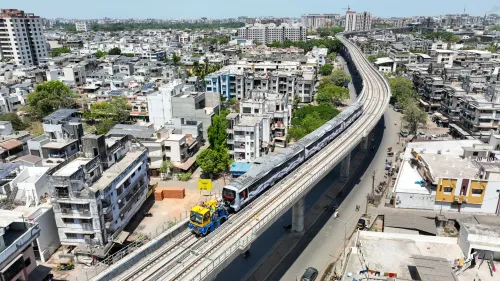
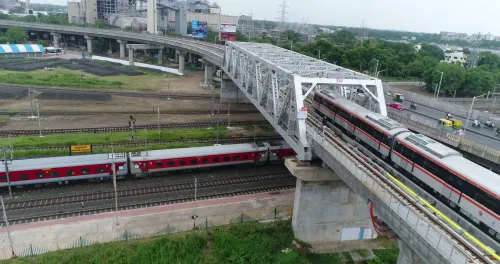
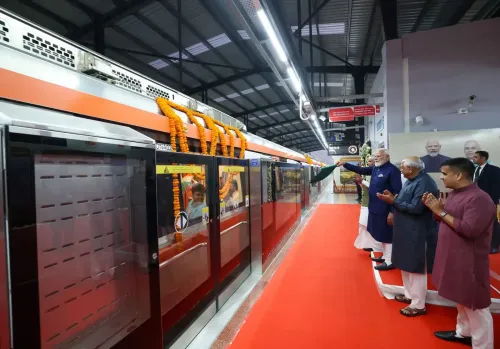
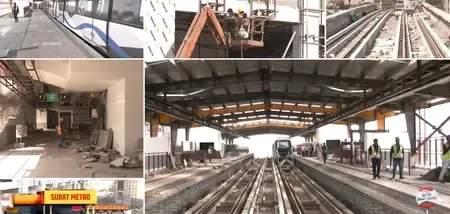
Surat, Gujarat is on the cusp of a transformative shift in urban mobility as its much-anticipated Metro rail network enters the final stretch before public launch. A 500-hour trial run has commenced on an 8.5-kilometre stretch between Dream City and Althan Tenament, testing the train's speed, braking systems, and technical performance — signalling that Surat's Metro dream is now closer to reality than ever before.
Trial Run Underway on Diamond Corridor
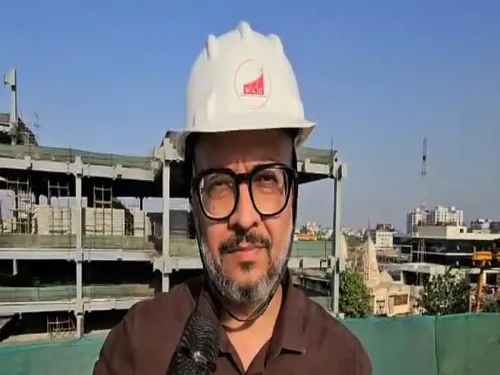
Anand Singh Bisht, Project Director of the Surat Metro Rail Project, confirmed that Corridor I — officially branded the Diamond Corridor — runs from Dream City to Sarthana, covering a total length of 21.6 kilometres. Of this, 15 kilometres is elevated and 6.5 kilometres is underground, featuring 14 elevated stations and 6 underground stations.
Corridor II, known as the Textile Corridor, connects Bhesan to Saroli across 18.7 kilometres, entirely elevated, with 18 stations. Construction work across both corridors is progressing at an accelerated pace, with seven Metro stations along the trial route in their final stages of completion.
Once safety inspections and regulatory testing are cleared, the Surat Metro is expected to be inaugurated for public use in the coming months — making Surat the second city in Gujarat after Ahmedabad to receive Metro connectivity.
Economic Impact: Diamond and Textile Industries Stand to Gain
The Metro's most immediate beneficiary will be the Surat Diamond Bourse, one of the world's largest diamond trading hubs. An estimated 40,000 to 45,000 artisans and traders commute daily from densely populated areas like Varachha, Katargam, and Sarthana — all of which fall along the Metro's planned route.
Jayanti Savaliya, Regional Chairman of the Gujarat Gems and Jewellery Export Promotion Council, stated that the Metro would dramatically ease the traffic burden around the Diamond Bourse. He said 45,000 people will be able to commute to and from the facility, adding that the Metro system has been exceptionally well-planned to connect the entire city.
This connectivity is not merely a convenience — it represents a structural economic upgrade. Surat accounts for cutting and polishing roughly 90% of the world's diamonds, according to industry data. Any friction in daily worker mobility directly impacts production output. A reliable, fast Metro link could reduce absenteeism and improve productivity across the sector.
Residents React: Years of Waiting Come to an End
For ordinary Surat residents, the trial run has triggered a wave of optimism. Raj Patel, a city resident, noted that the Metro would transform the daily routines of thousands who depend on public transport. He remarked that after years of waiting, Surat is finally getting the Metro, and the heart of every Surati is filled with joy.
Roshan Chimna, another local resident, praised the speed of construction, noting that the project has been completed remarkably fast and called it a source of immense civic pride.
Traffic congestion in Surat has long been a civic pain point. The city's rapid industrial growth — driven by diamond polishing, textile manufacturing, and a booming population — has consistently outpaced its road infrastructure. The Metro is expected to provide a fast, safe, and eco-friendly alternative that reduces both congestion and vehicular emissions.
Gujarat's Urban Transit Expansion in Context
Surat's Metro project is part of a broader national push under the Smart Cities Mission and Metro Rail Policy 2017, which has seen rapid urban rail expansion across Tier-1 and Tier-2 Indian cities. Ahmedabad Metro served as Gujarat's first Metro success story and set a benchmark for Surat's project planners.
Notably, Surat's Metro is being developed at a time when the city is also undergoing major infrastructure upgrades including the Surat Diamond Bourse — the world's largest office building — and expansion of its international airport. Together, these projects position Surat as one of India's most ambitiously redeveloped commercial cities in the 2020s.
Critics, however, have raised questions about last-mile connectivity — whether Metro stations will be well-integrated with feeder bus services and auto-rickshaws to truly serve the working-class commuters who need it most. The success of the Metro will ultimately depend not just on the rail infrastructure, but on the ecosystem built around it.
What Comes Next
Following the ongoing 500-hour trial run, the project will undergo mandatory safety inspections by the Commissioner of Metro Rail Safety (CMRS) — a statutory requirement before any Metro line in India can be opened to the public. Once clearance is granted, a formal inauguration is expected, likely with high-profile political presence given Surat's significance as an economic powerhouse in Gujarat.
With construction at an advanced stage and public enthusiasm running high, the Surat Metro appears set to redefine urban commuting in one of India's fastest-growing cities — and potentially serve as a model for other industrial cities seeking to balance growth with livability.
Point of View
The Metro is a productivity intervention as much as a transit project. The real question mainstream coverage misses is whether last-mile connectivity will be robust enough to actually serve the artisans and daily-wage workers who need it most, or whether the Metro will primarily benefit white-collar commuters. Gujarat's political establishment has strong incentives to fast-track the launch, but speed must not come at the cost of safety certification rigour.
NationPress
2 Oct 2026
Frequently Asked Questions
When will Surat Metro open for the public?
Surat Metro is expected to open for the public after completion of its 500-hour trial run and mandatory safety inspections by the Commissioner of Metro Rail Safety. No official inauguration date has been announced yet, but the launch is anticipated in the coming months.
What is the route of the Surat Metro trial run?
The current trial run is being conducted on an 8.5-kilometre stretch between Dream City and Althan Tenament on Corridor I, the Diamond Corridor. This corridor ultimately spans 21.6 kilometres from Dream City to Sarthana.
How many corridors does the Surat Metro have?
Surat Metro has two corridors — Corridor I, the Diamond Corridor, running 21.6 km from Dream City to Sarthana, and Corridor II, the Textile Corridor, running 18.7 km from Bhesan to Saroli. Together they cover over 40 kilometres across the city.
How will Surat Metro benefit the diamond industry?
The Metro will provide direct connectivity to the Surat Diamond Bourse, allowing 40,000 to 45,000 artisans and traders from Varachha, Katargam, and Sarthana to commute faster and more reliably. This is expected to reduce absenteeism and boost productivity in Surat's diamond trade.
Is Surat Metro the first Metro in Gujarat?
No, Ahmedabad was the first city in Gujarat to get Metro rail connectivity. Surat Metro, once launched, will become the second Metro system in Gujarat and a key part of the state's urban infrastructure expansion.