Bengal madrasah audit: 12-district preliminary reports submitted to Nabanna

Synopsis
West Bengal's state-wide madrasah audit has crossed a key milestone — preliminary reports from 12 districts, seven of them sharing a border with Bangladesh, are now with Nabanna. District magistrates have unanimously flagged overseas and institutional funding for unaffiliated Khariji madrasahs as a priority concern, setting the stage for a potentially consequential final report to Chief Minister Suvendu Adhikari.
Key Takeaways
Preliminary madrasah audit reports from 12 West Bengal districts submitted to State Secretariat Nabanna on 29 July .
7 of the 12 districts — including Murshidabad, Malda, and Nadia — share international borders with Bangladesh and have the highest concentration of Khariji madrasahs.
District magistrates have uniformly called for a probe into institutional and overseas funding for unaffiliated madrasahs.
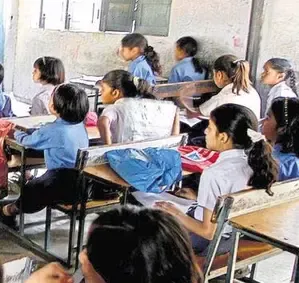
Most Khariji madrasahs reportedly teach only Islamic religious education, with no mainstream academic curriculum.
The State Minority Affairs and Madrasah Education Department will compile reports from all 22 districts and submit a final report to Chief Minister Suvendu Adhikari .
The audit was initiated in the first week of June , with DMs directed to report by 5 July ; these are the second-round reports.
Preliminary reports on the state of madrasahs across 12 districts in West Bengal have been submitted to the State Secretariat Nabanna, an official from the State Minority Affairs and Madrasah Education Department confirmed on Wednesday, 29 July. The exercise is part of a state-wide drive to identify illegally-run and Khariji (unaffiliated) madrasahs operating across the state.
Districts Covered and Border Sensitivity
The 12 districts from which preliminary reports have been received are Cooch Behar, North Dinajpur, Malda, Murshidabad, Birbhum, South 24 Parganas, North 24 Parganas, East Midnapore, West Midnapore, Nadia, Hooghly, and Howrah. Of these, seven districts — Cooch Behar, North Dinajpur, Malda, Murshidabad, South 24 Parganas, North 24 Parganas, and Nadia — share international borders with Bangladesh. According to the department official, the maximum number of Khariji madrasahs have been reported from these seven border districts.
Funding Sources Under Scrutiny
A consistent thread across the district magistrates' preliminary reports is the call for a thorough probe into the sources of funding for unaffiliated madrasahs. According to the department official, the reports note that beyond small local donations, the primary funding for these institutions comes from institutional donations — including overseas contributions. District magistrates have explicitly flagged the need to investigate such institutional and foreign funding channels.
It is also learnt that the majority of Khariji madrasahs restrict their curriculum exclusively to Islamic religious education, with no integration of the mainstream academic syllabus.
How the Audit Was Initiated
The audit process began in the first week of June, when the State Minority Affairs and Madrasah Education Department issued a notification directing district magistrates (DMs) across all districts to submit comprehensive madrasah reports to Nabanna by 5 July. Following the initial submission, DMs of these 12 districts were directed to conduct a second round of investigation and submit further preliminary reports — a process that has now been completed.
What Happens Next
The department will now compile the findings from all 22 districts and prepare a consolidated final report to be submitted to the office of Chief Minister Suvendu Adhikari. The combined report is expected to form the basis for any regulatory or enforcement action against madrasahs found to be operating outside the state's recognised framework. This is the second round of preliminary reports from the 12 districts, signalling an intensifying scrutiny of unaffiliated religious educational institutions in the state.
Point of View
And DMs have unanimously pointed to overseas funding as the central concern. That convergence is not incidental; it frames this less as a routine education review and more as a security-adjacent exercise. The critical question mainstream coverage is sidestepping is what legal framework the state intends to invoke against madrasahs found to have received irregular foreign funds — and whether the final report to Chief Minister Adhikari will recommend action or merely document the problem. A report without enforcement teeth risks becoming another data-gathering exercise that changes nothing on the ground.
NationPress
28 Oct 2026
Frequently Asked Questions
What is the West Bengal madrasah audit about?
The West Bengal government has directed district magistrates across all districts to survey and report on the state of madrasahs, with a specific focus on identifying illegally-run and Khariji (unaffiliated) institutions. Preliminary reports from 12 districts have now been submitted to the State Secretariat Nabanna as part of this exercise.
What are Khariji madrasahs?
Khariji madrasahs are unaffiliated religious schools that operate outside the state's recognised madrasah education framework. According to reports, most of these institutions teach only Islamic religious education and do not follow the mainstream academic syllabus mandated for affiliated institutions.
Why are the Bangladesh-border districts significant in this audit?
Seven of the 12 districts that have submitted preliminary reports — Cooch Behar, North Dinajpur, Malda, Murshidabad, South 24 Parganas, North 24 Parganas, and Nadia — share international borders with Bangladesh. According to the department official, these districts have also reported the highest concentration of Khariji madrasahs.
What have district magistrates flagged about madrasah funding?
District magistrates across all 12 districts have stressed the need to investigate the sources of funds for unaffiliated madrasahs. Their preliminary reports note that, beyond small local donations, the primary funding comes from institutional donations including overseas contributions.
What happens after these preliminary reports are submitted?
The State Minority Affairs and Madrasah Education Department will compile findings from all 22 districts and submit a consolidated final report to the office of Chief Minister Suvendu Adhikari. That final report is expected to guide any regulatory or enforcement action against non-compliant institutions.