West Bengal new industrial policy 2025: Ancillary sectors, jobs in focus
Synopsis
West Bengal is finalising an industrial policy that bets on a multiplier effect: by prioritising sectors with dense ancillary networks — textiles, auto, IT, steel — the state hopes to generate mass employment through both large anchor units and the small businesses that feed them. A key stakeholder meeting chaired by Industries Minister Tapas Roy on 11 August will shape the final blueprint.
Key Takeaways
West Bengal is set to finalise its new industrial policy by August 2025 , with the framework centred on ancillary-intensive sectors.
Priority sectors identified: textiles and garments , iron and steel , heavy electrical equipment , automotive , and IT and electronics .
A consultative meeting at Nabanna on 11 August will be chaired by Commerce and Industries Minister Tapas Roy .
North Bengal's Triple-T cluster — tea, timber, and tourism — will receive dedicated policy focus.
Union Finance Minister Nirmala Sitharaman has reportedly assured central support for reviving the tea and textiles sectors in the state.
The West Bengal government is on track to finalise its new industrial policy by August 2025, with the framework set to prioritise sectors that generate strong demand for ancillary industries — small support businesses that multiply employment across supply chains. Insiders at the state secretariat Nabanna confirmed that the policy's core thrust is on enabling big-ticket investments while simultaneously boosting micro, small and medium enterprise (MSME) growth.
Priority Sectors Identified
State secretariat sources indicate that five sectors have already been shortlisted as priority areas under the proposed policy: textiles and garments, iron and steel, heavy electrical equipment, the automotive industry, and information technology and electronics. These sectors were selected specifically because of their demonstrated capacity to support dense networks of ancillary units in both manufacturing and services.
Notably, the policy will also give focused attention to North Bengal, where the Triple-T cluster — tea, timber, and tourism — will receive dedicated emphasis as a regional growth engine.
Key Meeting at Nabanna on August 11
A critical consultative meeting to finalise the blueprint for the 'land for industry' component of the new policy has been convened at Nabanna on 11 August. The meeting will be chaired by state Commerce and Industries Minister Tapas Roy, with industrialists and representatives of industry associations invited to participate and submit recommendations.
'In the meeting, the state government will outline its plans for industrialisation and investment attraction with priority on sectors having strong demand for ancillary industries. Accordingly, suggestions will be sought from the industrialists and representatives from industry associations on how this plan could be implemented,' a senior state government official said.
The Employment Logic Behind the Policy
According to officials, the rationale for centering the policy on ancillary-intensive sectors is straightforward: such industries generate employment both within the main industrial unit and across the ecosystem of small support businesses that serve it. 'At the same time, promoting investment in sectors with strong demand for support businesses will also ensure a parallel promotion of the micro, small and medium enterprises as ancillary to the main business units,' the official added.
Industry observers have broadly endorsed the approach. 'Such industries with high demand for ancillary industries promote both direct support and indirect support entrepreneurship. In fact, the sectors identified as priority focus best suit the dual purpose of enabling big-ticket investments and higher employment generation in one go,' said a Kolkata-based industrial observer.
Central Support and Tea-Textile Revival
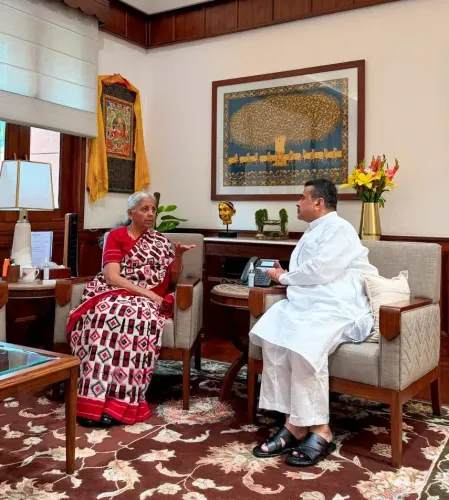
The new policy is also expected to align with commitments made at the Centre. According to the official, Union Finance Minister Nirmala Sitharaman had assured all forms of central assistance to revive the tea and textiles sectors in West Bengal — an assurance attributed to Chief Minister Suvendu Adhikari in remarks made last week. 'The target of the state government now is formulating a comprehensive industrial policy enabling big-ticket investments and higher employment generation at the same time,' the official said.
With the consultative process now in its final stages, West Bengal's new industrial policy is expected to be formally released before the end of August 2025.
Point of View
But the state has a long history of policy announcements that stall at implementation. The five sectors chosen — textiles, auto, IT, steel, heavy electricals — are precisely the ones where competing states like Tamil Nadu, Gujarat, and Telangana have already built deep ecosystems. The real question is whether the 'land for industry' component, always Bengal's most contentious bottleneck, will be resolved in the final policy text. Without credible land allocation and single-window clearance commitments, the ancillary multiplier effect remains theoretical.
NationPress
24 Sept 2026
Frequently Asked Questions
What is West Bengal's new industrial policy about?
West Bengal's new industrial policy, expected to be finalised by August 2025, prioritises sectors with high demand for ancillary industries — such as textiles, automotive, IT, and steel — to simultaneously attract large investments and generate mass employment through supply-chain businesses.
Which sectors are prioritised under the new West Bengal industrial policy?
The five priority sectors are textiles and garments, iron and steel, heavy electrical equipment, the automotive industry, and information technology and electronics. North Bengal's tea, timber, and tourism cluster will also receive dedicated focus.
What is the 11 August Nabanna meeting about?
The meeting on 11 August at the state secretariat Nabanna, chaired by Commerce and Industries Minister Tapas Roy, is a consultative session to finalise the 'land for industry' blueprint. Industrialists and industry association representatives have been invited to submit recommendations.
Why is West Bengal focusing on ancillary industries?
Ancillary-intensive sectors generate employment both within the main industrial unit and across the network of small support businesses that serve it. The state government says this dual effect allows big-ticket investments and MSME growth to happen simultaneously.
What is the Triple-T focus in North Bengal?
Triple-T refers to tea, timber, and tourism — three sectors central to North Bengal's economy. The new industrial policy will give these sectors dedicated emphasis, supported by central assistance that Union Finance Minister Nirmala Sitharaman has reportedly assured for the tea and textiles revival.