Priyanka Gandhi demands Election Commissioner face treason charge
Synopsis
Congress general secretary and Wayanad MP Priyanka Gandhi Vadra escalated opposition rhetoric on September 24, 2026, demanding the Election Commissioner be prosecuted for treason over alleged tampering with India's democratic process — the sharpest such charge levelled at the constitutional body in recent memory.
Key Takeaways
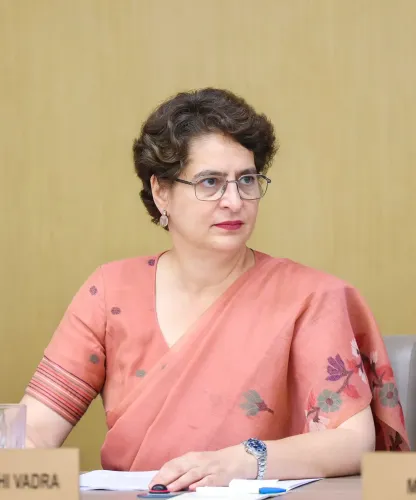
Priyanka Gandhi Vadra , Congress general secretary and Lok Sabha MP from Wayanad , called for the Election Commissioner to be 'prosecuted for treason' in a post on September 24, 2026 .
She stated that anyone who 'plays around with the democratic process' is committing treason against the nation.
The Election Commission of India is a constitutional body under Article 324 , with commissioners protected by security of tenure to ensure independence.
Congress and opposition parties have raised concerns about EVM-VVPAT integrity across multiple election cycles since 2019 , but a treason framing marks a significant escalation.
No formal treason proceedings have ever been initiated against any sitting Election Commissioner in India's history.
The Election Commission had not issued a public response to the statement at the time of publication.
The word 'treason' landed like a thunderclap in Indian politics on Thursday, September 24, 2026, when Congress general secretary Priyanka Gandhi Vadra called for the Election Commissioner of India to be prosecuted for the crime — accusing whoever 'plays around with the democratic process' of betraying the nation itself.
The charge Priyanka Gandhi is making
In an unsparing post on X, Priyanka Gandhi Vadra wrote: 'Anybody who plays around with the democratic process of our elections is committing treason against this nation. The Election Commissioner should be prosecuted for treason.' The statement is categorical — not a call for inquiry, not a demand for resignation, but a demand for criminal prosecution of a sitting constitutional authority. That is a significant escalation in the language of electoral contestation.
The Election Commission of India is a constitutional body established under Article 324 of the Constitution, charged with the superintendence, direction, and control of all elections to Parliament and state legislatures. Calling its leadership criminally culpable — let alone treasonous — breaks well past the conventional register of opposition criticism.
A pattern that has sharpened over seven years
Congress and a broad coalition of opposition parties have raised persistent concerns about the integrity of EVMs and VVPAT verification across multiple election cycles since 2019. Allegations of procedural lapses, claims of institutional partiality, and demands for electoral reform have formed a steady drumbeat through both the 2024 general elections and subsequent state polls. What is new here is the legal framing: treason is among the gravest charges recognised in Indian jurisprudence, and invoking it against the head of a constitutional body is a deliberate, high-voltage choice of words.
Opposition figures across parties have periodically accused the Election Commission of acting in favour of the ruling dispensation — charges the Commission has consistently denied. No formal treason proceedings have ever been initiated against any Election Commissioner. The institution's constitutional insulation, including security of tenure for commissioners, was designed precisely to shield it from political pressure of any kind.
Why the timing matters
Priyanka Gandhi Vadra is not only a senior party strategist — she is a sitting Lok Sabha MP from Wayanad, Kerala, which gives her remarks the standing of a parliamentary voice, not merely a campaign trail salvo. Her post accompanies a video, the contents of which could not be independently verified at the time of publication, but which may clarify the specific conduct she is responding to. The Election Commission has not issued a public response as of filing time.
When an MP frames an election regulator's conduct as treason, the courts, parliamentary committees, and the Commission itself are all put on notice — whether they act on it or not. India's next electoral calendar will test whether this rhetoric becomes a legislative or legal campaign, or remains a political pressure point.
Point of View
Not merely a procedural one. This is consistent with a broader Congress strategy of elevating institutional-integrity concerns to a fundamental rights register ahead of the next electoral cycle. However, using the language of treason against a constitutionally protected body risks being read as political hyperbole that could dilute the credibility of the underlying reform demands. The critical question is whether the accompanying video evidence she references is specific enough to convert this into a legal or parliamentary campaign — or whether it stays at the level of high-decibel political pressure.
NationPress
24 Sept 2026
Frequently Asked Questions
What did Priyanka Gandhi say about the Election Commissioner?
On September 24, 2026, Priyanka Gandhi Vadra posted on X that 'anybody who plays around with the democratic process of our elections is committing treason against this nation' and demanded the Election Commissioner be prosecuted for treason.
Can the Election Commissioner of India be prosecuted for treason?
The Election Commissioner holds a constitutionally protected position under Article 324, with security of tenure similar to a Supreme Court judge. While no individual is above the law in principle, no Election Commissioner has ever faced treason proceedings in India's history, and such a prosecution would be constitutionally and legally unprecedented.
Why is the opposition attacking the Election Commission of India?
Congress and several opposition parties have raised concerns about EVM and VVPAT integrity, and alleged procedural partiality, across multiple election cycles since 2019. These concerns have intensified during periods of political polarisation, though the Election Commission has consistently denied any wrongdoing.
What is the Election Commission of India and what does it do?
The Election Commission of India is a constitutional body established under Article 324, responsible for superintendence, direction, and control of all elections to Parliament and state legislatures. Its commissioners are granted security of tenure to protect institutional independence.
Who is Priyanka Gandhi Vadra in Indian politics?
Priyanka Gandhi Vadra is the General Secretary of the Indian National Congress in charge of Uttar Pradesh, and a Lok Sabha MP elected from Wayanad, Kerala. She is also the daughter of former Prime Minister Rajiv Gandhi and sister of former Congress president Rahul Gandhi.