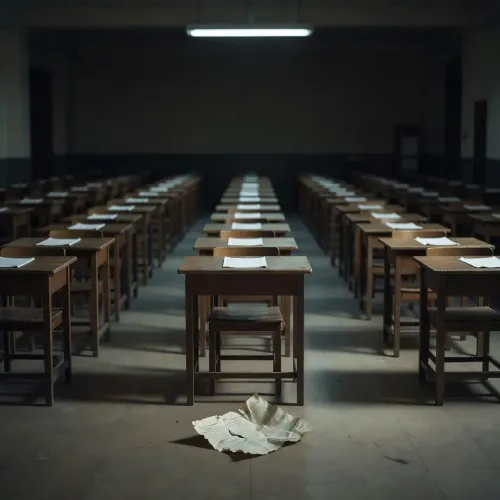
Priyanka Gandhi shares Rahul's charge: 152 paper leaks, zero convictions
Synopsis
Congress general secretary Priyanka Gandhi Vadra amplified Rahul Gandhi's charge that 152 paper leaks over a decade harmed 7.5 crore students, with no convictions, under the #ChhatronKiGoonj campaign — intensifying Opposition pressure on exam accountability.
Key Takeaways
Congress general secretary Priyanka Gandhi Vadra shared the statement on 17 July 2026 under the hashtag #ChhatronKiGoonj .
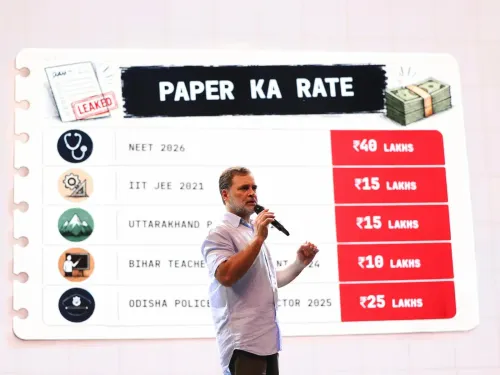
Leader of the Opposition Rahul Gandhi claimed 152 paper leaks occurred in the past 10 years — roughly one per month.
He alleged 7.5 crore students were harmed and that not a single person has been convicted.
The National Testing Agency (NTA) , which conducts NEET and JEE , has faced repeated leak allegations since its establishment in 2017 .
Parliament enacted the Public Examinations (Prevention of Unfair Means) Act, 2024 , but its enforcement track record remains under scrutiny.
The Congress campaign signals sustained Opposition pressure on examination integrity ahead of the 2026-27 exam season .
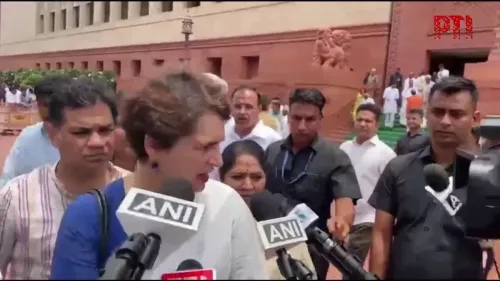
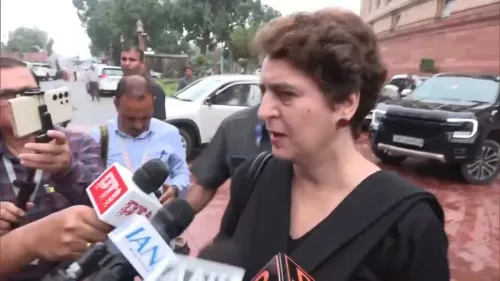
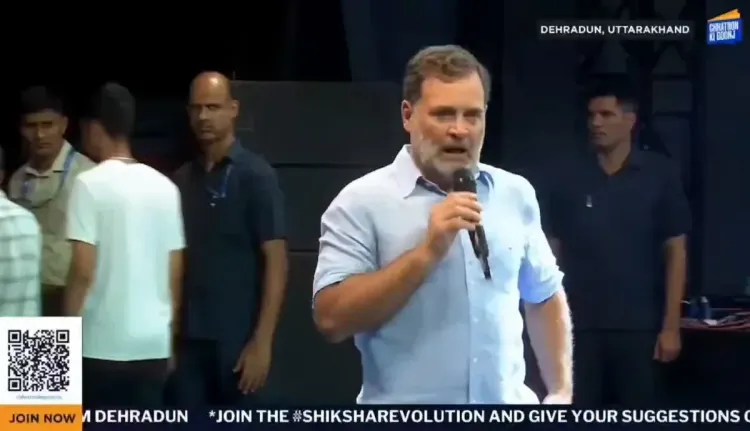
Congress general secretary Priyanka Gandhi Vadra on Friday, 17 July 2026, shared a statement by Leader of the Opposition Rahul Gandhi on her official X account, amplifying his charge that 152 competitive examination paper leaks over the past decade have harmed 7.5 crore students — and that not a single person has been punished for it.
The post, tagged #ChhatronKiGoonj ('Echo of Students'), quotes Rahul Gandhi directly: 'Pichle 10 saal mein kul 152 paper leak hue hain yaani har mahine ek paper leak. Isse 7.5 crore chhatron ko nuksan hua hai. Lekin ek bhi vyakti ko saza nahin hui.' — ('In the last 10 years, a total of 152 paper leaks have occurred, meaning one paper leak every month. This has harmed 7.5 crore students. But not a single person has been punished.') He called this an insult to the youth of the country, their parents, and their hard work and struggle.
Context
Recurring examination paper leaks in competitive tests for higher education admissions and government jobs have been reported across multiple states and at the national level for over a decade. Student protests and legal challenges have followed several high-profile incidents, eroding public confidence in merit-based selection systems.
The hashtag #ChhatronKiGoonj suggests a coordinated Congress campaign around student grievances, with Priyanka Gandhi Vadra using her platform to extend the reach of the party's messaging on examination integrity.
Policy Backdrop
The National Testing Agency (NTA), established in 2017, was tasked with conducting major national entrance examinations including NEET and JEE. Both exams have faced repeated allegations of paper leaks and malpractice, triggering parliamentary debates and judicial scrutiny.
Parliament passed the Public Examinations (Prevention of Unfair Means) Act, 2024, imposing stricter penalties for malpractice in public examinations. The National Education Policy 2020 had also called for an overhaul of examination patterns and greater use of technology to ensure integrity. Critics argue, however, that legislative intent has not translated into enforcement on the ground.
Stakeholders and Impact
The statement directly addresses crores of aspirants preparing for medical, engineering, and government job entrance examinations, as well as their families who invest years of effort and significant financial resources in exam preparation. Each leak incident disrupts examination schedules, triggers re-tests, and prolongs uncertainty for candidates.
The Opposition's framing positions the zero-conviction claim as a failure of accountability under the current administration, sharpening the political contrast ahead of the 2026-27 exam season when enforcement of the 2024 anti-cheating law will come under fresh scrutiny.
What's Next
Attention will now turn to whether the Public Examinations (Prevention of Unfair Means) Act, 2024 yields its first convictions during the ongoing exam cycle, and whether Parliament or the government announces structural reforms to the NTA's oversight mechanisms. Any regulatory action — or continued inaction — is likely to sustain this as a live political issue through the academic year.
Point of View
The Congress is moving beyond reactive criticism toward a structured student-outreach campaign — a pattern that has proven electorally useful in states with large aspirant populations. The 'zero convictions' framing is the sharpest edge of the attack, because it targets not just the leaks but the enforcement machinery, making it harder for the government to deflect by citing the 2024 law alone. If the NTA or the government does not produce visible accountability outcomes during the 2026-27 cycle, the Opposition's narrative will only gain traction. The broader arc here is a contest over who credibly speaks for India's examination-going middle class — a constituency that cuts across caste and regional lines.
NationPress
16 Oct 2026
Frequently Asked Questions
How many paper leaks have happened in India in the last 10 years according to Rahul Gandhi?
According to a statement by Rahul Gandhi shared by Priyanka Gandhi Vadra on 17 July 2026 , 152 paper leaks occurred in the past 10 years, amounting to roughly one leak per month. These figures are the Congress party's assertion and have not been independently verified from public records.
How many students were affected by paper leaks in India?
Rahul Gandhi's statement, as shared by Priyanka Gandhi Vadra, claims that 7.5 crore students have been harmed by paper leaks over the past decade. This is the Opposition's stated figure; official government data on total affected students has not been separately confirmed.
What is the Public Examinations (Prevention of Unfair Means) Act 2024?
The Public Examinations (Prevention of Unfair Means) Act, 2024 is a law passed by Parliament to impose stricter penalties for malpractice, cheating, and paper leaks in public examinations. Its enforcement during the 2026-27 exam season is being closely watched.
What is #ChhatronKiGoonj?
#ChhatronKiGoonj , meaning 'Echo of Students,' is a Congress campaign hashtag used in posts addressing student grievances related to examination paper leaks and the lack of accountability in the exam system.
What is the National Testing Agency (NTA) and why is it controversial?
The National Testing Agency (NTA) was established in 2017 to conduct major national entrance exams including NEET and JEE . It has faced repeated allegations of paper leaks and malpractice, prompting parliamentary debates, court cases, and calls for structural reform.