Bengaluru-Mumbai Express launches: 1,210 km in 24 hrs, fares from ₹750
Synopsis
Indian Railways has added a direct bi-weekly link between Bengaluru and Mumbai, covering 1,210 km in just over 24 hours with 15 stops through North Karnataka and western Maharashtra. With fares starting at ₹750 and Divyangjan-friendly coaches, the new service directly addresses a connectivity gap that commuters, students, and businesses on this corridor have flagged for years.
Key Takeaways
The Bengaluru-Mumbai Express made its inaugural run on 17 May 2025 , operated by South Western Railway (SWR) .
Regular service begins from Bengaluru on 23 May and from Mumbai on 24 May , running bi-weekly under train numbers 16553/16554 .
The train covers 1,210 km in 24 hours and 5 minutes , halting at 15 stations including Hubballi, Belagavi, and Pune.
Fares are set at ₹750 (Sleeper), ₹1,880 (AC 3 Tier), and ₹2,575 (AC 2 Tier).
The rake comprises 17 LHB coaches , including a Divyangjan-friendly compartment .
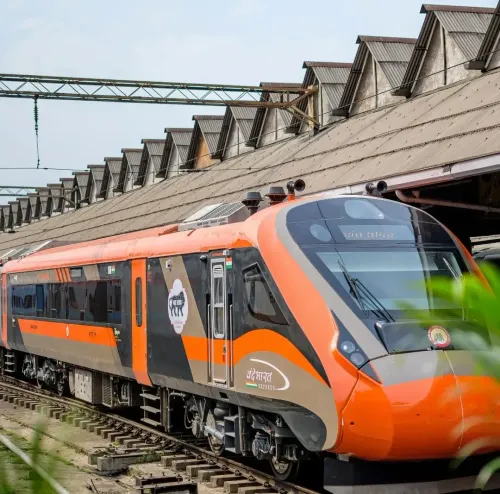
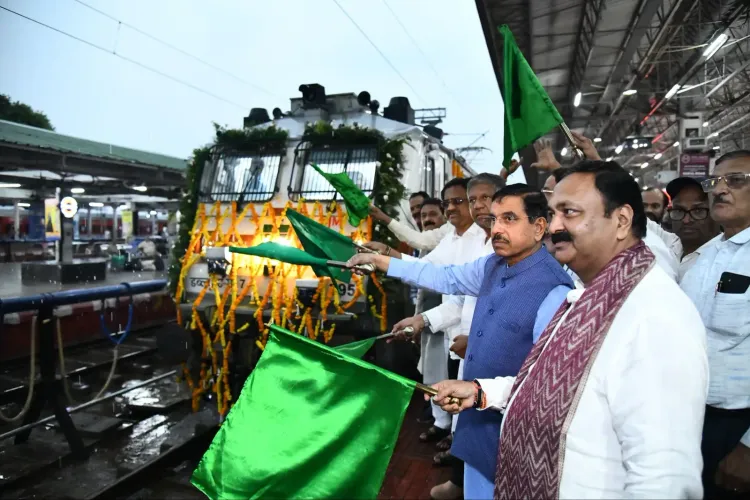
The Bengaluru-Mumbai Express commenced its inaugural run on Sunday, 17 May, linking Karnataka and Maharashtra with a new bi-weekly rail service that covers 1,210 km in 24 hours and 5 minutes. Operated by the South Western Railway (SWR) zone, the train is designed to ease travel for passengers moving between Bengaluru, the Hubballi-Dharwad region, Belagavi, Pune, and Mumbai for business, education, tourism, and employment.
Inaugural Run and Regular Schedule
The inaugural one-way special service ran under train number 06557 between Sir M. Visvesvaraya Terminal (SMVT), Bengaluru and Lokmanya Tilak Terminus, Mumbai. Regular operations will begin from Bengaluru on 23 May, with the Mumbai leg commencing on 24 May. In regular service, the train will carry numbers 16553/16554.
Train No. 16553 departs SMVT Bengaluru at 8.35 pm every Saturday and Tuesday, arriving at Lokmanya Tilak Terminus at 8.40 pm the following day. In the return direction, Train No. 16554 departs Lokmanya Tilak Terminus at 11.15 pm every Sunday and Wednesday, reaching SMVT Bengaluru at 10.30 pm on Monday and Thursday, respectively.
Stations and Coaches
The Express will halt at 15 stations en route: Tumakuru, Davangere, SSS Hubballi, Dharwar, Belagavi, Miraj, Sangli, Karad, Satara, Lonand, Pune, Lonavala, Karjat, Kalyan, and Thane. The rake consists of 17 LHB coaches — one AC 2-tier, four AC 3-tier, six Sleeper class, four general second class, one second class luggage-cum-brake van with a Divyangjan-friendly compartment, and one luggage-cum-generator car-cum-brake van.
Ticket Fares
Fares for the SMVT Bengaluru–Lokmanya Tilak Terminus route have been set at ₹750 for Sleeper Class, ₹1,880 for AC 3 Tier, and ₹2,575 for AC 2 Tier.
What Officials Said
SWR Chief Public Relations Officer Dr Manjunath Kanamadi said the new service 'is expected to greatly benefit passengers travelling for business, education, tourism and employment purposes between Bengaluru, North Karnataka and the Mumbai region,' adding that it 'will also improve rail connectivity to important commercial and cultural centres en route.'
Broader Significance
The corridor connects two of India's most economically active cities, and the inclusion of North Karnataka stops — particularly Hubballi-Dharwad and Belagavi — addresses a longstanding demand from the region's business and student communities. This comes amid a broader push by Indian Railways to add capacity on high-demand intercity corridors ahead of the summer travel peak. The bi-weekly frequency leaves room for expansion if ridership warrants it.
Point of View
But bi-weekly frequency is a cautious start for one of India's busiest intercity demand corridors. The inclusion of Hubballi-Dharwad and Belagavi is politically and economically significant for a region that has long argued its rail connectivity lags its economic weight. The real measure of success will be load factors in the first three months — if occupancy runs high, pressure will mount to upgrade to daily service. Indian Railways' pattern on new corridors suggests frequency expansion follows demand, but rarely ahead of it.
NationPress
26 Sept 2026
Frequently Asked Questions
When does the Bengaluru-Mumbai Express start regular service?
Regular service begins from Bengaluru on 23 May 2025 and from Mumbai on 24 May 2025. The inaugural one-way run took place on 17 May 2025 under a special train number.
What are the ticket fares for the Bengaluru-Mumbai Express?
Fares for the full SMVT Bengaluru to Lokmanya Tilak Terminus route are ₹750 for Sleeper Class, ₹1,880 for AC 3 Tier, and ₹2,575 for AC 2 Tier.
Which stations does the Bengaluru-Mumbai Express stop at?
The train halts at 15 stations: Tumakuru, Davangere, SSS Hubballi, Dharwar, Belagavi, Miraj, Sangli, Karad, Satara, Lonand, Pune, Lonavala, Karjat, Kalyan, and Thane.
How long does the Bengaluru-Mumbai Express take to complete the journey?
The train covers the 1,210 km distance between SMVT Bengaluru and Lokmanya Tilak Terminus in 24 hours and 5 minutes.
On which days does the Bengaluru-Mumbai Express run?
Train No. 16553 departs Bengaluru every Saturday and Tuesday. The return service, Train No. 16554, departs Mumbai every Sunday and Wednesday, making it a bi-weekly service in each direction.