Will K'taka Minister's Request for Vande Bharat Sleeper Express Train Be Approved?
Synopsis
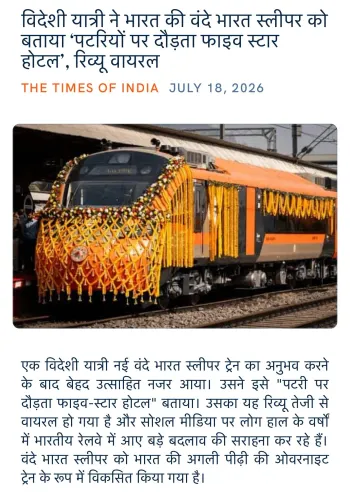
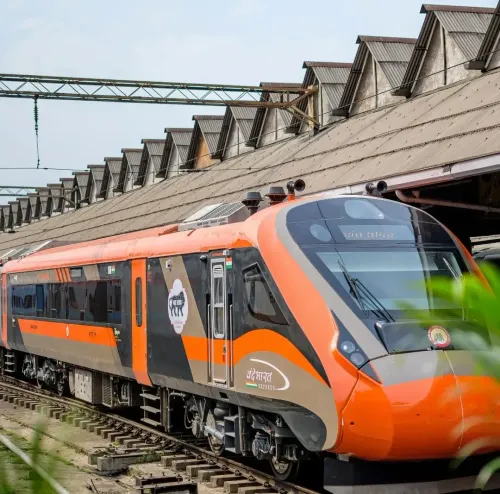
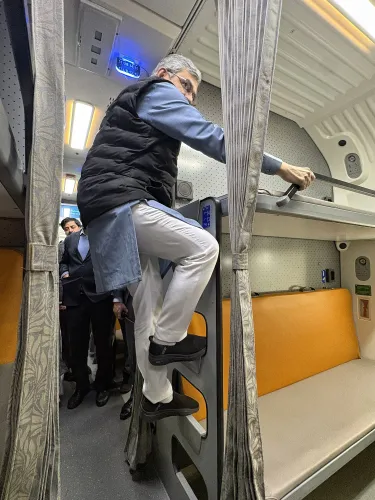
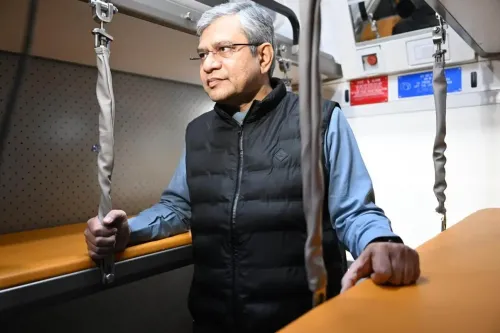
In a significant move to enhance connectivity, Karnataka's Infrastructure Development Minister M.B. Patil has appealed to Union Railway Minister Ashwini Vaishnaw for a Vande Bharat Sleeper Express train. This initiative aims to streamline travel between Bengaluru and Vijayapura, promising to bolster economic growth and social benefits across central Karnataka.
Key Takeaways
Patil has approached Ashwini Vaishnaw for a Vande Bharat Sleeper Express .
Proposal includes a high-speed rail corridor between Bengaluru and Mumbai .
Current travel time between Bengaluru and Vijayapura is 15-16 hours.
The goal is to reduce travel time to about 10 hours.
Investment of over Rs 4,000 crore for infrastructure enhancement.
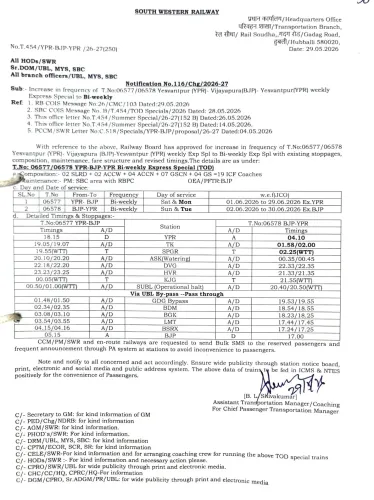
Bengaluru, Feb 8 (NationPress) Karnataka's Infrastructure Development Minister M.B. Patil has formally approached Union Railway Minister Ashwini Vaishnaw, requesting approval for a Vande Bharat Sleeper Express train connecting Bengaluru to Vijayapura, as well as a high-speed rail corridor linking Bengaluru and Mumbai, along with a daily special train service on the Bengaluru-Vijayapura route.
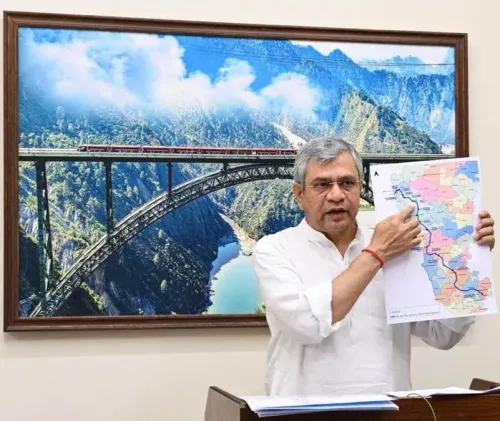
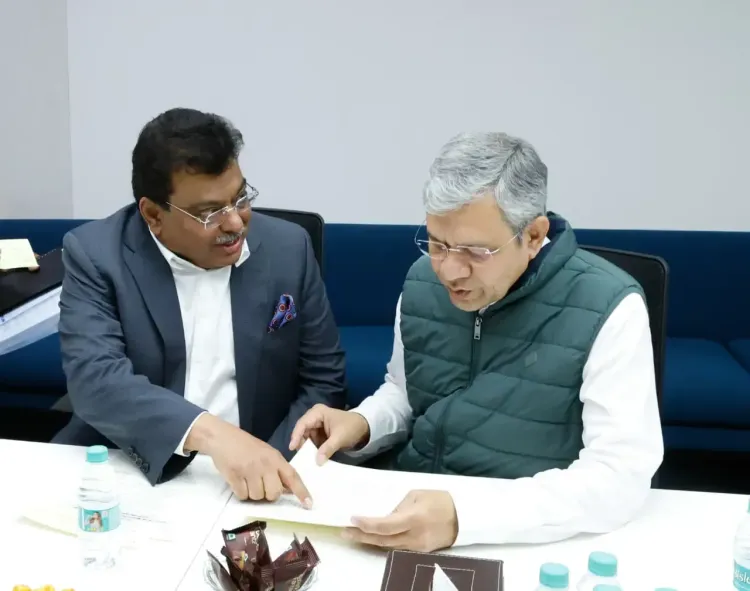
Following the launch of an electronics manufacturing facility at the Hi-Tech Hardware Park in Bagalur, Minister Patil met with Vaishnaw and presented his proposals. The Railway Minister assured him that the requests would be considered favorably.
Patil emphasized the strategic importance of connecting Bengaluru, known as the country's technology hub, with Mumbai, the financial center, through a modern and efficient transportation network. He suggested extending the recently announced high-speed rail corridor from Mumbai to Pune to include Bengaluru, to which Vaishnaw responded positively.
Noting that the current distance of approximately 530 km between Bengaluru and Vijayapura takes nearly 15 to 16 hours by train, Patil proposed reducing the travel time to around 10 hours. He recommended fewer stops between Bengaluru and Hubballi, with trains operating via the Hubballi and Gadag bypasses, along with a Vande Bharat Express service on this route.
Additionally, he requested the launch of a daily special train service between Bengaluru and Vijayapura. In his meeting, Patil highlighted that all three services would significantly enhance social, industrial, and economic conditions in several districts across central and northern Karnataka. The Railway Minister responded positively to each of these requests.
Attending the meeting were senior railway officials, including Ajay Sharma, General Manager of South Western Railway.
Earlier, after inaugurating the manufacturing facility, Minister Patil stated that this new unit significantly enhances India’s capacity to design and produce high-reliability electronics for crucial applications.
He explained that the facility is specifically designed for essential sectors such as defense, aerospace, and automotive electronics, where quality, precision, and reliability are paramount. With state-of-the-art manufacturing lines, clean rooms, and a top-tier environmental stress-testing laboratory, the unit aims to operate at the high-value end of electronics manufacturing.
Patil also mentioned that the state is investing over Rs 4,000 crore to ensure a steady supply of Cauvery water to industrial areas in and around Bengaluru, in addition to ongoing investments in roads, power, and logistics to support long-term reliability for manufacturing units.
Point of View
The proposal for the Vande Bharat Sleeper Express train highlights an essential push for enhanced infrastructure in India. It reflects the government's commitment to improving transportation networks, which are vital for economic growth and social integration. By linking major cities like Bengaluru and Mumbai, this initiative could significantly benefit various sectors, thereby fostering regional development.
NationPress
24 Sept 2026
Frequently Asked Questions
What is the purpose of the Vande Bharat Sleeper Express train?
The Vande Bharat Sleeper Express train aims to improve connectivity between Bengaluru and Vijayapura, significantly reducing travel time and enhancing transportation efficiency.
Who are the key figures involved in this proposal?
The key figures include Karnataka's Infrastructure Development Minister M.B. Patil and Union Railway Minister Ashwini Vaishnaw.
What are the expected benefits of this train service?
The expected benefits include social, industrial, and economic growth across various districts in central and northern Karnataka.
How much time will the new route save for travelers?
The new route aims to reduce the travel time from the current 15-16 hours to approximately 10 hours.
What investments are being made in infrastructure in Karnataka?
The state is investing over Rs 4,000 crore to extend assured Cauvery water supply to industrial areas and improve roads, power, and logistics.