RSS Chief Bhagwat in Nagpur: 'We are part of nature, not its masters'
Synopsis
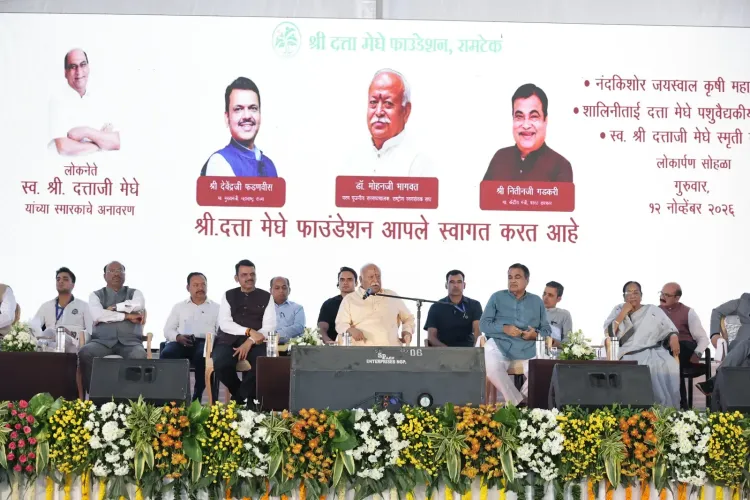
At a memorial event in Ramtek, Nagpur, RSS Chief Mohan Bhagwat told an audience that included Maharashtra CM Devendra Fadnavis and Union Minister Nitin Gadkari that humanity is not nature's master but its dependent — and that India's traditional knowledge systems, from the One Health approach to indigenous cattle breeds, hold answers the world is only now discovering.
Key Takeaways
RSS Chief Mohan Bhagwat spoke on 12 November at a memorial event for the late Datta Meghe in Ramtek, Nagpur .
Bhagwat declared: ‘We are not the owners of nature, but a part of it,’ calling for voluntary self-restraints to protect biodiversity.
He endorsed the global ‘One Health’ framework, arguing India’s traditional culture had already embedded it centuries ago.
Bhagwat criticised India’s historical shift to Jersey and foreign cattle breeds at the expense of indigenous livestock.
He called for development anchored in Atmanirbharta and traditional wisdom, positioning India as a guide for global ecological progress.
Maharashtra CM Devendra Fadnavis and Union Minister Nitin Gadkari were present at the event.
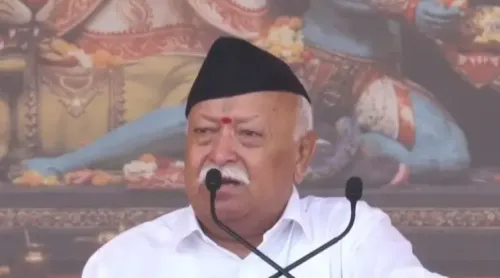
Rashtriya Swayamsevak Sangh (RSS) Chief Mohan Bhagwat on Thursday, 12 November issued a pointed call for ecological self-restraint, asserting that humanity must recognise its dependence on nature and impose voluntary limits on itself to safeguard biodiversity and ecological balance. Speaking in Ramtek, Nagpur district, Bhagwat urged policymakers and society to draw upon India's traditional knowledge systems to build a self-reliant, ecologically balanced model of development.
The Setting and Key Attendees
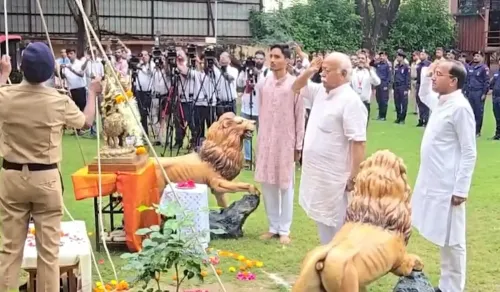
Bhagwat was addressing a gathering at the unveiling of a memorial for the late veteran public leader Datta Meghe in Ramtek. The event also marked the inauguration of the Nandkishor Jaiswal Agricultural College and the Shalinitai Datta Meghe Veterinary Hospital. Maharashtra Chief Minister Devendra Fadnavis, Union Minister Nitin Gadkari, and state ministers Chandrashekhar Bawankule, Ashish Jaiswal, and Pankaj Bhoyar were among those present.
Bhagwat on Human Dependence on Nature
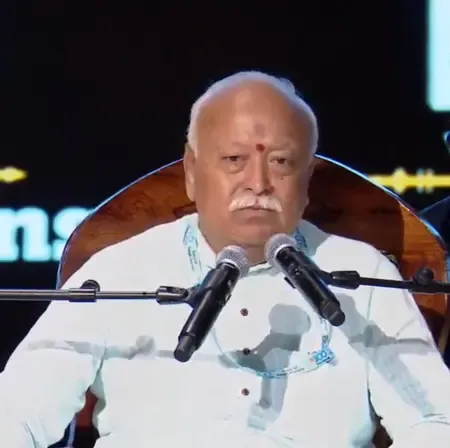
In remarks widely seen as a subtle caution to the state government regarding unchecked development, the RSS Chief emphasised the interdependence of all living beings. “We used to believe that we are the masters of nature. However, we are a part of this universe along with nature, which makes us dependent on it and interdependent on one another,” Bhagwat said.
“Humans will be happy only when biodiversity and ecology thrive, and for that to happen, humans must impose certain restrictions on themselves. We are not the owners of nature, but a part of it,” he added. The statement encapsulates what analysts describe as a growing ‘ecological nationalism’ strand within the RSS’s ideological discourse — one that connects environmental stewardship to cultural identity rather than framing it purely as a policy question.
The 'One Health' Framework and India's Traditional Knowledge
Drawing on his background as a veterinary doctor, Bhagwat highlighted the global emergence of the ‘One Health’ framework — which recognises the interconnection between human, animal, and environmental health. He argued this approach has been embedded in Indian culture for centuries, well before it gained international scientific acceptance.
“Everyone experiences the fact that if the environment is not healthy, we cannot stay healthy. If the health of animals deteriorates, it not only affects income, but their diseases are also transmitted to humans,” he warned. “The world today is learning this through trial and error, whereas our ancestors built our way of life through hard-earned experiences.”
Notably, this comes amid renewed global attention on zoonotic disease transmission following the COVID-19 pandemic, lending fresh resonance to Bhagwat’s remarks on animal-human health linkages.
India's Indigenous Livestock and the Jersey Cow Debate
Echoing remarks made earlier by Union Minister Nitin Gadkari regarding Gir cows, Bhagwat lamented what he described as India’s historical neglect of its native livestock in favour of foreign breeds. “We had an indigenous breed whose capacity we could have enhanced, yet we failed to do so. We brought in Jersey and foreign cows instead,” he said.
He pointed out that Indian cattle were historically exported abroad to improve foreign dairy yields — noting that breeds like the Holstein reportedly carry Brahman cattle lineage — while India overlooked its own genetic heritage. Citing Diwali traditions such as Vasubaras (dedicated to cattle) and the crafting of Govardhan from cow dung, he remarked that practices once dismissed globally are now gaining scientific validation.
Call for Atmanirbhar, Ecology-Anchored Development
Concluding his address, Bhagwat called for a development paradigm rooted in Atmanirbharta (self-reliance) and traditional wisdom. “If we develop based on what we already possess, we will not have to depend on the world,” he said, adding that India carries a responsibility to offer the world a holistic model of progress where every nation’s growth contributes to global well-being.
The speech signals that environmental messaging is increasingly central to the RSS’s public discourse, and observers will watch whether these remarks translate into policy pressure on the Maharashtra government amid ongoing debates over industrial and infrastructure clearances in ecologically sensitive zones.
Point of View
It reads as a calibrated nudge toward ecological accountability at a moment when the state faces scrutiny over infrastructure clearances in sensitive regions. The ‘One Health’ invocation is shrewd: it links a globally credible scientific framework to indigenous practice, reclaiming environmental high ground for a cultural-nationalist narrative. The indigenous cattle argument, echoing Gadkari, suggests a coordinated messaging push rather than a one-off remark. What remains to be seen is whether this ecological rhetoric will translate into institutional pressure — or remain at the level of symbolism.
NationPress
12 Nov 2026
Frequently Asked Questions
What did RSS Chief Mohan Bhagwat say about nature and humanity?
Bhagwat said humans are not the masters of nature but a part of it, and must impose voluntary self-restraints to protect biodiversity and ecological balance. He made the remarks at a public event in Ramtek, Nagpur, on 12 November 2026.
Where and why did Bhagwat deliver this speech?
Bhagwat spoke at the unveiling of a memorial for the late veteran public leader Datta Meghe in Ramtek, Nagpur district. The event also included the inauguration of the Nandkishor Jaiswal Agricultural College and the Shalinitai Datta Meghe Veterinary Hospital.
What is the 'One Health' framework Bhagwat referred to?
The One Health framework is a globally recognised scientific approach that links human, animal, and environmental health as interdependent. Bhagwat argued that this concept has long been embedded in Indian cultural traditions, predating its adoption by modern science.
What did Bhagwat say about India's indigenous cattle breeds?
Bhagwat lamented that India neglected its native livestock in favour of imported breeds like Jersey cows. He noted that Indian cattle were historically taken abroad to improve foreign dairy yields, while India failed to develop its own genetic wealth.
Who attended the Ramtek event alongside Bhagwat?
Maharashtra Chief Minister Devendra Fadnavis, Union Minister Nitin Gadkari, and state ministers Chandrashekhar Bawankule, Ashish Jaiswal, and Pankaj Bhoyar were present at the event in Ramtek, Nagpur.