Bhopal farmer protest Day 3: Police chief meets delegation, CM forms minister panel
Synopsis
Bhopal’s farmer agitation is no longer just a local traffic headache — with bare-chested protesters breaching bus barricades and the opposition piling on, Chief Minister Mohan Yadav’s ministerial committee now faces a hard deadline to deliver. The three core demands — full moong procurement, MSP legal guarantee, and e-token reform — echo unresolved national fault lines that have tripped governments before.
Key Takeaways
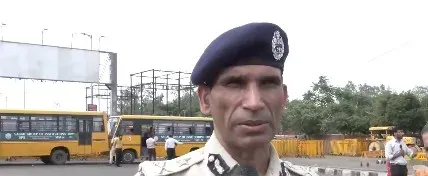
Bhopal Police Commissioner Sanjay Kumar met a farmer delegation on 29 July as the protest entered its third day .
Farmers submitted a memorandum demanding 100% moong procurement , a legal MSP guarantee , and reform of the e-token system .
Kisan Sangh members continued their sit-in at RRL Square ; police deployed a four-layer bus barricade near the CM’s residence to halt a march.
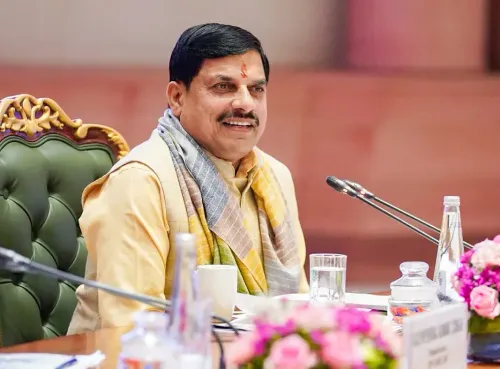
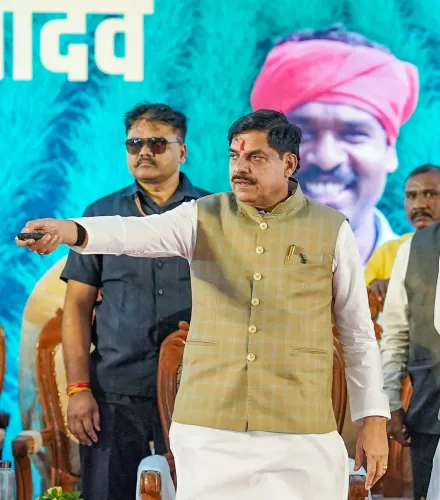
Chief Minister Mohan Yadav announced a ministerial committee to hold talks with the agitating farmers.
Leader of Opposition Umang Singhar and the Congress criticised the government, calling the committee insufficient without concrete action.
Bhopal Police Commissioner Sanjay Kumar on Wednesday, 29 July met a delegation of protesting farmers as their agitation over moong procurement, the e-token system, and a legal guarantee for Minimum Support Price (MSP) entered its third consecutive day in Madhya Pradesh's state capital. Heavy police deployment remained in place across Bhopal as more supporters joined the sit-in through the day.
Key Developments
The farmers submitted a formal memorandum listing their demands during the meeting with Commissioner Kumar. He assured the delegation that the administration was committed to resolving issues through dialogue while maintaining law and order. Traffic diversion routes were activated across the city, with details shared via newspapers and social media, and a multi-layer police presence deployed at key junctions.
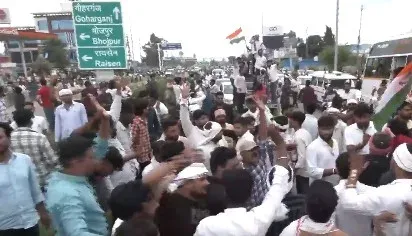
Members of the Kisan Sangh continued their sit-in at RRL Square, where they have been camping since Tuesday night. When a group of farmers attempted to march towards the Chief Minister's residence near Veer Savarkar Setu at the AMPRI junction, police halted them with a four-layer barricade of buses. Some protesters climbed the barricades before coming down after police intervention, subsequently sitting on the road and raising slogans against the state government. Several farmers protested bare-chested to underscore the urgency of their demands.
What the Government Said
Chief Minister Mohan Yadav on Wednesday morning announced the formation of a ministerial committee to hold talks with the agitating farmers. “We welcome constructive suggestions from farmers. The committee will discuss their issues, but care should also be taken that the general public is not inconvenienced,” Yadav said.
Commissioner Kumar, speaking to reporters, said police were in constant dialogue with the protesters. “Our priority is to maintain peace while facilitating dialogue. We appeal to everyone to cooperate so that law and order is maintained,” he said, adding that diversion points had been set up on both sides of the protest route with adequate local police personnel deployed.
Opposition and Congress Response
Leader of Opposition Umang Singhar criticised the state government, arguing that forming a committee alone would not resolve the farmers’ problems. The Indian National Congress (INC) separately demanded 100 per cent procurement of moong, improvement in fertiliser distribution, and an early resolution of all pending farmer-related issues.
Core Demands and What’s Next
The protesters’ three principal demands are: full procurement of moong at fair prices, scrapping or reform of the e-token system, and a statutory legal guarantee for MSP — a demand that mirrors the national-level farmer agitation seen in previous years. Notably, this is the third straight day of the stir, and the addition of fresh supporters signals that the movement could widen if the ministerial committee does not produce tangible outcomes quickly. The committee’s first round of talks is expected to be a key indicator of whether the government can de-escalate the situation.
Point of View
But it risks being perceived as delay rather than resolution — particularly when protesters are already breaching barricades on Day 3. The three demands at the heart of this agitation are not new: moong procurement shortfalls and the e-token system have been flashpoints in Madhya Pradesh for multiple seasons, and the MSP legal guarantee is a demand the Centre has deferred since the 2020-21 farm law protests. If the Yadav government’s committee does not produce a credible timeline, the protest has the structural conditions to escalate. The opposition’s early and vocal entry also suggests this will become a political pressure point ahead of any upcoming electoral cycle.
NationPress
29 Jul 2026
Frequently Asked Questions
Why are farmers protesting in Bhopal?
Farmers, led by the Kisan Sangh, are protesting over three main demands: 100 per cent procurement of moong at fair prices, a legal guarantee for Minimum Support Price (MSP), and reform or removal of the e-token system used in procurement. The agitation began earlier this week and entered its third day on 29 July 2025.
What action has the Madhya Pradesh government taken?
Chief Minister Mohan Yadav announced the formation of a ministerial committee on Wednesday morning to hold dialogue with the protesting farmers. Police Commissioner Sanjay Kumar also met a farmer delegation and received their memorandum of demands, assuring them of the administration’s commitment to resolving issues through talks.
What is the e-token system and why are farmers opposed to it?
The e-token system is a digital queuing and registration mechanism used in Madhya Pradesh for government procurement of crops. Farmers argue it creates barriers to timely and full procurement of their produce, particularly moong, and have demanded its reform or scrapping as part of their protest.
Who is leading the opposition response to the protest?
Leader of Opposition Umang Singhar criticised the state government, saying a committee alone would not solve farmers’ problems. The Indian National Congress also demanded 100 per cent moong procurement, better fertiliser distribution, and early resolution of pending farmer issues.
What happened when farmers tried to march to the Chief Minister’s residence?
Police stopped the marching farmers near Veer Savarkar Setu at the AMPRI junction using a four-layer barricade made of buses. Some protesters climbed the barricades but came down after police intervention and subsequently sat on the road, raising slogans against the state government.