Bhupender Yadav orders zero-tolerance action on NCR polluting industries
Synopsis
Environment Minister Bhupender Yadav has put NCR’s polluting industries on notice, invoking a Zero-Tolerance policy and directing State Pollution Control Boards to act on identified hotspots. With over 25 review meetings already held and a follow-up assessment due in September, the Centre is signalling that enforcement — not just communication — will define this winter’s air quality push.
Key Takeaways
Bhupender Yadav directed zero-tolerance action against non-conforming polluting industries in the NCR on 3 September .
State Pollution Control Boards have been asked to focus on identified air pollution hotspots and prepare practical mitigation plans.
The Minister has conducted more than 25 meetings over the past year to review municipal-level air quality management plans.
IEC activities must be coordinated across states; enforcement and implementation flagged as equally critical.
A Union Minister-level review meeting is scheduled for September to assess state progress.
The meeting included senior officials from Delhi , Haryana , Uttar Pradesh , Punjab , and Rajasthan .
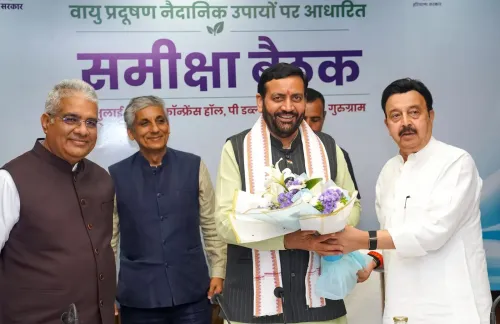
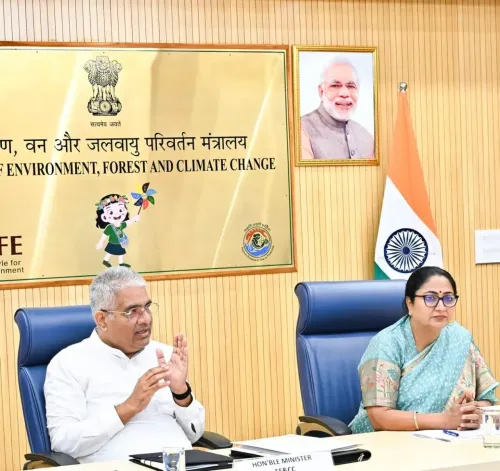
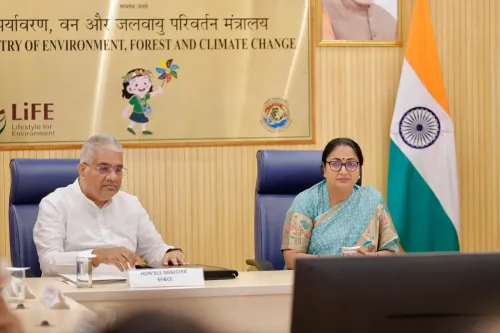
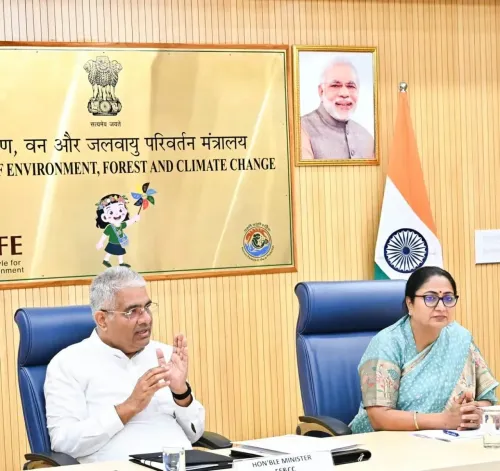
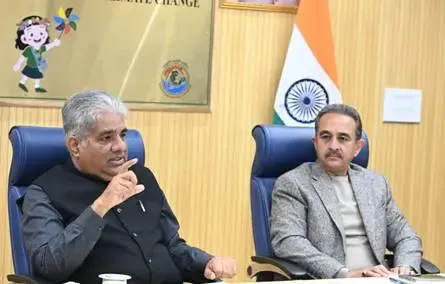
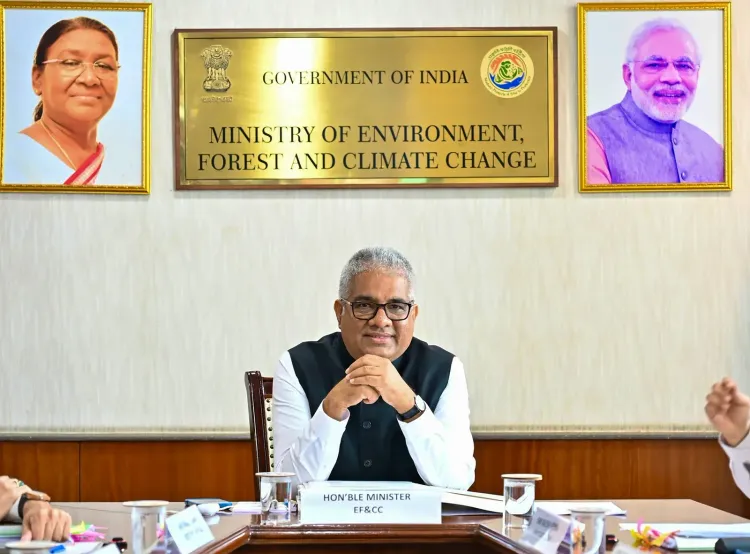
Union Minister for Environment, Forest and Climate Change Bhupender Yadav on Thursday, 3 September directed that ‘non-conforming polluting industries’ in the National Capital Region (NCR) must face firm action under a strict Zero-Tolerance policy. The directive came as Yadav reviewed comprehensive air quality management plans submitted by NCR state governments, with a focus on stakeholder engagement and behavioural change communication.
Key Directives from the Review
Yadav underlined the need to fix clear accountability for violations and defaults, according to an official statement. He stressed that State Pollution Control Boards must concentrate on identified air pollution hotspots and prepare practical, on-ground action plans for their mitigation. The Minister made clear that Information, Education, and Communication (IEC) activities alone would not suffice — effective implementation and enforcement remain non-negotiable.
Coordinated Stakeholder Push
The Minister reviewed IEC activities proposed by different states and emphasised that these must be executed in a coordinated manner to maximise outreach and impact. Welcoming the detailed action plans prepared by NCR state governments to ensure citizen participation, Yadav highlighted specific state-level initiatives and urged other states to adopt and replicate best practices. He stressed that coordinated stakeholder engagement is essential to make anti-pollution efforts more effective.
Over 25 Meetings in a Year
Yadav has conducted more than 25 meetings over the past year to review individual air quality management plans of municipal bodies across the NCR and assess progress against targets. These sessions have resulted in the crystallisation of individual state action plans encompassing a range of on-ground measures to tackle identified sources of air pollution, in addition to the stakeholder engagement framework reviewed on Thursday.
Centre’s Assurance and Next Steps
The Minister informed state governments that a follow-up review meeting at the Union Minister level would be held in September to assess progress on initiatives and actions taken by states. He reassured NCR state governments that the Centre would extend full support to their air quality management efforts.
The meeting was attended by the Secretary, Ministry of Environment, Forest and Climate Change (MoEFCC), the Chairman of the Commission for Air Quality Management (CAQM), and other senior officials. State representation included Environment Ministers and Secretaries, Chairpersons and Member Secretaries of the Pollution Control Boards of Delhi, Haryana, and Uttar Pradesh, along with the Agriculture Minister and Agriculture Secretary and the Environment Secretary of Punjab, and senior officials from Rajasthan. All eyes are now on the September review, which will test whether the Centre’s zero-tolerance posture translates into measurable improvements in NCR air quality before the onset of the winter smog season.
Point of View
Yet Delhi consistently ranks among the world’s most polluted capitals once October arrives. The real question is whether the accountability framework being built through 25-plus review meetings will produce enforceable consequences for violating industries, or remain a coordination exercise. Notably, the meeting’s composition — spanning five states and the CAQM — reflects the structural complexity of NCR pollution governance, where no single authority holds full jurisdiction. Until enforcement data — closures, penalties, prosecutions — is made public, the zero-tolerance pledge will be difficult to verify.
NationPress
3 Sept 2026
Frequently Asked Questions
What did Bhupender Yadav direct regarding NCR polluting industries?
Yadav directed that non-conforming polluting industries in the NCR must be dealt with firmly under a Zero-Tolerance policy, announced during a review of air quality management plans on 3 September. He also asked State Pollution Control Boards to focus on identified pollution hotspots.
Which states were represented at the NCR air pollution review meeting?
The meeting included Environment Ministers and senior officials from Delhi, Haryana, Uttar Pradesh, Punjab, and Rajasthan, along with the Secretary of MoEFCC and the Chairman of the Commission for Air Quality Management (CAQM).
How many review meetings has Yadav held on NCR air quality?
Yadav has conducted more than 25 meetings over the past year to review individual air quality management plans of municipal bodies in the NCR and assess action taken against targets.
What is the next step after Thursday’s review?
A follow-up review meeting at the Union Minister level is scheduled for September to assess the progress of initiatives and actions taken by NCR states. The Centre has assured full support to state efforts.
Why is stakeholder engagement being emphasised alongside enforcement?
The Minister stressed that IEC activities — information, education, and communication campaigns — must be coordinated across states for greater impact, but also made clear that enforcement and implementation are equally critical and cannot be replaced by communication efforts alone.