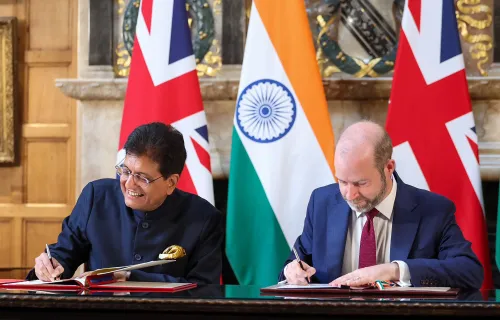
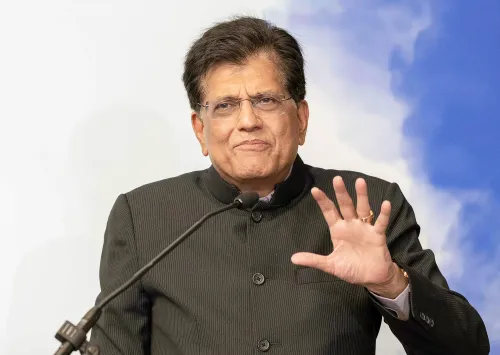
Bhupender Yadav Hails India-UK FTA Coming Into Force
Synopsis
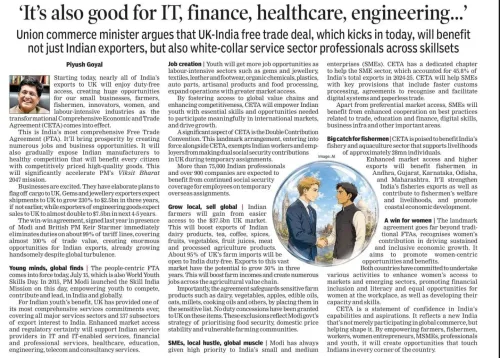
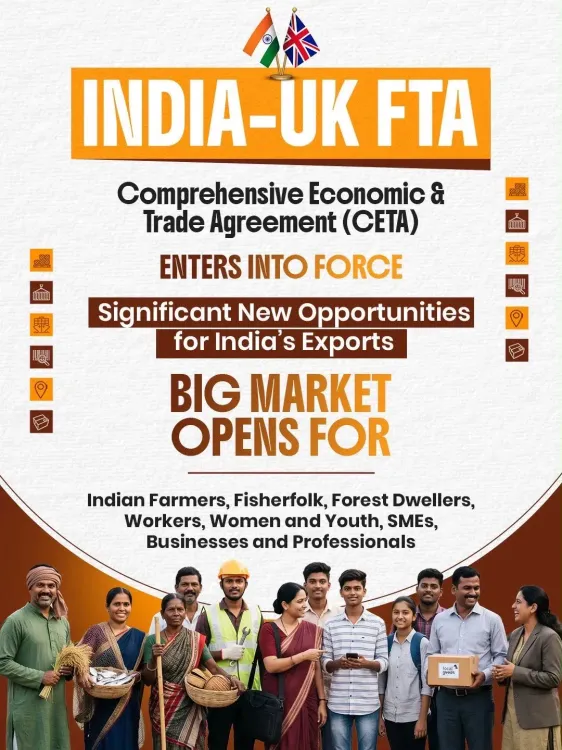
The India-UK Free Trade Agreement entered into force on 15 July 2026. Union Environment Minister Bhupender Yadav hailed the deal, which offers zero-duty access for 99% of Indian exports including textiles, leather, pharmaceuticals and MSME goods, while also benefiting Indian professionals in the UK.
Key Takeaways
The India-UK Free Trade Agreement came into force on 15 July 2026 , according to Union Minister Bhupender Yadav .
The deal provides zero-duty market access for 99% of Indian exports to the United Kingdom.
Key beneficiary sectors include textiles, leather, engineering goods, food processing, pharmaceuticals , and MSMEs .
The agreement also includes provisions offering substantial benefits for Indian professionals working or seeking to work in the UK .
Negotiations were formally launched in January 2022 and the deal is framed as part of the government's Viksit Bharat (Developed India by 2047) agenda.
The FTA is part of India's broader bilateral trade strategy that has also produced agreements with the UAE and Australia .
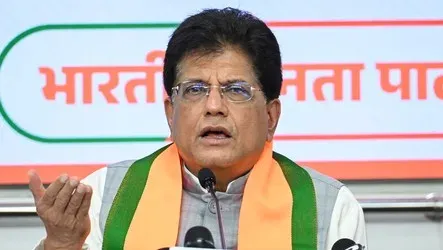
Union Environment Minister Bhupender Yadav on Wednesday, 15 July 2026 welcomed the entry into force of the India-UK Free Trade Agreement (FTA), calling it a significant milestone on the path to a Viksit Bharat (Developed India) as envisioned by Prime Minister Narendra Modi.
Context
Posting on X, Yadav described the agreement as one that 'unlocks immense opportunities for India's labour-intensive sectors by providing zero-duty market access for 99% of Indian exports.' The sectors he cited include textiles, leather, engineering goods, food processing, pharmaceuticals, and MSMEs. He also noted that the treaty delivers 'substantial benefits for Indian professionals in the UK,' framing the deal as an expression of 'people-centric diplomacy.'
Policy Backdrop
Negotiations for the India-UK FTA were formally launched in January 2022 following a virtual summit between the two governments. The talks covered goods, services, investment, and professional mobility — a package that successive rounds of negotiation sought to balance against each other. The agreement's entry into force on 15 July 2026 marks the conclusion of what became one of India's most closely watched bilateral trade processes in recent years.
The deal fits into a broader pattern of India pursuing bilateral trade pacts since 2021, including agreements with the UAE and Australia and ongoing talks with the European Union. The government has consistently presented these agreements as instruments to drive exports from labour-intensive industries and to advance the goal of a developed economy by 2047 — the centenary of Indian independence, a target the ruling BJP brands as Viksit Bharat.
Stakeholders and Impact
Textile exporters, leather manufacturers, and MSME owners stand to be among the most immediate beneficiaries if the zero-duty access for 99% of Indian exports materialises as described. These sectors have long faced tariff barriers in the United Kingdom that limited their competitiveness relative to other supplier nations. A preferential access arrangement of this scale could redirect significant trade flows.
Indian professionals working or seeking to work in the UK are also cited as beneficiaries, with the minister pointing to 'substantial benefits' under the treaty's services and mobility provisions. The specifics of those provisions — visa categories covered, quotas, and qualifying criteria — are expected to become clearer once the full agreement text and implementing regulations are published.
What's Next
With the agreement now in force, attention will shift to the practical implementation of tariff schedules, rules of origin, and professional mobility provisions. Any parliamentary scrutiny in either country, along with the rollout of implementing regulations, will determine how quickly the stated benefits reach exporters and workers on the ground. Industry bodies representing MSMEs and textile exporters are expected to publish their assessments of the tariff schedules in the coming weeks.
For the Modi government, the FTA's entry into force offers a political and diplomatic marker ahead of continued negotiations with the EU — reinforcing the narrative that India's trade diplomacy is delivering tangible results for its manufacturing and professional classes.
Point of View
Which has staked considerable political capital on expanding India's trade footprint through bilateral deals. By centering the announcement on labour-intensive sectors and professional mobility, the government is signalling that this is not merely a corporate trade deal but one with a mass-employment dimension — a framing that carries electoral resonance. The timing also strengthens India's hand in ongoing EU trade talks, demonstrating that complex multi-year negotiations can be brought to conclusion. Whether the 99% zero-duty figure translates into real export gains will depend heavily on rules of origin and implementation, making the fine print of the agreement the next political battleground.
NationPress
15 Jul 2026
Frequently Asked Questions
What is the India-UK Free Trade Agreement?
The India-UK Free Trade Agreement is a bilateral trade deal covering goods, services, investment and professional mobility. Negotiations were launched in January 2022 and the agreement entered into force on 15 July 2026.
Which Indian sectors benefit most from the India-UK FTA?
Labour-intensive sectors including textiles, leather, engineering goods, food processing, pharmaceuticals, and MSMEs are the primary beneficiaries, gaining zero-duty market access for 99% of Indian exports to the UK.
What does the India-UK FTA mean for Indian professionals in the UK?
The agreement includes provisions described as offering substantial benefits for Indian professionals in the UK, though the specific visa categories, quotas and qualifying criteria will become clearer once the full agreement text is published.
What is Viksit Bharat and how does the India-UK FTA relate to it?
Viksit Bharat — meaning Developed India — is the Modi government's goal of making India a fully developed economy by 2047. The India-UK FTA is presented as one of the trade policy tools designed to accelerate that goal through greater market access and export growth.
Has India signed other free trade agreements recently?
Yes. India has pursued multiple bilateral trade agreements since 2021, including deals with the UAE and Australia, and is engaged in ongoing negotiations with the European Union as part of a broader export-led growth strategy.