Bhupender Yadav Launches NTCA Eco-Tourism Page on Tiger Day
Synopsis
On International Tiger Day, Union Environment Minister Bhupender Yadav launched the NTCA eco-tourism webpage in New Delhi, highlighting 12 years of tiger population growth under PM Modi and framing India's conservation model as one rooted in traditional knowledge alongside science.
Key Takeaways
Union Environment Minister Bhupender Yadav addressed the International Tiger Day event in New Delhi on 29 July 2026 alongside MoS K.V.
The NTCA eco-tourism webpage was officially launched at the event, creating a digital platform for India's tiger reserves.
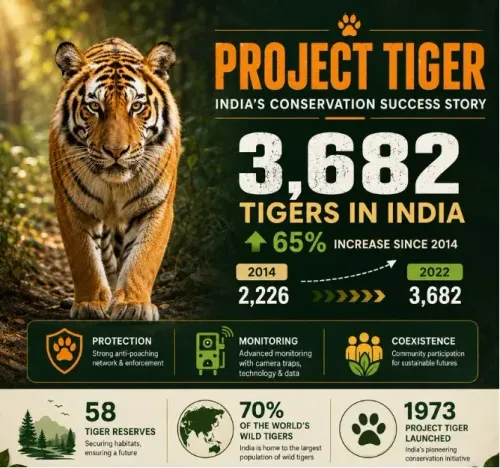
India's 2022 tiger census recorded 3,167 wild tigers, the highest count in successive estimations since 2006 .
Yadav credited 12 years of PM Modi's leadership for a 'remarkable rise' in tiger numbers and reserve expansion.
India's conservation model was framed as integrating traditional ecological knowledge with formal policy — not just data-driven management.
Project Tiger , launched in 1973 , remains the foundational policy framework underpinning all current reserve management.
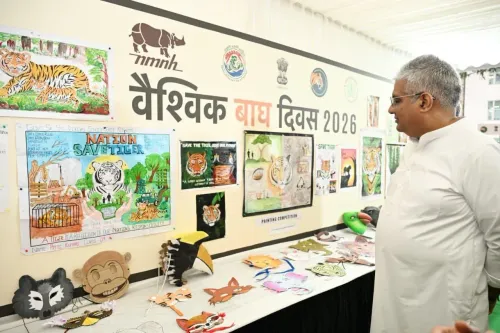
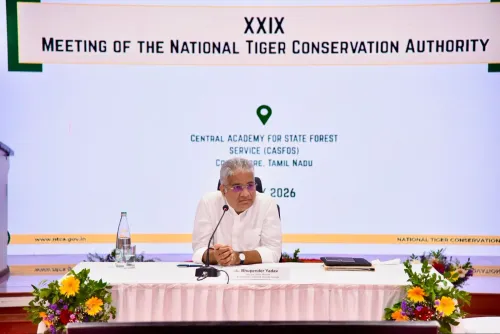
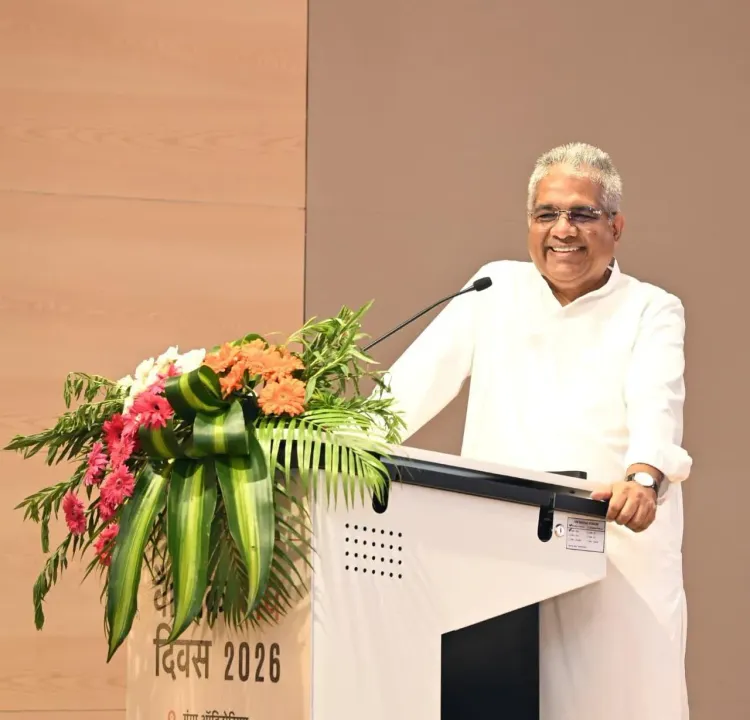
On the day the world marks International Tiger Day, Union Environment Minister Bhupender Yadav stood in New Delhi on 29 July 2026 and made a pointed case: India's tiger story is not just a census number — it is a civilisational relationship with the wild. Addressing the national event alongside Minister of State Shri K.V. Singh, Yadav launched the National Tiger Conservation Authority's new eco-tourism webpage, opening a direct digital gateway between India's tiger reserves and the world.
A Decade-Plus of Upward Tiger Counts
The minister pointed squarely at the last 12 years under Prime Minister Narendra Modi as the engine behind what he called a 'remarkable rise' in both tiger numbers and tiger reserves. The foundation for this run was laid by Project Tiger, launched in 1973 as India's flagship centrally-sponsored scheme — one of the oldest and most consequential wildlife programmes in the world. The 2022 All India Tiger Estimation placed India's wild tiger population at 3,167, a figure that has climbed consistently through successive census cycles since 2006. India today holds the largest share of the global wild tiger population.
Beyond the Data: Traditional Knowledge Enters the Frame
Yadav's remarks carried a deliberate philosophical undercurrent. Conservation, he argued, 'assimilates traditional knowledge, emotions, passion and years of experience' — a framing that positions India's approach as something distinct from a purely technocratic model. This is not incidental. Successive policy frameworks have increasingly integrated community-based conservation, pulling forest-dwelling communities and local ecological knowledge into the formal governance of tiger habitats. The argument: numbers improve when people who live alongside tigers have a stake in their survival.
The NTCA Eco-Tourism Webpage: What It Opens Up
The centrepiece announcement of the event was the launch of the NTCA eco-tourism webpage — a digital platform designed to channel visitor interest toward India's network of tiger reserves in a structured, sustainable way. Eco-tourism has long been flagged as a mechanism to generate local livelihoods while keeping conservation incentives alive at the community level. The webpage puts that proposition online, connecting operators, travellers, and reserve managers through a single authoritative portal. How quickly visitor uptake scales across reserves will be the first real test of its reach.
India's position as what Yadav called 'a global leader in tiger conservation' now carries a digital infrastructure to match its on-ground numbers. The next All India Tiger Estimation will tell whether the upward curve holds — but the launch of the eco-tourism platform signals that the government is already betting it will.
Point of View
Accessible brand — one the BJP can point to as a governance dividend of the Modi era. By foregrounding 'traditional knowledge' alongside census data, Yadav is also signalling a broader ideological positioning: that India's environmental model is culturally rooted, not simply borrowed from Western conservation frameworks. The eco-tourism play ties livelihoods to conservation outcomes, which is politically smart in forest-fringe constituencies. The real measure of this moment, however, will come with the next tiger estimation and whether digital access translates into equitable revenue for local communities.
NationPress
29 Jul 2026
Frequently Asked Questions
What is International Tiger Day and when is it observed?
International Tiger Day is observed every year on 29 July to raise awareness about tiger conservation and the threats facing the species globally. India marks the day with national-level events coordinated by the Ministry of Environment and the NTCA.
What is the NTCA eco-tourism webpage launched by Bhupender Yadav?
The NTCA eco-tourism webpage is a digital platform launched by the National Tiger Conservation Authority to connect travellers, operators, and reserve managers with India's network of tiger reserves, promoting sustainable wildlife tourism.
How many tigers does India have as per the latest census?
The 2022 All India Tiger Estimation recorded India's wild tiger population at 3,167 , the highest figure in successive census cycles conducted since 2006, making India home to the world's largest wild tiger population.
What is Project Tiger and how old is it?
Project Tiger was launched in 1973 as India's centrally-sponsored flagship scheme to protect tigers and their habitats. It is one of the world's longest-running wildlife conservation programmes and operates through the NTCA.
How many tiger reserves does India have?
India has significantly expanded its network of tiger reserves over the past decade under the Project Tiger framework. The exact current count is managed by the NTCA , and the government has cited reserve expansion as a key driver of population recovery.