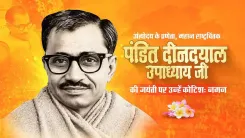
Bhupender Yadav pays tribute to Deendayal Upadhyay on birth anniversary
Synopsis
Union Environment Minister Bhupender Yadav marked Pandit Deendayal Upadhyay's birth anniversary on 25 September 2026, saluting the ideologue's Integral Humanism and Antyodaya philosophy while asserting the Modi government carries that legacy forward through last-mile welfare delivery.
Key Takeaways
Bhupender Yadav paid tribute to Pandit Deendayal Upadhyay on his birth anniversary, 25 September 2026 .
Upadhyay propounded Ekatm Manavvad (Integral Humanism) and the Antyodaya principle — that governance must prioritise the last and poorest person.
He served as general secretary of the Bharatiya Jana Sangh , the organisational predecessor of the BJP.
The Antyodaya Anna Yojana , launched in 2000 , drew its name and mandate directly from Upadhyay's philosophy.
BJP leaders across ministries routinely use the 25 September anniversary to frame current welfare schemes as continuations of Upadhyay's ideological legacy.
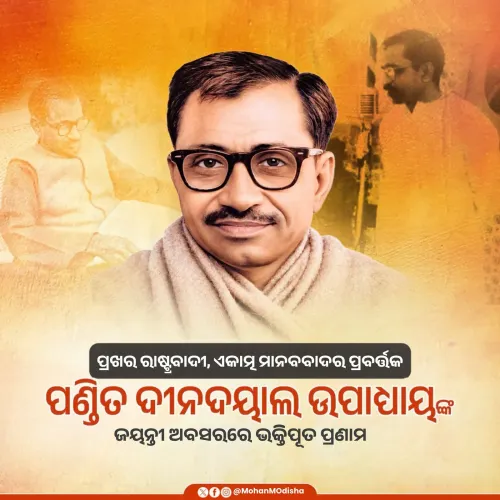
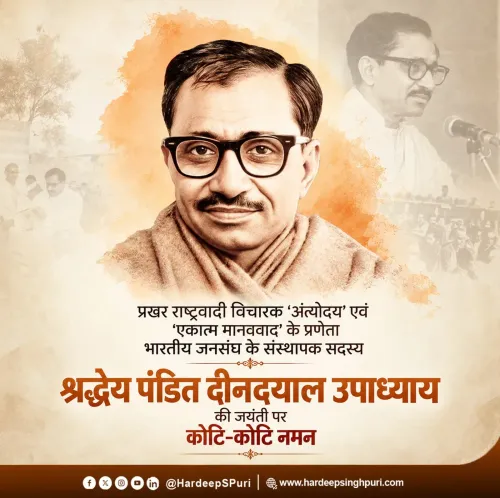
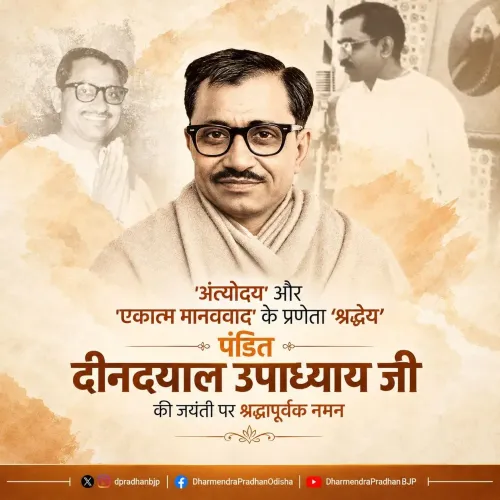
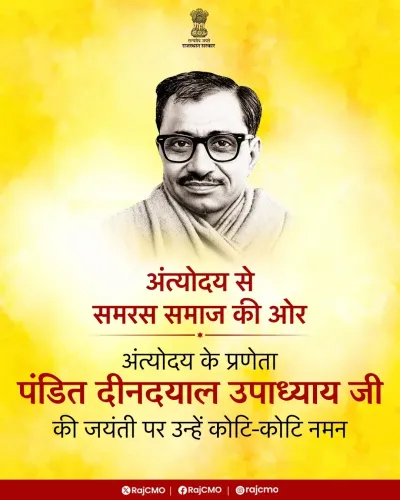
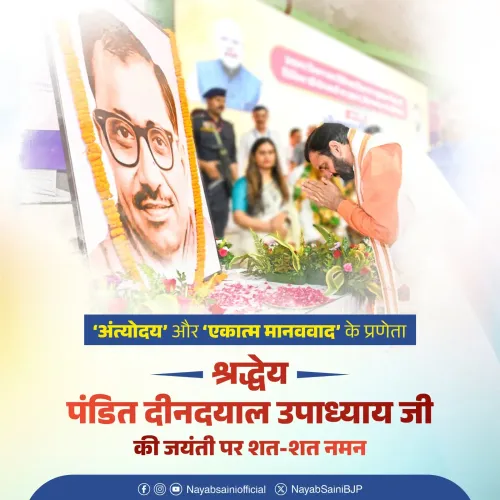
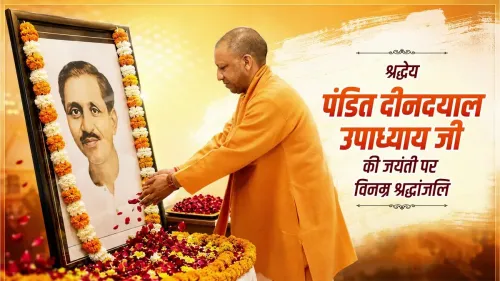
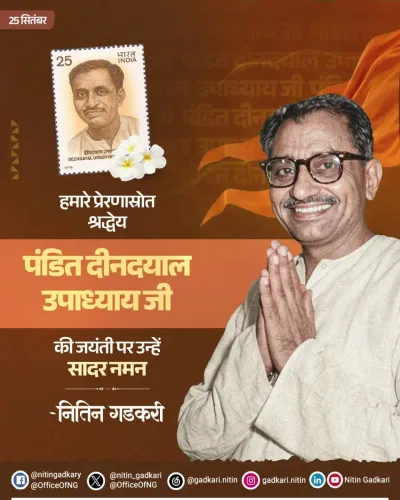
On the birth anniversary of one of independent India's most consequential ideological architects, Union Environment Minister Bhupender Yadav offered his homage to Pandit Deendayal Upadhyay on Friday, 25 September 2026, invoking the thinker's twin pillars of Ekatm Manavvad (Integral Humanism) and Antyodaya — the creed of uplifting the last person in line.
Writing in Hindi, Yadav offered 'countless salutations' to Upadhyay, describing him as 'the originator of ideas like Integral Humanism and Antyodaya, and an ideal for all of us.' He added that walking on Upadhyay's path of cultural nationalism, 'the Modi government is today delivering the benefits of schemes to the last person standing in the queue of development.'
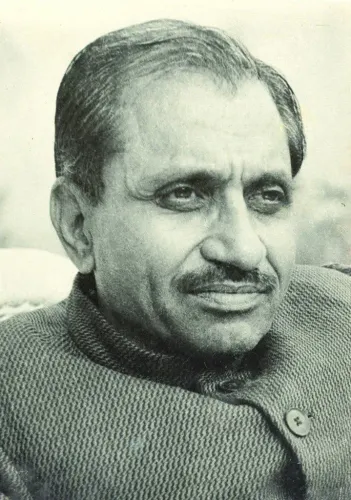
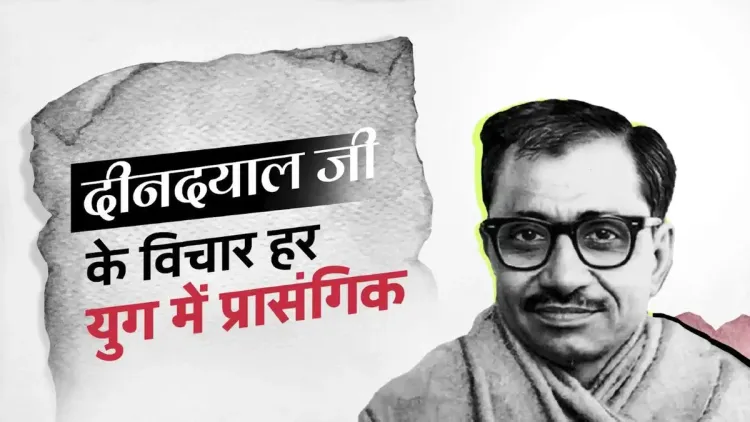
The man behind the philosophy: who was Pandit Deendayal Upadhyay?
Pandit Deendayal Upadhyay served as general secretary of the Bharatiya Jana Sangh — the organisational forerunner of today's BJP — and articulated a distinctly Indian school of political thought that rejected both Western capitalism and Soviet-style socialism. His concept of Ekatm Manavvad argued for a holistic view of the human being — physical, mental, intellectual, and spiritual — as the true unit of civilisation. His Antyodaya principle, meanwhile, demanded that the measure of any government's success be the condition of its very poorest citizen.
Upadhyay's birth anniversary on 25 September has become a fixed marker in the BJP calendar — a moment to connect present-day governance to the party's deeper ideological roots.
Antyodaya in policy: from philosophy to ration card
The bridge between Upadhyay's ideas and concrete governance is not purely rhetorical. The Antyodaya Anna Yojana, launched in 2000 by an earlier NDA government, drew its name and intent directly from his principle — providing heavily subsidised foodgrains to the families deemed poorest among the poor. The scheme remains one of the most cited examples of the BJP framing welfare delivery as an ideological commitment rather than mere electoral calculation.
Yadav's post fits a broader pattern: across ministries and across years, BJP leaders use the 25 September commemoration to position current central schemes — from direct-benefit transfers to rural housing — as practical extensions of Upadhyay's 50-year-old vision. The argument, in essence, is that Antyodaya is not a legacy to be archived but a live governing standard.
Whether that standard is being met — in nutrition, housing, or income floors — is the harder question that each anniversary quietly raises anew.
Point of View
Lending it cultural legitimacy beyond electoral arithmetic. For the Modi government, invoking Antyodaya reframes direct-benefit transfers and subsidised food programmes not as populism but as the fulfilment of a founding vision. The pattern also signals internal party culture: Upadhyay's legacy serves as a lowest-common-denominator unifier across the BJP's ideologically diverse factions. The real test, analysts note, is whether the Antyodaya standard — the condition of the very last person — is actually applied as a benchmark in budget allocations and scheme audits.
NationPress
25 Sept 2026
Frequently Asked Questions
Who was Pandit Deendayal Upadhyay?
Pandit Deendayal Upadhyay was an Indian politician and thinker who served as general secretary of the Bharatiya Jana Sangh and propounded Integral Humanism and the Antyodaya principle, which holds that a government's success must be measured by the welfare of its poorest citizen.
What is the Antyodaya principle?
Antyodaya, literally 'rise of the last person,' is the philosophy articulated by Deendayal Upadhyay that places the upliftment of the most marginalised individual at the centre of governance and development.
What is the Antyodaya Anna Yojana?
Antyodaya Anna Yojana is a food-security scheme launched in 2000 by the NDA government to provide heavily subsidised foodgrains to the poorest families in India, drawing its name and rationale directly from Upadhyay's philosophy.
When is Deendayal Upadhyay's birth anniversary?
Pandit Deendayal Upadhyay's birth anniversary falls on 25 September and is observed each year by BJP leaders and party organisations across India.
What is Integral Humanism in Indian politics?
Integral Humanism, or Ekatm Manavvad , is the political philosophy developed by Deendayal Upadhyay that advocates a holistic approach to human development — encompassing body, mind, intellect, and spirit — as an alternative to both Western capitalism and communism, and remains a foundational ideology of the BJP.