Bihar CM Launches FTA Outreach Workshop for State Industry
Synopsis
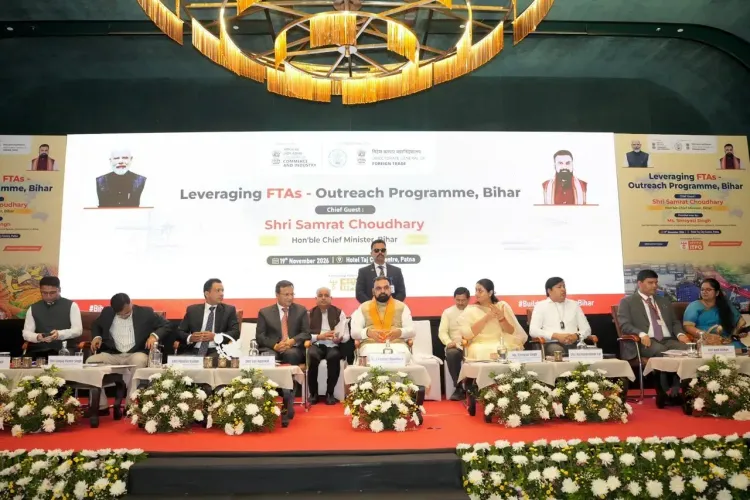
Bihar CM Samrat Choudhary inaugurated the 'Leveraging FTAs – Outreach Programme' in Patna on 19 November 2026. Organised by the state's Industry Department, the workshop aims to help Bihar's exporters and MSMEs unlock tariff benefits under India's Free Trade Agreements, addressing persistently low FTA utilisation outside major exporting hubs.
Key Takeaways
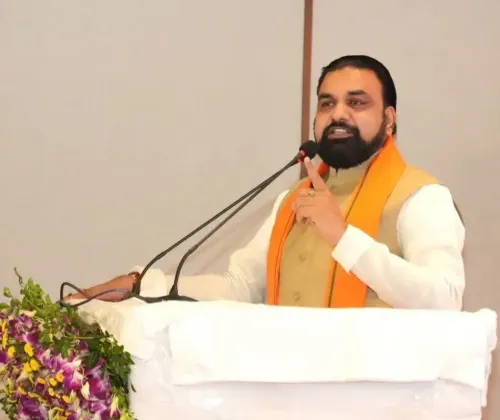
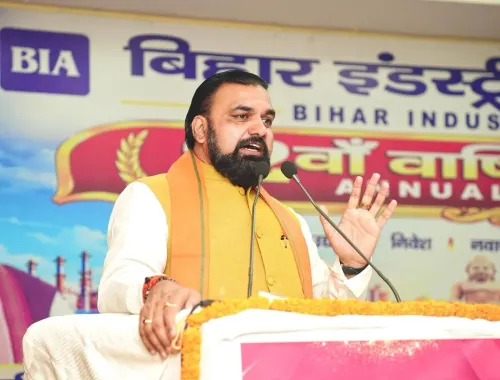
Chief Minister Samrat Choudhary inaugurated the 'Leveraging FTAs – Outreach Programme' at Hotel Taj City Centre on 19 November 2026 .
The workshop was organised by the Industry Department, Government of Bihar , targeting exporters, MSMEs and industry associations.
Sessions covered practical FTA mechanics including rules of origin, tariff concessions and compliance procedures.
India's India-UAE Comprehensive Economic Partnership Agreement (2022) is among the key agreements whose benefits the programme aims to extend to Bihar businesses.
Follow-up training sessions by the Industry Department are expected to deepen FTA utilisation among Bihar firms.
The initiative is part of a broader national pattern of state-level outreach to raise FTA utilisation rates beyond established coastal export hubs.
Bihar is making a deliberate push to plug its businesses into India's global trade deals. Chief Minister Samrat Choudhary on Thursday, 19 November 2026, inaugurated a state-level workshop titled 'Leveraging FTAs – Outreach Programme' at Hotel Taj City Centre, signalling the state government's intent to translate national Free Trade Agreements into tangible gains for Bihar's exporters and small manufacturers.
What the workshop set out to do
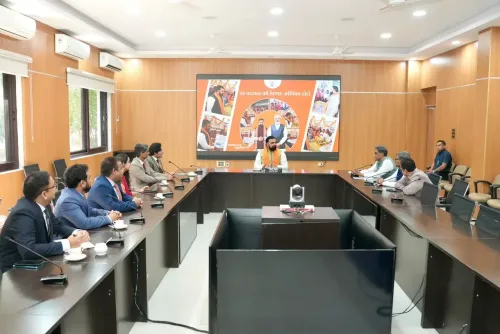
Organised by the Industry Department, Government of Bihar, the programme is designed to bridge a persistent gap: India has negotiated several FTAs, but businesses in non-metro states have historically captured far fewer of the resulting tariff benefits than exporters in established hubs. The workshop walked participants — Bihar's exporters, MSMEs and industry associations — through the practical mechanics of FTA utilisation: rules of origin, tariff concession schedules, and compliance procedures.
The Chief Minister's Office announced the inauguration on X, noting that the event was organised by the state's industry department as an outreach initiative. The programme's framing — 'leveraging' rather than merely 'awareness' — reflects an operational ambition: not just informing businesses that FTAs exist, but equipping them to actually use them.
India's FTA push and the states left behind
India has expanded its trade agreement footprint considerably in recent years. The India-UAE Comprehensive Economic Partnership Agreement, signed in 2022, was among the most significant — opening markets for Indian goods across sectors from textiles to engineering. Yet utilisation rates across smaller and landlocked states have lagged, with the gains concentrated in coastal export hubs.
That gap is exactly what state-level outreach programmes like this one aim to close. Indian states have increasingly been running such workshops to extend the reach of central FTA policy into regional economies — translating Delhi's trade diplomacy into factory-floor reality for businesses that rarely engage with customs law directly.
Bihar's industrial ambitions in the frame
Bihar's industry base leans heavily on agriculture-linked manufacturing, food processing, leather, and light engineering — sectors with real export potential if businesses can navigate preferential tariff windows. The outreach programme represents a recognition by the state administration that FTA benefits don't flow automatically; they require active intermediation between policy and enterprise.
The Industry Department is expected to follow up with targeted training sessions to help firms complete the compliance steps needed to claim concessions under active agreements.
Bihar's businesses now have a roadmap. Whether they can execute it fast enough to shift the state's export needle is the question that the Industry Department's follow-through will answer.
Point of View
Translating central trade agreements into local uptake is a structural challenge, not merely an administrative one. The workshop places Bihar within a wider arc of states competing to industrialise and diversify their revenue base ahead of the next investment cycle. How aggressively the Industry Department follows through with compliance support will determine whether this remains a symbolic gesture or becomes a measurable shift in Bihar's trade footprint.
NationPress
19 Nov 2026
Frequently Asked Questions
What is the 'Leveraging FTAs – Outreach Programme' in Bihar?
It is a state-level workshop organised by the Industry Department of the Government of Bihar to help local exporters and MSMEs understand and utilise the tariff benefits available under India's Free Trade Agreements, covering topics like rules of origin, tariff schedules and compliance procedures.
Who inaugurated the FTA outreach workshop in Bihar?
Bihar Chief Minister Samrat Choudhary inaugurated the workshop at Hotel Taj City Centre on 19 November 2026.
Which Free Trade Agreements are most relevant for Bihar exporters?
The India-UAE Comprehensive Economic Partnership Agreement signed in 2022 is among the most significant active FTAs, offering preferential tariff access for Indian goods across several sectors relevant to Bihar's manufacturing base.
Why do Bihar businesses need a separate FTA outreach programme?
FTA utilisation in India has historically been concentrated in coastal and established export hubs. Landlocked states like Bihar have lower awareness of rules of origin and compliance requirements, meaning businesses miss out on tariff concessions without targeted guidance.
What will happen after the Bihar FTA workshop?
The Industry Department is expected to conduct follow-up training sessions to assist firms in completing the specific compliance steps required to claim concessions under active trade agreements.