Bihar CM flags state as India's first to adopt Agri Roadmap
Synopsis
Bihar CM Nitish Kumar, speaking through the Chief Minister's Office, announced plans to connect Bihar's fruits to international markets for fair farmer prices, while reaffirming Bihar's status as India's first state to adopt a formal Agriculture Roadmap since 2008.
Key Takeaways
The Chief Minister's Office of Bihar shared remarks by CM Nitish Kumar on 17 June 2026 announcing international market linkages for Bihar's fruit produce.
CM Kumar stated that Bihar was the first state in India to adopt the Agriculture Roadmap, a distinction dating to 2008 .
The stated objective is to ensure Bihar's farmers receive fair prices for their produce through access to international markets.
The Bihar Agriculture Roadmap , launched in 2008-2012 , has been a multi-phase framework to modernise the state's farm sector and shift it toward commercial horticulture.
Specific fruit varieties, target export markets, and implementation timelines have not yet been announced and are expected in follow-up government communications.
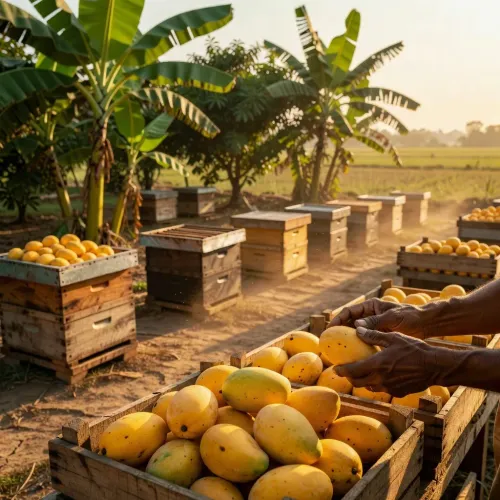
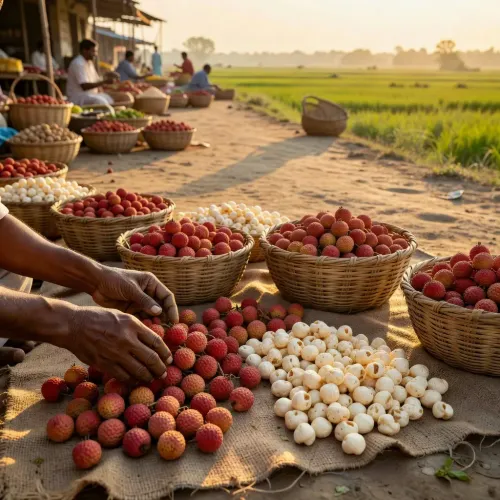
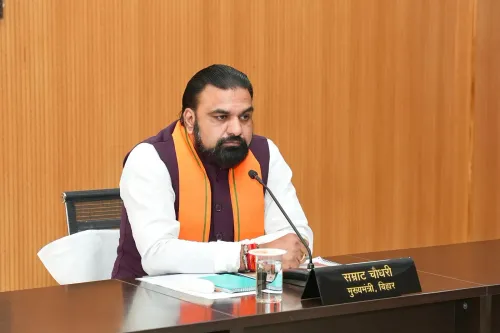
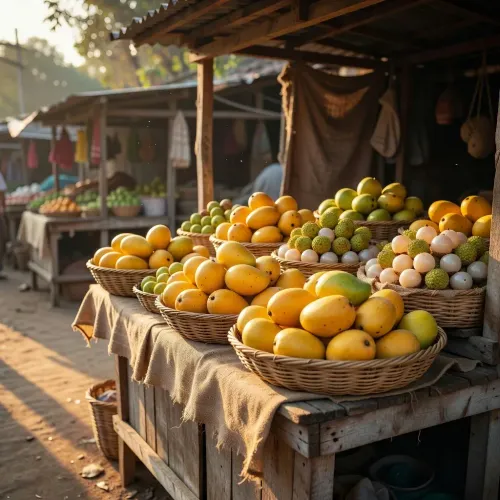
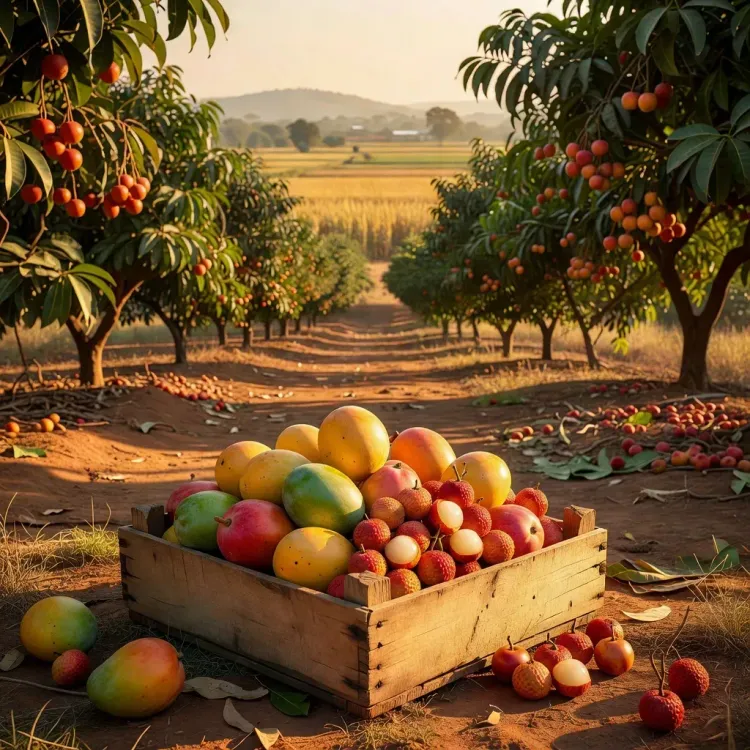
The Chief Minister's Office of Bihar on Wednesday, 17 June 2026, shared remarks by Chief Minister Nitish Kumar announcing that Bihar's fruits will be linked to international markets to ensure farmers receive fair prices for their produce.
The post, shared from the official @officecmbihar account, quoted the Chief Minister as stating that 'बिहार कृषि रोडमैप को अपनाने वाला देश का पहला राज्य रहा है' — 'Bihar has been the first state in the country to adopt the Agriculture Roadmap.' Alongside this, the Chief Minister underlined that the state's fruits would be connected to international markets to deliver fair prices to Bihar's farmers.
Context
Bihar launched its first Agriculture Roadmap in 2008 under Nitish Kumar, becoming the earliest state in India to adopt a comprehensive, time-bound agricultural development plan. The roadmap framework has since evolved through successive phases, each aimed at raising farm productivity and farmer incomes. The Chief Minister's remarks reaffirm this foundational claim and signal a continued push toward commercial horticulture.
The statement appears to be part of a broader government communication around agricultural policy, with the Chief Minister's Office highlighting both the state's historical leadership in farm policy and its forward-looking market integration agenda.
Policy Backdrop
The Bihar Agriculture Roadmap is a multi-phase policy framework first adopted in 2008-2012 to modernise the state's agriculture sector and shift it from subsistence farming toward commercial and market-linked production. Over successive iterations, the roadmap has placed increasing emphasis on horticulture, crop diversification, and value-chain development. Bihar's approach has been cited as a model that several other Indian states have drawn upon in designing their own agricultural development plans.
The current emphasis on linking Bihar's fruits to international markets aligns with central government schemes promoting agricultural exports and crop diversification, including efforts coordinated through agencies focused on agricultural and processed food product exports. This trajectory reflects a broader national pattern of integrating state horticulture into global supply chains.
Stakeholders and Impact
Bihar's farming community, which remains one of the largest in eastern India, stands to be the primary beneficiary if international market linkages are successfully established. Horticulture exporters and agri-logistics operators in the state would also see expanded opportunity under such a framework. The announcement signals intent to move beyond domestic mandis and create price discovery mechanisms tied to export demand.
For Bihar's farmers, fair price realisation has long been a challenge given the state's landlocked geography and historically underdeveloped cold-chain infrastructure. Connecting fruit produce to international buyers would require coordinated investment in post-harvest handling, quality certification, and logistics — areas the government has not yet detailed in this communication.
What's Next
Specific fruit varieties to be targeted, named partner countries, and any formal agreements with export promotion bodies are expected to be detailed in follow-up government releases. The announcement as shared does not specify an implementation timeline or identify international buyers. Observers will watch for concrete operational steps, including whether the state enters into new partnerships with central export facilitation agencies or international trade bodies.
The Chief Minister's framing of Bihar as India's first Agriculture Roadmap state also suggests this communication may be a precursor to a formal roadmap launch or update event, where granular policy commitments are likely to be made public.
Point of View
Particularly as central export promotion frameworks expand. However, the announcement remains aspirational until operational details — cold-chain investment, export certifications, named buyer agreements — are made public. The real test will be whether this communication precedes a structured roadmap update or remains a statement of intent.
NationPress
20 Sept 2026
Frequently Asked Questions
What did Bihar CM Nitish Kumar announce about farmers on 17 June 2026?
CM Nitish Kumar announced that Bihar's fruits will be linked to international markets to ensure farmers receive fair prices for their produce, as shared by the Chief Minister's Office on 17 June 2026.
Was Bihar really the first state to adopt an Agriculture Roadmap in India?
Yes, Bihar launched its first Agriculture Roadmap in 2008 under CM Nitish Kumar, making it the first state in India to adopt a comprehensive, time-bound agricultural development plan of this kind.
Which fruits from Bihar will be exported internationally?
The government has not yet specified which fruit varieties will be targeted for international markets. Details on specific produce, target countries, and timelines are expected in follow-up official announcements.
What is the Bihar Agriculture Roadmap?
The Bihar Agriculture Roadmap is a multi-phase policy framework first adopted in 2008-2012 to modernise the state's agriculture sector, raise farmer incomes, and shift production toward commercial horticulture and market-linked farming.
How will linking Bihar's fruits to international markets help farmers?
By connecting fruit produce to international buyers, the government aims to create better price discovery and higher income for farmers, moving beyond domestic markets where price realisations have historically been lower due to infrastructure and logistics constraints.