Bihar CM Office Launches Free Dialysis at 25 Sub-Divisional Hospitals
Synopsis
Bihar's Chief Minister's Office launched free dialysis at 25 sub-divisional hospitals on 22 July 2026. PHH and Ayushman Bharat cardholders receive the service free; other eligible beneficiaries pay concessional rates, extending kidney-care access to rural and semi-urban communities across the state.
Key Takeaways
Free dialysis services were launched across 25 sub-divisional hospitals in Bihar on 22 July 2026 .
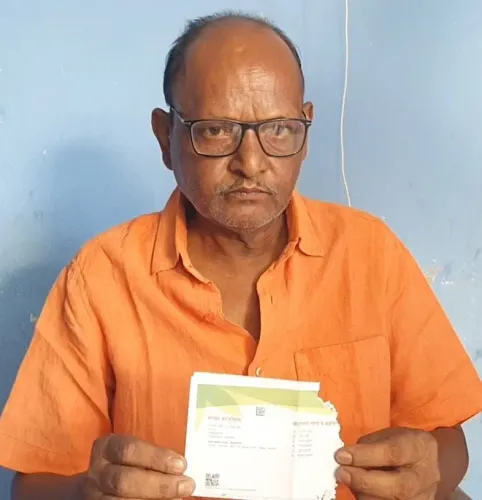
PHH (Priority Household) cardholders and Ayushman Bharat cardholders are entitled to the service at no cost .
Other eligible beneficiaries will receive dialysis at subsidised (concessional) rates .
The rollout integrates with existing National Food Security Act and Ayushman Bharat beneficiary databases, eliminating the need for fresh enrolment.
The initiative decentralises a high-cost, recurring NCD procedure from medical colleges to secondary-level public facilities, improving geographic access for rural patients.
Utilisation data and potential expansion beyond the initial 25 facilities will be key indicators of programme success.
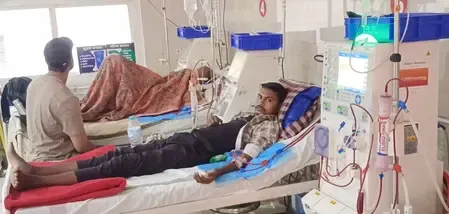
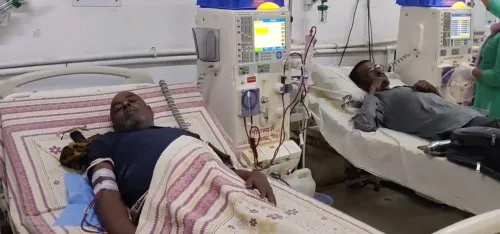
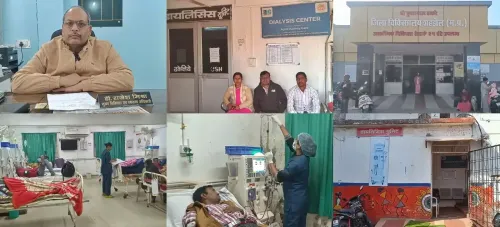
The Chief Minister's Office of Bihar announced on Wednesday, 22 July 2026 the launch of free dialysis services across 25 sub-divisional hospitals in the state, extending critical kidney-care access to economically vulnerable residents. The initiative covers PHH (Priority Household) cardholders and Ayushman Bharat cardholders, while other eligible beneficiaries will receive the service at subsidised rates.
Context
The official post, shared from @officecmbihar, stated: 'राज्य के 25 अनुमंडलीय अस्पतालों में निःशुल्क डायलिसिस सेवा का शुभारंभ किया गया' ('Free dialysis services have been launched in 25 sub-divisional hospitals of the state'). It further noted that the benefit will reach PHH and Ayushman cardholders as well as other eligible beneficiaries, the latter at concessional rates. Sub-divisional hospitals are secondary-level public health facilities located at sub-division headquarters, typically serving rural and semi-urban populations who lack easy access to medical colleges or district hospitals.
Policy Backdrop
The move builds on the architecture of Ayushman Bharat Pradhan Mantri Jan Arogya Yojana, the national health insurance scheme launched in 2018 that provides cashless coverage of up to Rs 5 lakh per family per year for eligible low-income households. Bihar has progressively integrated its public health facilities with both the Ayushman Bharat database and the National Food Security Act 2013 Priority Household ration-card database, allowing the state to layer free or subsidised care onto existing beneficiary rosters without requiring fresh enrolment for most recipients. Dialysis — a recurring, high-cost procedure for patients with chronic kidney disease — has historically been concentrated in tertiary facilities such as medical colleges, making it financially and geographically out of reach for rural patients.
Under Chief Minister Nitish Kumar, Bihar has pursued a strategy of decentralising non-communicable disease services from medical colleges to district and sub-divisional hospitals. This dialysis expansion fits squarely within that pattern, reflecting a broader national trend of pushing specialised NCD care closer to the last mile.
Stakeholders and Impact
The primary beneficiaries are dialysis-dependent patients in Bihar's rural and semi-urban belts who currently travel long distances — often to Patna or district headquarters — for a procedure that must typically be performed two to three times a week. For PHH cardholders, the service is entirely free; for other eligible categories, the concessional rate reduces what has historically been a catastrophic out-of-pocket expense. Low-income families managing a member with chronic kidney failure often face financial ruin from dialysis costs alone, making subsidised access at a nearby sub-divisional hospital a significant relief.
The rollout across 25 facilities simultaneously signals a state-wide, coordinated push rather than a pilot, suggesting the health department has already established supply chains for consumables and trained technical staff at each site. The integration with both PHH and Ayushman card databases means verification can be handled through existing government infrastructure.
What's Next
Analysts and health administrators will watch utilisation data closely to assess whether patient uptake matches the installed capacity at each of the 25 sub-divisional hospitals. A key test will be whether awareness campaigns reach the most remote beneficiaries, particularly those who may not know they qualify under PHH or Ayushman Bharat. Any announcement of further expansion beyond the initial 25 facilities — potentially in subsequent state budget sessions or health department reviews — will indicate whether the programme scales to Bihar's full network of sub-divisional and district hospitals. The success of this model could also serve as a reference point for other states seeking to decentralise dialysis services within their own public health infrastructure.
Point of View
Lending the initiative more credibility than a typical scheme launch. By anchoring eligibility to pre-existing PHH and Ayushman Bharat databases, the state sidesteps the enrolment bottleneck that has historically undermined welfare delivery in the region. The move fits Chief Minister Nitish Kumar's long-running pattern of incremental, infrastructure-led governance that prioritises measurable service expansion over headline-grabbing policy shifts. If utilisation data holds up, Bihar could emerge as a replicable model for other large, rural-heavy states seeking to decentralise NCD care without building new tertiary infrastructure.
NationPress
22 Jul 2026
Frequently Asked Questions
Who can get free dialysis at Bihar government hospitals?
PHH (Priority Household) cardholders and Ayushman Bharat cardholders are entitled to free dialysis at the 25 sub-divisional hospitals launched under this scheme. Other eligible beneficiaries can access the service at subsidised, concessional rates.
How many hospitals in Bihar now offer dialysis services?
As of 22 July 2026, dialysis services have been launched at 25 sub-divisional hospitals across Bihar under this initiative.
What is a sub-divisional hospital in Bihar?
A sub-divisional hospital is a secondary-level public health facility located at the sub-division headquarters in Bihar, typically serving rural and semi-urban populations who lack easy access to larger district or medical-college hospitals.
What is the Ayushman Bharat scheme and how does it help dialysis patients?
Ayushman Bharat Pradhan Mantri Jan Arogya Yojana is a central government health insurance scheme launched in 2018 that provides cashless coverage of up to Rs 5 lakh per family per year for eligible low-income households. In Bihar, cardholders under this scheme can now access dialysis free of charge at the 25 designated sub-divisional hospitals.
Will Bihar expand free dialysis to more hospitals?
The current announcement covers 25 sub-divisional hospitals. Any further expansion would depend on utilisation data and future state budget or health department decisions, which have not yet been announced.