Bihar CM Office Orders Border-District Asset Checks
Synopsis
The Chief Minister's Office of Bihar has ordered special police teams at the police-station level in border districts to identify individuals with disproportionate income or assets, while also directing the swift completion of pending works in those areas.
Key Takeaways
The Chief Minister's Office of Bihar issued the directive on 3 July 2026 .
Special teams are to be formed at the thana (police-station) level in Bihar's border districts.
The teams will identify and verify persons whose income or assets have grown unusually relative to their known income sources.
A parallel directive calls for expeditious completion of pending works in border areas.
The move targets districts along the porous Indo-Nepal frontier in northern Bihar.
The legal basis for disproportionate-asset probes in India is the Prevention of Corruption Act, 1988 (amended 2018) .
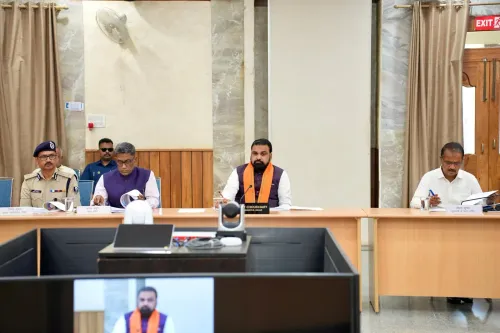
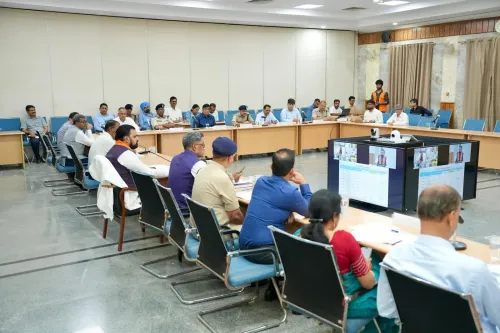
The Chief Minister's Office of Bihar, on Friday, 3 July 2026, directed the formation of special police teams at the police-station level in border districts to identify and verify individuals whose income or assets have grown disproportionately relative to their known sources of income.
The official post, shared from the Chief Minister's Office account, stated that teams would be constituted at the thana (police-station) level in seemaavarti jile (border districts) to carry out identification and verification of persons showing 'unusual increases in income or property compared to their known income sources.' The directive also called for the expeditious completion of pending works in border areas.
Context
Bihar shares a long, porous frontier with Nepal along its northern edge, spanning districts such as West Champaran, East Champaran, Sitamarhi, Madhubani, Supaul, Araria, and Kishanganj. The open character of the Indo-Nepal border has historically made these zones susceptible to unaccounted financial flows and cross-border economic irregularities. Periodic enforcement drives targeting disproportionate assets in these districts have been a recurring feature of Bihar's administrative calendar.
The Bihar Police will be the primary implementing agency for the new special teams. Officers at each thana in the designated border districts are expected to draw up lists of individuals for scrutiny, with verification to follow through coordination between local police and revenue authorities.
Policy Backdrop
The legal foundation for such asset-scrutiny exercises rests on the Prevention of Corruption Act, 1988, as amended in 2018, which provides the framework for investigating disproportionate assets across all Indian states, including Bihar. State governments may direct police and vigilance departments to conduct preliminary identification exercises before formal referrals to anti-corruption agencies.
Nitish Kumar, who has served as Chief Minister of Bihar since 2005 across multiple terms, has consistently positioned administrative and law-enforcement reform as a pillar of his governance record. Directives combining financial scrutiny with instructions to complete pending infrastructure or development works in border zones align with that broader pattern.
Stakeholders and Impact
Residents of Bihar's border districts stand to be most directly affected — both those who may face asset verification and those who stand to benefit from the accelerated completion of pending local works. The directive to fast-track pending projects suggests a dual focus: enforcement on one hand and improved administrative delivery on the other.
The Bihar Police will need to operationalise the special teams swiftly, coordinating with district administrations to ensure that verification exercises are conducted within the bounds of due process. Civil-society groups in border districts have in the past flagged the need for such drives to be conducted transparently to avoid harassment of ordinary residents.
What's Next
Attention will now turn to how quickly the thana-level special teams are constituted and whether the state government issues detailed operational guidelines for the verification process. The status of pending works in border areas — whether infrastructure, welfare schemes, or administrative projects — will be another metric to watch in the weeks ahead.
If the exercise yields significant asset-verification outcomes or leads to formal referrals to anti-corruption bodies, it could set a template for similar drives in other sensitive districts across Bihar. The dual directive — enforcement plus delivery — signals an intent to address both security and governance gaps along the state's northern frontier simultaneously.
Point of View
Suggesting this is as much about institutional routine as it is about any specific intelligence trigger. The real test will be whether the thana-level teams are operationalised with adequate oversight mechanisms to prevent misuse while delivering credible outcomes.
NationPress
4 Jul 2026
Frequently Asked Questions
Why is Bihar forming special police teams in border districts?
The Chief Minister's Office of Bihar directed the formation of thana-level special teams in border districts to identify and verify individuals whose income or assets have grown disproportionately compared to their known income sources, as part of a financial scrutiny and anti-corruption drive.
Which Bihar districts are likely to be covered by this directive?
The directive covers Bihar's border districts, which primarily lie along the Indo-Nepal frontier in the north, including areas such as West Champaran, East Champaran, Sitamarhi, Madhubani, Supaul, Araria, and Kishanganj, though the official post does not name specific districts.
What law allows Bihar police to probe disproportionate assets?
The Prevention of Corruption Act, 1988, as amended in 2018, provides the legal framework for investigating disproportionate assets in India, including in Bihar, and allows state authorities to initiate preliminary identification and verification exercises.
What pending works in Bihar border areas does the directive refer to?
The directive calls for the expeditious completion of pending works in border areas, though the official post does not specify the nature of those works; they could include infrastructure, welfare scheme implementation, or other administrative projects.
Who is the Chief Minister of Bihar issuing these orders?
Nitish Kumar is the Chief Minister of Bihar, having served in that role since 2005 across multiple terms, and the directive was issued through the official Chief Minister's Office account.