Bihar CM Orders Faster PMAY-G Survey, 12 Lakh Housing Target
Synopsis
Bihar's Chief Minister has ordered officials to speed up beneficiary surveys, clear objections, and complete 12 lakh rural house constructions under Pradhan Mantri Awas Yojana (Gramin), targeting faster delivery of the centrally sponsored housing scheme.
Key Takeaways
Bihar CM issued a directive on 27 October 2026 to accelerate implementation of Pradhan Mantri Awas Yojana (Gramin) .
The specific instruction covers two bottlenecks: faster surveys and quicker resolution of objections .
The state's stated target is the construction of 12 lakh rural houses under the scheme.
PMAY-G is a central government scheme launched in 2015 to provide pucca housing to eligible rural families.
Survey and grievance-redressal backlogs are the most common barriers to on-ground progress under the scheme across Indian states.
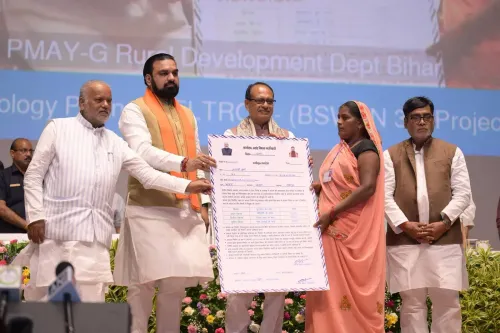
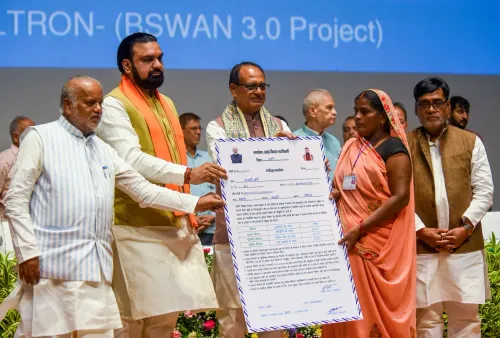
Rural housing in Bihar just got a direct push from the top. The Chief Minister's Office of Bihar announced on Tuesday, 27 October 2026 that the Chief Minister has directed officials to accelerate surveys, resolve pending objections, and achieve the state's target of constructing 12 lakh houses under the Pradhan Mantri Awas Yojana (Gramin) at the earliest.
The official directive, posted by the Chief Minister's Office, reads: 'Mananiy Mukhyamantri ji ne Pradhan Mantri Awas Yojana (Gramin) ke tahat sarvekshan evam aapattyon ke niraakaran mein tezi laane tatha 12 lakh aavaas nirmaan ke lakshya ko jald poora karne ka nirdesh diya' — 'The Honourable Chief Minister has directed speeding up surveys and resolution of objections under the Pradhan Mantri Awas Yojana (Gramin), and completing the target of building 12 lakh houses at the earliest.'
What PMAY-G actually demands on the ground
Pradhan Mantri Awas Yojana (Gramin) is a centrally sponsored scheme launched in 2015, designed to ensure that every eligible rural family living in a kutcha or dilapidated house receives a pucca dwelling. The programme began with a national target of one crore houses and has since been expanded in successive phases — placing enormous implementation responsibility on state administrations, which must conduct household surveys, verify eligibility, resolve disputes, and sanction beneficiaries before a single brick is laid.
That last step — clearing surveys and objections — is precisely where progress most often stalls. Disputes over land ownership, errors in beneficiary lists, and backlogs in grievance redressal have historically slowed disbursement across multiple states. Bihar's directive squarely names this bottleneck and orders it cleared.
Why the pace directive matters for Bihar's rural poor
Bihar consistently ranks among India's most densely populated and economically vulnerable states, with a large proportion of its rural households still living in informal or semi-permanent structures. A 12-lakh-unit target represents a significant slice of the state's unmet rural housing demand. Every month of administrative delay translates directly into a family spending another monsoon in an unsafe home.
Indian states routinely issue such acceleration directives at key points in a fiscal cycle — particularly when annual progress reviews reveal gaps between sanctions and actual completions. The Chief Minister's intervention signals that Bihar's administration is treating this not as a routine bureaucratic exercise but as a deliverable to be tracked and closed.
With surveys and objections flagged as the immediate pressure point, the next visible marker will be whether district-level completion numbers reflect the acceleration the Chief Minister has now publicly demanded.
Point of View
Not just scheme enrolment. Historically, the gap between sanctioned houses and completed houses has been a politically sensitive metric that opposition parties use to challenge ruling governments at election time. By ordering a clearance of surveys and objections specifically, the CM is targeting the administrative choke-point that most visibly delays beneficiary experience. Whether this translates into measurable ground-level acceleration in the weeks ahead will determine whether the directive is a genuine operational push or a public-relations exercise.
NationPress
28 Oct 2026
Frequently Asked Questions
What is Pradhan Mantri Awas Yojana (Gramin)?
Pradhan Mantri Awas Yojana (Gramin), or PMAY-G, is a centrally sponsored scheme launched in 2015 to provide pucca houses to eligible rural families living in kutcha or dilapidated structures. It is funded jointly by the central and state governments.
What has Bihar's Chief Minister directed regarding PMAY-G?
Bihar's Chief Minister has directed officials to speed up surveys and resolution of objections under PMAY-G and to complete the state's target of constructing 12 lakh rural houses at the earliest, as announced by the Chief Minister's Office on 27 October 2026.
What is Bihar's housing target under PMAY-G?
Bihar's stated housing construction target under Pradhan Mantri Awas Yojana (Gramin) is 12 lakh houses, as referenced in the Chief Minister's directive.
Why do PMAY-G houses get delayed?
Delays under PMAY-G typically arise from backlogs in household surveys, disputes over beneficiary eligibility, land ownership issues, and slow resolution of objections — all of which the Bihar CM's directive specifically targets.
When was PMAY-G launched?
Pradhan Mantri Awas Yojana (Gramin) was launched in 2015 as a flagship rural housing programme, with an initial target of one crore houses that has been expanded in subsequent phases.