Bihar CM's Office: 4.25 Lakh Sahyog Camp Pleas Resolved
Synopsis
Bihar's Chief Minister's Office announced on 7 July 2026 that Sahyog Camps have resolved over 4.25 lakh of 4.53 lakh public applications, with CM Nitish Kumar crediting village-level outreach for delivering timely justice to rural citizens across the state.
Key Takeaways
The Chief Minister's Office of Bihar announced on 7 July 2026 that Sahyog Camps have received over 4.53 lakh applications from citizens.
More than 4.25 lakh of those applications have been successfully resolved, reflecting a disposal rate of approximately 93 per cent .
Chief Minister Nitish Kumar stated that the government is travelling village to village to resolve public problems and ensure timely justice.
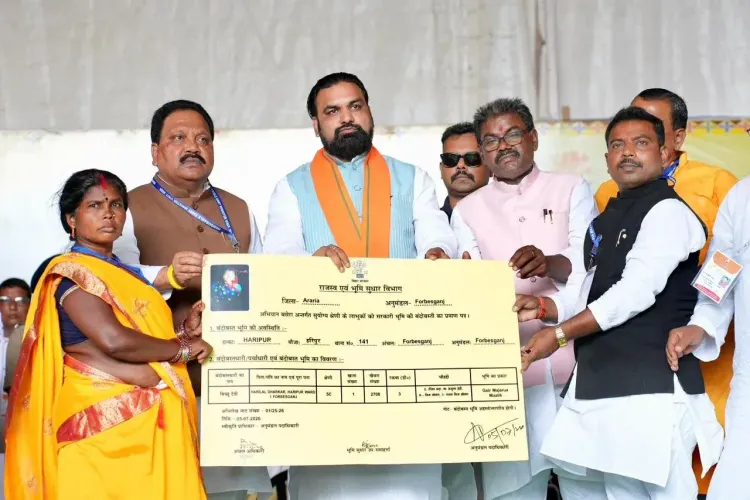
The Sahyog Camp model deploys state officials directly to rural communities, eliminating the need for citizens to visit distant government offices.
Bihar has maintained village-level grievance outreach since the mid-2000s, with the current programme representing an institutionalised extension of that tradition.
Roughly 28,000 applications remain pending, and future quarterly reports will be watched for updates on their resolution and any expansion of the camps.
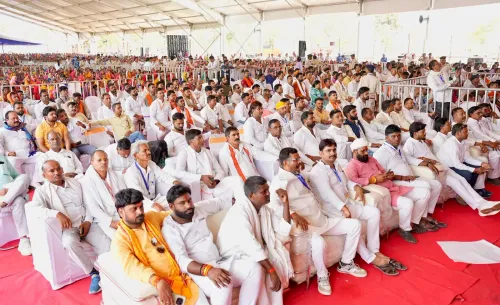
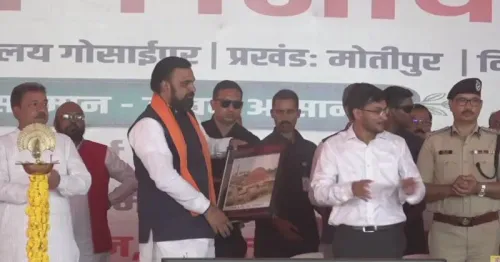
The Chief Minister's Office of Bihar on Tuesday, 7 July 2026, announced that the state government's village-level Sahyog Camps have successfully resolved more than 4.25 lakh applications out of over 4.53 lakh received, underscoring Chief Minister Nitish Kumar's push to deliver administrative justice at the doorstep of rural citizens.
The official post quoted the Chief Minister as saying: 'Sarkar gaon-gaon pahunchkar logon ki samasyaon ka nivaaran kar rahi hai, taaki pratyek naagrik ko samay par nyay mil sake' — ('The government is reaching village to village to resolve people's problems, so that every citizen can get justice on time.')
Context
The Sahyog Camps are village-level grievance redressal drives in which state officials travel directly to local communities to collect and process public applications for a range of administrative services. The model is designed to cut the burden on citizens who would otherwise need to travel to district or block headquarters to file routine requests. The announcement on 7 July 2026 marks one of the most detailed public accounting of camp outcomes the government has shared in recent months. The disposal figure — more than 4.25 lakh applications cleared out of 4.53 lakh received — represents a resolution rate of approximately 93 per cent, a number the Chief Minister's Office is positioning as evidence of the programme's operational effectiveness.Policy Backdrop
Bihar has maintained a tradition of public grievance outreach since the mid-2000s, when Chief Minister Nitish Kumar introduced public darbars and periodic camps as part of a broader administrative reform agenda. The Sahyog Camp model extends that lineage by institutionalising village-level visits rather than requiring citizens to approach officials. Several other Indian states have adopted comparable last-mile delivery frameworks, but Bihar's emphasis on publishing disposal statistics signals a results-oriented approach to governance transparency. The programme targets the most common friction points in rural administration: land records, welfare scheme enrolment, pension disbursement, and identity documentation. By bringing officials to villages, the government aims to reduce both pendency and the informal costs citizens bear when navigating bureaucracy from a distance.Stakeholders and Impact
The primary beneficiaries are Bihar's rural population, particularly those in remote blocks where access to district-level offices is limited by distance, cost, or mobility constraints. For village applicants, the camps offer a single-window opportunity to file and, in many cases, receive resolution on pending requests without repeated visits to government offices. For the state administration, the camps serve a dual purpose: they generate real-time data on the nature and volume of citizen grievances, and they create visible accountability touchpoints that can be reported upward and outward. The high disposal rate cited in the post will likely be used as a benchmark in future programme reviews and budget discussions.What's Next
Attention will now turn to the remaining applications — roughly 28,000 cases still pending — and whether the government announces a timeline or mechanism for their resolution. Observers will also watch for quarterly updates on camp coverage, including whether the initiative is extended to additional blocks or districts across Bihar's 38 districts. Any expansion announcement or a fresh round of Sahyog Camps would signal that the government is treating this not as a one-off drive but as a recurring pillar of its rural governance strategy.Point of View
Who has built much of his political identity around administrative competence since 2005, such statistics serve as durable electoral currency in a state where rural service access remains a live issue. The village-to-village model also pre-empts opposition narratives about centralised, inaccessible governance by making the state visibly mobile. Whether the remaining pending cases are resolved — and how quickly — will test whether the programme's reported efficiency holds under scrutiny.
NationPress
7 Jul 2026
Frequently Asked Questions
What are Sahyog Camps in Bihar?
Sahyog Camps are village-level grievance redressal drives organised by the Bihar government in which state officials travel to local communities to collect and process public applications for services such as land records, pensions, and welfare scheme enrolment.
How many applications were resolved in Bihar's Sahyog Camps?
According to the Chief Minister's Office of Bihar, more than 4.25 lakh applications have been successfully resolved out of over 4.53 lakh received through the Sahyog Camps.
What did CM Nitish Kumar say about the Sahyog Camp programme?
Chief Minister Nitish Kumar stated that the government is reaching village to village to resolve people's problems so that every citizen can receive justice on time.
How long has Bihar been running village-level grievance camps?
Bihar has maintained a tradition of public grievance outreach and village-level camps since the mid-2000s, when Chief Minister Nitish Kumar introduced public darbars and periodic camps as part of administrative reforms.
What happens to applications still pending after Sahyog Camps?
Approximately 28,000 applications remain pending after the current round of Sahyog Camps. The government has not yet announced a specific timeline for their resolution, and observers are watching for the next quarterly update.