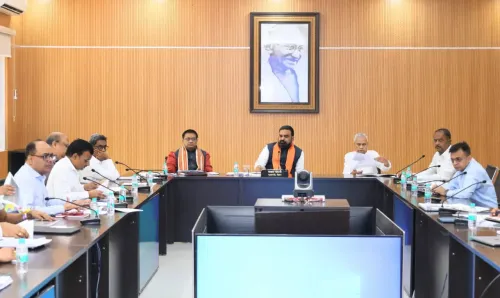
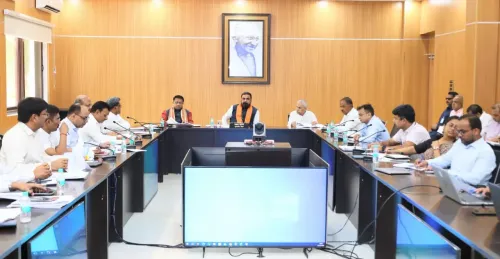
Bihar CM's Office Stresses Crackdown on Overloaded Vehicles
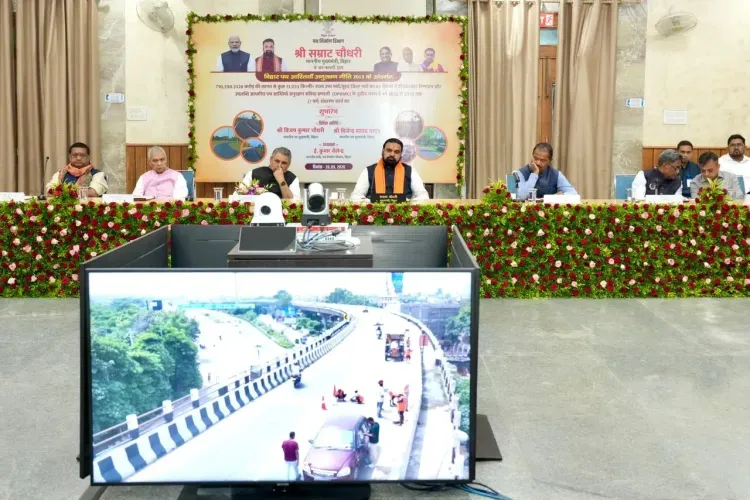
Synopsis
The Chief Minister's Office of Bihar on 26 September 2026 stressed effective control over overloaded commercial vehicles and the safety of the state's bridges and roads, reinforcing a recurring enforcement priority under CM Nitish Kumar's infrastructure-focused administration.
Key Takeaways
The Chief Minister's Office of Bihar issued a directive on 26 September 2026 calling for effective control over overloaded vehicle operations.
The directive specifically emphasised protecting bridges and roads from damage caused by overweight commercial vehicles.
The push aligns with the Motor Vehicles (Amendment) Act 2019 , which introduced significantly higher penalties for overloaded vehicles nationally.
CM Nitish Kumar's administration has a long record of pairing large-scale road and bridge construction with periodic vehicle-load compliance drives.
Key stakeholders include truck operators and road maintenance agencies , whose costs are directly affected by overloading enforcement.
Follow-up orders from the Bihar Transport Department — including possible weigh-in-motion installations — will determine how this directive translates on the ground.
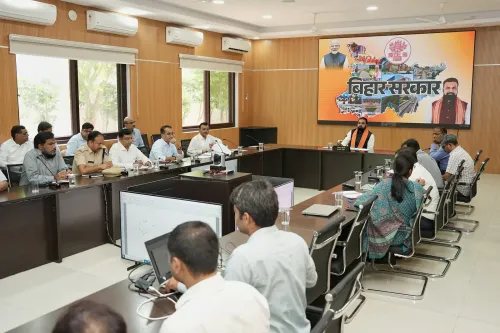
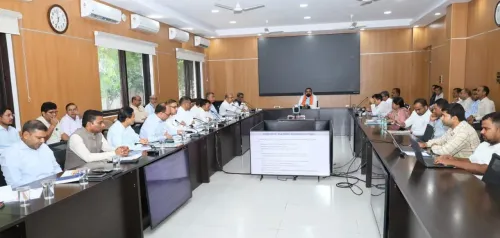
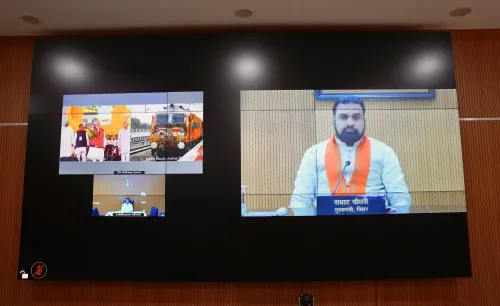
Bihar's roads and bridges are under stress — and the state's top office wants it stopped. The Chief Minister's Office of Bihar on Saturday, 26 September 2026 underscored a firm push for effective control over overloaded commercial vehicles, with an equal emphasis on protecting the structural integrity of the state's bridges and roads.
The post quoted a directive stressing, in Hindi: 'उन्होंने ओवरलोड वाहनों के परिचालन पर प्रभावी नियंत्रण तथा पुलों एवं सड़कों की सुरक्षा सुनिश्चित करने पर जोर दिया' — ('He emphasised effective control over the operation of overloaded vehicles and ensuring the safety of bridges and roads.')
Why overloaded trucks are Bihar's road-safety fault line
Overloaded commercial vehicles are among the leading causes of premature road and bridge deterioration across India. When a heavily laden truck crosses a bridge or arterial road repeatedly, it accelerates structural fatigue far beyond what standard maintenance cycles can absorb — shortening infrastructure lifespans by years, sometimes decades. In a state like Bihar, which has invested heavily in road and bridge construction under Chief Minister Nitish Kumar, allowing unchecked overloading effectively erodes those gains from within.
Nationally, the Motor Vehicles (Amendment) Act of 2019 raised the financial stakes significantly: penalties for overloaded vehicles were sharply increased to deter operators. Yet enforcement on the ground has remained uneven across states, and periodic regulatory drives are still needed to make the law felt beyond the statute books.
Bihar's infrastructure-build paired with compliance drives
Nitish Kumar's administration has long anchored its governance identity on infrastructure — roads and bridges have been a signature deliverable for over a decade. The pattern that has emerged is a deliberate pairing: large-scale construction on one side, regulatory enforcement on vehicle load compliance on the other. Without the second half of that equation, new infrastructure simply inherits the same damage cycle as the old.
Key stakeholders in this drive include truck operators and freight logistics firms who routinely exceed permissible axle loads to maximise per-trip margins, and road maintenance agencies whose repair budgets are stretched thin by the resulting damage. Enforcement mechanisms such as weigh-in-motion stations on highways represent the next logical escalation — and any follow-up orders from the Bihar Transport Department will signal how seriously the directive translates into action.
The message from Patna is clear: Bihar's bridges were built to last — and overloaded trucks will not be allowed to decide otherwise.
Point of View
Who has staked considerable political capital on roads and bridges as visible governance deliverables, this enforcement emphasis is also a reputational hedge — ensuring that what gets built is seen to last. The broader pattern across Indian states suggests that post-construction regulatory discipline, not just the ribbon-cutting, is what separates durable infrastructure policy from cyclical repair spending. Watch whether Bihar follows through with weigh-station installations or transport department orders — those will be the real test of intent.
NationPress
26 Sept 2026
Frequently Asked Questions
Why is Bihar cracking down on overloaded vehicles?
Bihar's Chief Minister's Office stressed that overloaded commercial vehicles cause serious damage to bridges and roads, undermining the state's large infrastructure investments. The drive aims to protect structural integrity and extend the lifespan of Bihar's road network.
What does Indian law say about overloaded trucks?
The Motor Vehicles (Amendment) Act of 2019 significantly increased financial penalties for operating overloaded vehicles across India, making non-compliance more costly for truck operators and freight companies.
Who is affected by Bihar's overloaded vehicle enforcement?
Truck operators and freight logistics firms that routinely exceed permissible axle loads face the most direct impact, while road maintenance agencies and the general public benefit from reduced infrastructure damage and longer-lasting roads.
What role has Nitish Kumar played in Bihar's road infrastructure?
Chief Minister Nitish Kumar has made road and bridge construction a defining feature of his administration over more than a decade, and has paired this construction drive with periodic enforcement campaigns on vehicle weight compliance.
What enforcement measures could Bihar use against overloaded vehicles?
Beyond traditional checkpoints, Bihar could deploy weigh-in-motion stations on highways, issue fresh transport department orders, and increase penalty collection drives — all of which would signal a more sustained enforcement push beyond a single directive.