Bihar govt plans LiDAR surveys, UNESCO push for Bodh Gaya and Kaimur heritage sites

Synopsis
Bihar is going beyond routine conservation — deploying LiDAR and GPR at Bodh Gaya, eyeing a UNESCO listing for Kaimur's ancient ruins, and building an eco-tourism circuit around the Banaras-Kolkata Expressway. With Padma Shri archaeologist K.K. Mohammed in the room, this is the most serious archaeological mobilisation the state has signalled in years.
Key Takeaways
Chief Minister Samrat Chaudhary on 4 August directed a phased archaeological action plan covering Bodh Gaya , Sultanganj , Mandar , Kesaria Stupa , and Kaimur .
Advanced LiDAR and GPR surveys ordered for the Mahabodhi Temple complex to map underground remains without excavation.
Thousands of ancient ruins in the Maa Mundeshwari Temple complex , Kaimur, identified as having significant archaeological value.
Sites at Tilhar Kund and Karkatgarh in Kaimur are about 4 km from the Banaras-Kolkata Expressway , improving tourist access.
Government plans to seek inclusion of eligible sites in the UNESCO World Heritage tentative list after conservation work.
Padma Shri archaeologist K.K.
Mohammed and an ASI official were part of the expert delegation at the meeting.
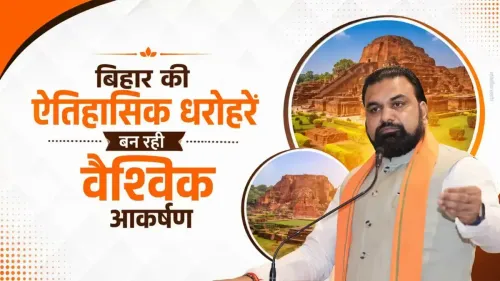
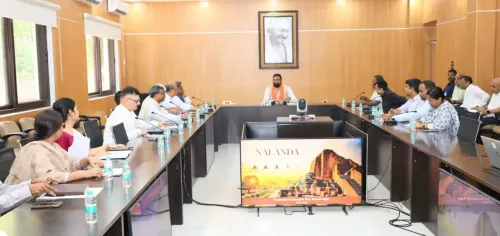
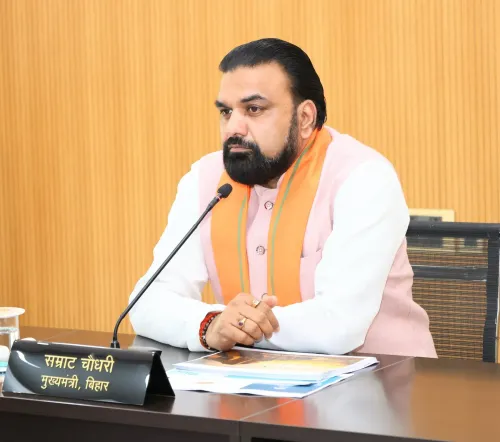
The Bihar government is drawing up a sweeping archaeological action plan to secure global recognition for the state's ancient heritage and transform key sites — including Bodh Gaya, Sultanganj, Mandar, Kesaria Stupa, and the Maa Mundeshwari Temple complex in Kaimur — into world-class tourism destinations. Chief Minister Samrat Chaudhary issued the directive on 4 August following a high-level meeting with senior archaeologists and heritage experts in Patna.
Key Directives from the Chief Minister
Chaudhary has asked officials to prepare a phased action plan covering conservation, scientific survey, excavation, and integrated development of the identified heritage sites. He specifically directed that the Mahabodhi Temple complex in Bodh Gaya and its surrounding areas be surveyed using advanced non-invasive technologies — LiDAR (Light Detection and Ranging) and GPR (Ground Penetrating Radar) — to detect potential underground structures and archaeological remains before any excavation begins. The approach signals a shift toward precision archaeology, allowing teams to target digs more effectively and minimise site disruption.
Maa Mundeshwari Temple and the Kaimur Circuit
A delegation of experts presented a detailed survey report on the Maa Mundeshwari Temple complex in Kaimur, identifying thousands of ancient ruins with significant archaeological value scattered across the complex and its surroundings. The delegation recommended scientific documentation, conservation, and restoration of these ruins, and proposed developing the wider region as a major centre of Indian archaeological heritage.
The meeting also examined the potential of natural and prehistoric sites in Kaimur — including Tilhar Kund and Karkatgarh — located approximately four kilometres from the Banaras-Kolkata Expressway. Experts noted that improved road connectivity through the expressway could significantly boost tourist footfall. The combination of natural landscapes, prehistoric remains, and archaeological heritage, they argued, makes Kaimur a strong candidate for a new heritage and eco-tourism circuit in Bihar.
UNESCO World Heritage Listing in Sight
Following scientific conservation and systematic development, the government intends to pursue inclusion of eligible sites in the UNESCO World Heritage tentative list. No timeline has been specified, but the move would place Bihar's heritage on a formal international track for the first time in recent years. Bodh Gaya already holds UNESCO World Heritage status; the new push appears aimed at extending that recognition to lesser-known but archaeologically rich sites across the state.
Who Was in the Room
The delegation that met Chief Minister Chaudhary included Padma Shri archaeologist K.K. Mohammed; Professor Rajat Sanyal of the Kolkata Institute; Professor Anil Kumar; Hariom Sharma, CEO of the Bihar Heritage Development Society; the Superintending Archaeologist of the Archaeological Survey of India (ASI); Development Commissioner Mihir Kumar Singh; and Pranav Kumar, Secretary of the Art, Culture and Youth Affairs and Building Construction departments. The presence of a Padma Shri archaeologist and an ASI official underscores the seriousness the state is attaching to the initiative.
What Comes Next
Officials are expected to submit a detailed action plan incorporating expert recommendations, with phased timelines for each site. Tourism infrastructure development — including visitor facilities, signage, and access roads — will be integrated into the conservation plan so that heritage experience and tourism readiness advance in parallel. The government's broader ambition is to reposition Bihar as a global destination for religious, cultural, and archaeological tourism, building on the international draw of sites like Bodh Gaya while unlocking the potential of under-explored locations like Kaimur.
Point of View
Not optics. The real test is execution: India has a long history of survey reports gathering dust. The UNESCO tentative-list ambition is credible for sites like Kesaria Stupa, which hosts the world's largest Buddhist stupa, yet remains largely unknown internationally. If the Kaimur eco-tourism circuit is built with the Banaras-Kolkata Expressway as its spine, it could genuinely shift tourist flows — but that requires infrastructure and hospitality investment that the action plan has not yet detailed.
NationPress
19 Sept 2026
Frequently Asked Questions
What is Bihar's new archaeological heritage plan?
The Bihar government is preparing a phased action plan for the conservation, scientific survey, excavation, and integrated tourism development of key heritage sites including Bodh Gaya, Kesaria Stupa, Sultanganj, Mandar, and the Maa Mundeshwari Temple complex in Kaimur. Chief Minister Samrat Chaudhary issued the directive on 4 August following a meeting with senior archaeologists and ASI officials.
Why is LiDAR being used at Bodh Gaya?
LiDAR (Light Detection and Ranging) and GPR (Ground Penetrating Radar) are non-invasive technologies that can detect underground structures and archaeological remains without immediate excavation. Using them at the Mahabodhi Temple complex allows authorities to map what lies beneath the surface first, making any subsequent digging more targeted and scientifically precise while minimising damage to the site.
Which sites in Kaimur are being developed for tourism?
The Maa Mundeshwari Temple complex, along with the natural and prehistoric sites of Tilhar Kund and Karkatgarh, are being prioritised in Kaimur. All three are located approximately four kilometres from the Banaras-Kolkata Expressway, which is expected to improve accessibility for tourists.
Will any Bihar heritage sites be nominated for UNESCO World Heritage status?
The government plans to seek inclusion of eligible sites in the UNESCO World Heritage tentative list after scientific conservation and systematic development are completed. No specific timeline has been announced, though Bodh Gaya already holds UNESCO World Heritage status.
Who were the experts involved in the heritage meeting?
The delegation included Padma Shri archaeologist K.K. Mohammed, Professor Rajat Sanyal of the Kolkata Institute, Professor Anil Kumar, Bihar Heritage Development Society CEO Hariom Sharma, an ASI Superintending Archaeologist, Development Commissioner Mihir Kumar Singh, and departmental secretary Pranav Kumar.