How is Bihar's record Rs 3.47 lakh crore budget shaping growth and social justice?
Synopsis
Bihar's groundbreaking budget of Rs 3.47 lakh crore for 2026-27 aims to foster economic growth, create job opportunities, and enhance social justice. With a focus on education, health, and infrastructure, this budget sets the stage for a transformative year ahead.
Key Takeaways
Bihar's budget for 2026-27 is Rs 3.47 lakh crore, the largest in history.
Focus on education with Rs 68,216.95 crore allocated.
Job creation target set at one crore opportunities.
Significant investment in health and infrastructure.
Commitment to women's empowerment through various initiatives.
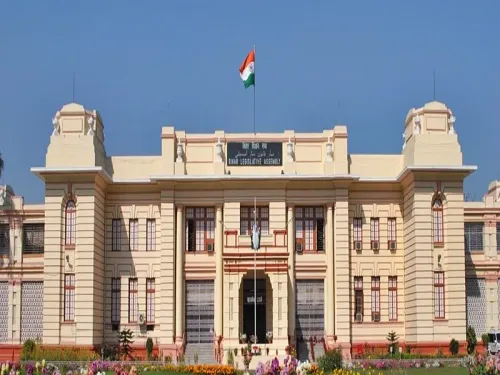
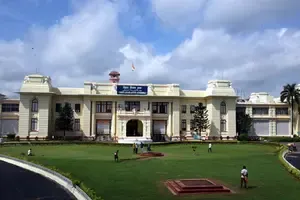
Patna, Feb 3 (NationPress) The government of Bihar unveiled an unprecedented budget of Rs 3,47,589.76 crore for the fiscal year 2026–27, marking a historic milestone for the state.
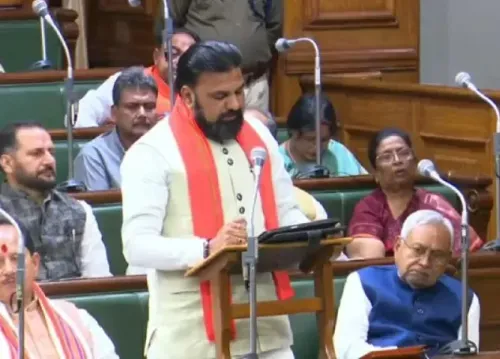
Presented by Finance Minister Bijendra Yadav in the Bihar Legislative Assembly, this budget signifies an increase of about Rs 30,695 crore compared to the last fiscal year.
The Bihar government characterized this budget as a crucial move towards accelerating economic growth, creating jobs, and advancing social justice.
A standout feature of the budget is the substantial boost in capital expenditure, with Rs 63,455.84 crore earmarked, representing 18.26 percent of the total budget.
This investment will focus on developing lasting infrastructure, including roads, bridges, irrigation systems, power stations, water supply networks, educational institutions, and healthcare facilities.
Education, particularly higher education, has received the largest allocation, with Rs 68,216.95 crore dedicated to it.
A considerable portion of this will go towards the salaries and benefits of both teaching and non-teaching personnel, alongside initiatives for establishing new degree colleges, model schools, recruiting teachers, promoting digital education, and expanding higher education.
The health sector is allocated Rs 21,270.40 crore, which aims to enhance district hospitals, set up new medical colleges, and expand healthcare services.
The Home Department, responsible for security, has been allocated Rs 20,270.40 crore, prioritizing improvements in law and order through technological advancements and better policing infrastructure.
For the agriculture-dependent state, the government announced the continuation of Agriculture Roadmap-4, focusing on boosting the production of maize, pulses, oilseeds, fruits, and vegetables.
Under the Chief Minister Kisan Samman Nidhi scheme, farmers will benefit from additional support of Rs 3,000 annually.
The budget also aims to enhance cold storage facilities, food processing units, and agricultural startups, with the goal of increasing farmers' incomes and generating rural employment.
Women’s empowerment has been a focal point, with the government pledging ongoing financial assistance to women involved in self-help groups, facilitating easy loans for self-employment, and encouraging activities like dairy, food processing, tailoring, and local industries.
These initiatives are designed to further bolster women's participation in the development of Bihar.
The state government aims to create one crore (10 million) job opportunities in the coming years.
Expansion of skill development centers and establishment of industrial clusters are planned to promote industrial growth.
Based on the new industrial policy, the government is optimistic about attracting substantial investments, with a target of Rs 50 lakh crore in capital investments for the upcoming financial year.
Special attention will be given to MSMEs and startups.
The budget outlines plans for the enhancement of rural and urban road networks and improvements in power generation and distribution.
Notably, per capita electricity consumption has climbed to 374 units, with a renewed emphasis on solar and renewable energy.
Affordable housing initiatives for urban underprivileged populations will continue, alongside the strengthening of flagship programs like 'Har Ghar Nal Se Jal'.
Flood control and irrigation projects remain top priorities.
Despite the extensive budget allocation, the government has successfully maintained a fiscal deficit of 2.99 percent of GSDP, adhering to established limits.
The total debt of the state is also reported to be within safe parameters.
The budget includes specific provisions for Scheduled Castes, Scheduled Tribes, and other marginalized groups.
The Scheduled Castes Department has received Rs 19,603 crore, while the Scheduled Tribes Department will get Rs 1,648 crore.
Point of View
It is crucial to recognize the significance of Bihar's record budget. This ambitious financial plan not only aims at economic growth but also emphasizes social justice, setting a precedent for inclusive development in the region. In a time when states need to prioritize sustainable growth, Bihar's initiatives could serve as a model for others to follow.
NationPress
21 Oct 2026
Frequently Asked Questions
What is the total budget presented by the Bihar government for 2026-27?
The total budget presented by the Bihar government for 2026-27 is Rs 3,47,589.76 crore.
What are the key focuses of the Bihar budget?
The key focuses of the Bihar budget include economic growth, job creation, social justice, and significant investments in education, health, and infrastructure.
How much has been allocated for education in the Bihar budget?
The Bihar budget has allocated Rs 68,216.95 crore for education, with a focus on higher education and infrastructure development.
What initiatives are included for women's empowerment?
The budget includes financial assistance for women in self-help groups, easy loans for self-employment, and support for activities like dairy and food processing.
What is the target for job creation in Bihar?
The Bihar government aims to create one crore (10 million) job opportunities in the coming years.