Bihar sets ₹4.95 lakh crore credit target for 2026-27, banks told to lend faster
Synopsis
Bihar has set a ₹4.95 lakh crore credit target for 2026-27 — but banks have disbursed only 38.25% of it by September. The state is now deploying a 100-point scoring index to rank every bank, and some of India's largest lenders, including SBI and Canara Bank, have landed in the red zone.
Key Takeaways
Bihar has set an Annual Credit Plan target of ₹4.95 lakh crore for 2026-27 , covering agriculture, MSMEs, startups, and priority sectors.
Banks disbursed ₹1,89,343 crore — just 38.25% of the target — by the end of the September 2026 quarter .
A new 100-point scientific performance index now ranks banks in Green, Yellow, and Red zones; IDFC First Bank tops with 74 points , while SBI (32), Canara Bank (27), and IDBI Bank (26) are in the Red Zone.
Agriculture lending achieved only 28% of its target (₹43,967 crore of ₹1,57,015 crore); MSME lending fared better at 52.68% .
Bihar's credit-deposit ratio stood at 60.17% as of 30 September 2026 , with Development Commissioner Mihir Kumar Singh calling any ratio below 50% unacceptable for major banks.
Over 28,625 artisans were formalised under PM Vishwakarma and 2,17,731 applications approved under PM SVANidhi .
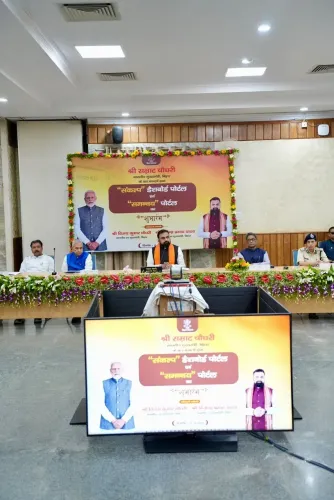
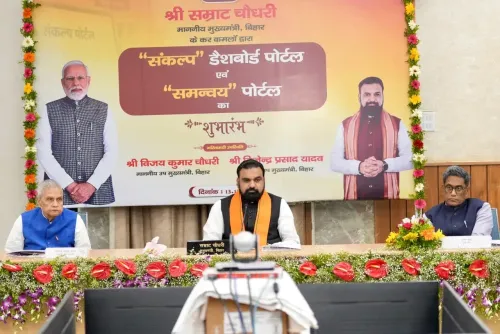
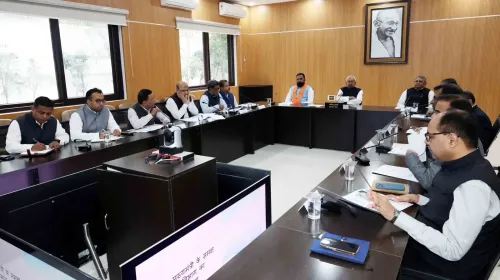
Bihar has fixed an Annual Credit Plan (ACP) target of ₹4.95 lakh crore for the financial year 2026-27, with the state government directing banks to sharply accelerate lending across agriculture, MSMEs, startups, and other priority sectors. The directive came during a high-level review meeting held at the Old Secretariat, Patna, on 24 October 2026, under the chairmanship of Development Commissioner Mihir Kumar Singh.
Mid-Year Performance: Where Banks Stand
Against the ₹4.95 lakh crore annual target, banks in Bihar had disbursed ₹1,89,343 crore by the end of the September 2026 quarter — achieving just 38.25% of the full-year goal. This nonetheless represents a year-on-year improvement of ₹46,228 crore over the corresponding period of 2025-26.
Sector-wise, the MSME segment fared best, recording disbursements of ₹84,091 crore against a target of ₹1,59,632 crore — a 52.68% achievement rate. Agriculture lagged considerably, with banks extending ₹43,967.17 crore against a target of ₹1,57,015 crore, amounting to only 28% of the sectoral goal. Overall priority-sector lending reached ₹1,30,619 crore against a target of ₹3,55,532 crore, or 36.74%.
New 100-Point Performance Index for Banks
A significant structural measure introduced at the meeting was a 100-point scientific measurement index to assess and rank every bank operating in Bihar. The index creates a transparent scoring framework and classifies banks into three categories: Green Zone (50 points and above, excellent performance), Yellow Zone (40–49 points, moderate performance), and Red Zone (below 40 points, underperformers).
IDFC First Bank topped the rankings with 74 points, followed by Jammu and Kashmir Bank and RBL Bank at 68 points each. HDFC Bank scored 65 and Bank of Baroda scored 64, both in the Green Zone. The Yellow Zone includes ICICI Bank (47), Bank of India (47), Punjab National Bank (45), and Axis Bank (42), among others.
Notably, several large public-sector lenders found themselves in the Red Zone: State Bank of India scored just 32 points, Canara Bank scored 27, and IDBI Bank, Bandhan Bank, and Kotak Mahindra Bank each scored 26. Development Commissioner Singh expressed concern over banks in the red zone and directed them to intensify lending through the remainder of the financial year.
Credit-Deposit Ratio and Deposit Landscape
Bihar's credit-deposit (CD) ratio stood at 60.21% at the close of financial year 2025-26 and dipped marginally to 60.17% as of 30 September 2026. Total deposits in the state reached ₹6,49,225 crore, while outstanding credit stood at ₹3,90,655 crore. Year-on-year, deposits rose by ₹33,797 crore and credit grew by ₹20,092 crore.
Singh warned that a CD ratio below 50% was unacceptable for major banks holding a substantial share of Bihar's deposits, emphasising that funds mobilised from Bihar's residents must be channelled back into productive economic activity within the state.
Welfare Scheme Lending: Key Numbers
The meeting reviewed lending under several central government welfare schemes. Under the Kisan Credit Card (KCC) scheme, farmers received ₹8,344.70 crore across 7,37,906 accounts, including the renewal of 7,12,383 accounts. Lending in animal husbandry amounted to ₹605.01 crore and in fisheries to ₹11.12 crore.
Under the PM Surya Ghar Muft Bijli Yojana, 13,911 applications were approved, facilitating disbursements of ₹284.51 crore. The PM SVANidhi scheme recorded 2,17,731 approved applications with loans worth ₹2,09,959 lakh disbursed. Additionally, 2,748 enterprises were covered under the PM Formalisation of Micro Food Processing Enterprises scheme, and more than 28,625 artisans were brought into the formal financial system under PM Vishwakarma.
Banks were directed to clear pending applications and reduce rejection rates — particularly under KCC, PM Vishwakarma, and street-vendor lending schemes. The state government also incorporated four additional welfare schemes into its credit-monitoring mechanism to strengthen oversight of financial flows. All eyes will now be on whether Bihar's banks can close the gap between targets and disbursements before the financial year ends in March 2027.
Point of View
But a 38.25% achievement rate at the half-year mark underlines a structural gap between what banks mobilise from the state and what they lend back into it. The 100-point ranking system is a smart accountability lever — but the real surprise is finding SBI, Canara Bank, and IDBI in the red zone, a reminder that size and state presence do not automatically translate into credit penetration. Agriculture's 28% achievement is the most troubling number in this report: Bihar remains a farm-dependent economy, and lagging KCC disbursals directly constrain rural incomes. The Development Commissioner's warning on CD ratios below 50% has teeth only if the state follows up with visible consequences for underperformers in the next review.
NationPress
24 Oct 2026
Frequently Asked Questions
What is Bihar's Annual Credit Plan target for 2026-27?
Bihar has set an Annual Credit Plan (ACP) target of ₹4.95 lakh crore for the financial year 2026-27. The target covers lending to agriculture, MSMEs, startups, and other priority sectors, with banks directed to accelerate disbursals after achieving only 38.25% of the target by the September 2026 quarter.
How much has been disbursed under Bihar's credit plan so far?
Banks in Bihar had disbursed ₹1,89,343 crore by the end of the September 2026 quarter — representing 38.25% of the ₹4.95 lakh crore annual target. This was an improvement of ₹46,228 crore over the same period in 2025-26.
What is the new 100-point bank performance index introduced in Bihar?
Development Commissioner Mihir Kumar Singh introduced a 100-point scientific measurement index to score and rank banks operating in Bihar on specified parameters. Banks scoring 50 or above are placed in the Green Zone (excellent), 40–49 in the Yellow Zone (moderate), and below 40 in the Red Zone (underperformers). IDFC First Bank tops the rankings with 74 points, while SBI (32) and Canara Bank (27) are among the Red Zone banks.
Which sectors are lagging in credit disbursement in Bihar?
Agriculture is the most under-served sector, with banks disbursing ₹43,967.17 crore against a target of ₹1,57,015 crore — just 28% of the goal. Overall priority-sector lending achieved 36.74%, while MSMEs fared better at 52.68% of target.
What is Bihar's credit-deposit (CD) ratio, and why does it matter?
Bihar's credit-deposit ratio stood at 60.17% as of 30 September 2026, essentially flat from 60.21% at the end of 2025-26. A lower CD ratio means banks are collecting more deposits from residents than they are lending back into the state. Development Commissioner Singh has stated that a CD ratio below 50% is unacceptable for major banks with large deposit bases in Bihar.