BJP Bengal chief urges RRTS network linking Kolkata with South Bengal towns
Synopsis
BJP West Bengal chief Samik Bhattacharya has formally pitched a Kolkata-anchored RRTS network to the Centre, modelled on NCRTC's Namo Bharat corridors. The VVB-RRTS proposal would link Kolkata with industrial hubs like Durgapur and Haldia and tourism centres like Mayapur — and could reshape commuter mobility across South Bengal if the Union Ministry greenlights a full feasibility study.
Key Takeaways
BJP West Bengal president Samik Bhattacharya wrote to Union Minister Manohar Lal Khattar on 19 September 2026 seeking a Kolkata RRTS network.
The proposed VVB-RRTS would connect Kolkata with towns including Durgapur , Asansol , Haldia , Bardhaman , Krishnanagar , and Diamond Harbour .
Corridors are designed to run along existing highways and rail alignments to minimise land acquisition.
A special purpose vehicle — the West Bengal Rapid Transit Corporation (WBRTC) — is proposed with joint ownership by the Centre and West Bengal.
Bhattacharya has requested a detailed study covering engineering, demand forecasting, and financial analysis if the Centre finds the preliminary proposal viable.
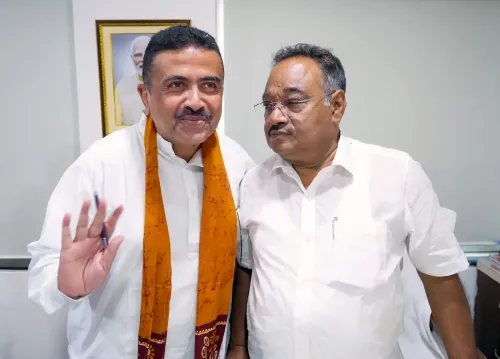
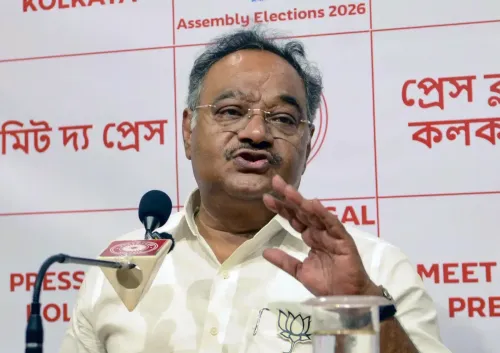
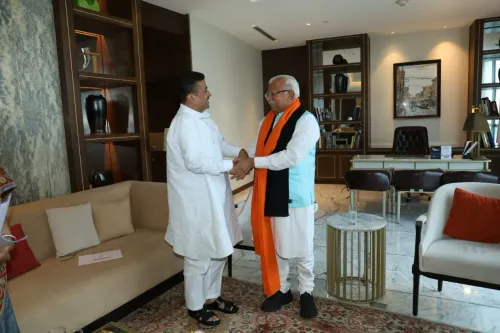
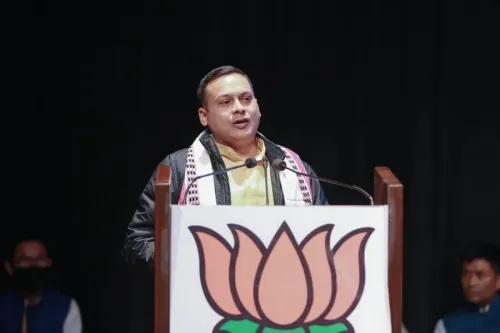
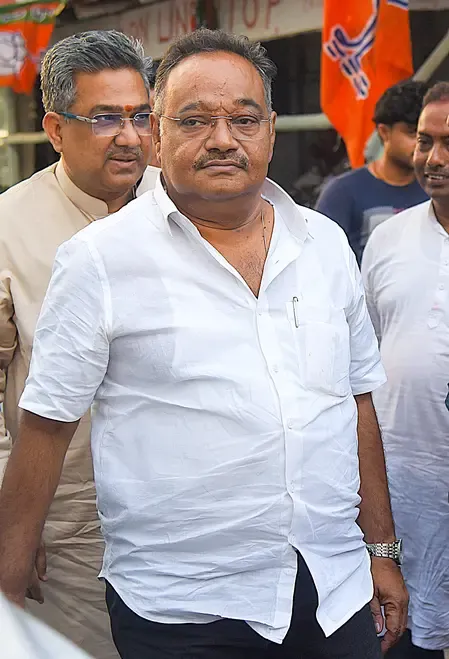
Bharatiya Janata Party (BJP) West Bengal president and Rajya Sabha member Samik Bhattacharya has written to Union Housing and Urban Affairs Minister Manohar Lal Khattar, urging the Centre to examine a proposal for a Regional Rapid Transit System (RRTS) network connecting Kolkata with key industrial and tourism towns across South Bengal. The letter, sent on 19 September 2026, advances a preliminary feasibility study for what is being called the West Bengal Regional Rapid Transit System (VVB-RRTS).
What the Proposal Covers
The VVB-RRTS plan envisages high-speed regional corridors linking Kolkata with towns including Kalyani, Krishnanagar, and Mayapur in Nadia district; Bardhaman in East Burdwan district; Durgapur and Asansol in West Burdwan district; Falta and Diamond Harbour in South 24 Parganas district; and Haldia in East Midnapore district, among others. The proposal draws inspiration from NCRTC's Namo Bharat corridors, which have introduced metro-like, high-frequency regional rail travel in the National Capital Region.
Key Design Principles
According to Bhattacharya, the proposal is engineered to minimise land acquisition by routing corridors along existing highways and railway alignments — a cost-saving approach that has been central to similar RRTS projects elsewhere. It also recommends establishing a special purpose vehicle, the West Bengal Rapid Transit Corporation (WBRTC), structured on the lines of NCRTC, with joint ownership shared between the Government of India and the Government of West Bengal.
Why Connectivity is a Concern
Bhattacharya's letter notes that South Bengal's links to Kolkata are currently dominated by conventional railway routes and highways, both of which are frequently congested and ill-suited for high-frequency commuter travel. The proposed RRTS is intended to ease pressure on existing transport infrastructure, strengthen industrial corridors, and improve access to tourism destinations such as Mayapur and Diamond Harbour. Notably, South Bengal houses several large manufacturing clusters — including Haldia's petrochemical belt and the Durgapur-Asansol industrial strip — whose workforce mobility remains constrained by legacy rail and road networks.
What Bhattacharya Has Asked For
The BJP leader has requested Minister Khattar to assess the preliminary feasibility report and, if deemed suitable, commission a detailed feasibility study covering engineering assessments, demand forecasting, and financial analysis — to be conducted in coordination with the West Bengal government. 'I would be glad to facilitate an interaction with the report's authors, should that be of assistance, and trust this proposal will receive your kind and favourable consideration,' Bhattacharya said in his letter. The ball is now in the Centre's court, with the next step contingent on the Union Ministry's response to the preliminary proposal.
Point of View
Championing a large infrastructure corridor — one that would require Centre-state cooperation — puts the onus on the TMC government to either collaborate or be seen as blocking development. The Namo Bharat framing is deliberate: it ties the proposal to a visible, Modi-era success story, making rejection politically costly. But the real challenge is institutional: RRTS projects succeed only when Centre and state governments work in lockstep, and the current acrimony between Delhi and Kolkata over multiple schemes makes joint ownership of a WBRTC a significant governance question that the letter does not address.
NationPress
19 Sept 2026
Frequently Asked Questions
What is the West Bengal RRTS (VVB-RRTS) proposal?
The VVB-RRTS is a preliminary feasibility proposal for a Regional Rapid Transit System connecting Kolkata with key South Bengal towns including Durgapur, Asansol, Haldia, Bardhaman, Krishnanagar, and Diamond Harbour. It is modelled on NCRTC's Namo Bharat corridors and envisions metro-like, high-speed regional connectivity across the state.
Who sent the RRTS proposal to the Centre and why?
BJP West Bengal president and Rajya Sabha member Samik Bhattacharya wrote to Union Housing and Urban Affairs Minister Manohar Lal Khattar on 19 September 2026. He argued that South Bengal's existing road and rail links to Kolkata are congested and unsuitable for high-frequency commuter travel.
Which towns would the proposed Kolkata RRTS network cover?
The proposed network would connect Kolkata with Kalyani, Krishnanagar, and Mayapur in Nadia; Bardhaman in East Burdwan; Durgapur and Asansol in West Burdwan; Falta and Diamond Harbour in South 24 Parganas; and Haldia in East Midnapore, among other towns.
What is the WBRTC and how would it work?
The West Bengal Rapid Transit Corporation (WBRTC) is a proposed special purpose vehicle to implement and operate the RRTS network, structured on the lines of NCRTC. It would be jointly owned by the Government of India and the Government of West Bengal.
What is the next step for the RRTS proposal?
Bhattacharya has requested Minister Khattar to assess the preliminary report and, if found suitable, commission a detailed feasibility study covering engineering, demand forecasting, and financial analysis in coordination with the West Bengal government. No formal approval or timeline has been announced yet.