India's BRICS strategy shapes Southeast Asia's engagement with the bloc
Synopsis
Four ASEAN nations are now formally tied to BRICS, and India — straddling the Quad, the EU, and the Global South — is the one power positioned to shape what that means. A new policy analysis argues New Delhi's calibrated multilateralism, backed by dense bilateral partnerships across Southeast Asia, gives it unmatched influence over how ASEAN hedges between Washington and the BRICS bloc.
Key Takeaways
India has pursued a slow, calibrated BRICS strategy with a deliberate Southeast Asian dimension, according to a report by The Interpreter .
Indonesia joined BRICS as a full member; Malaysia , Thailand , and Vietnam were inducted as partner countries in 2025 , bringing four of 11 ASEAN nations into the fold.
US President Donald Trump has threatened 100 per cent tariffs on BRICS members that act to undermine the US dollar .
ASEAN members in BRICS have been careful to avoid appearing to 'take sides' against the West — mirroring India's own positioning.
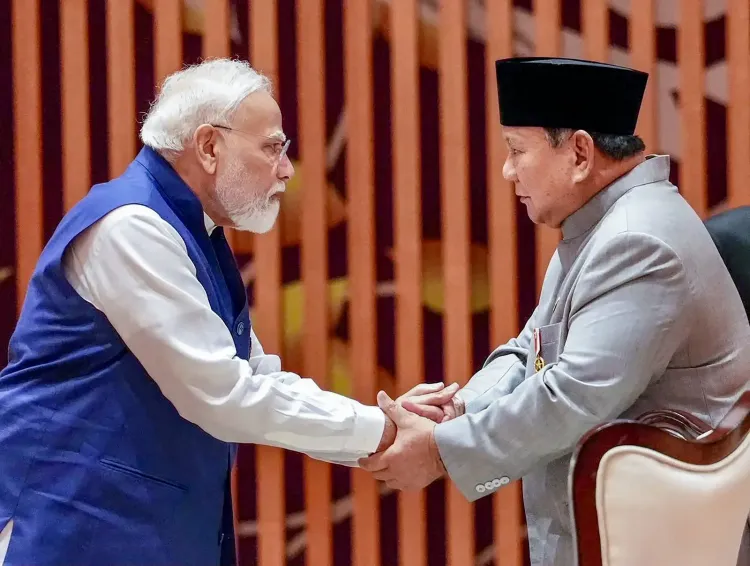
India holds strategic partnerships with Vietnam , Indonesia , Malaysia , and Thailand , covering semiconductors, defence, and connectivity.
The New Delhi Declaration from the 18th BRICS Summit reaffirmed the G20 as the 'premier global forum for international economic cooperation.'
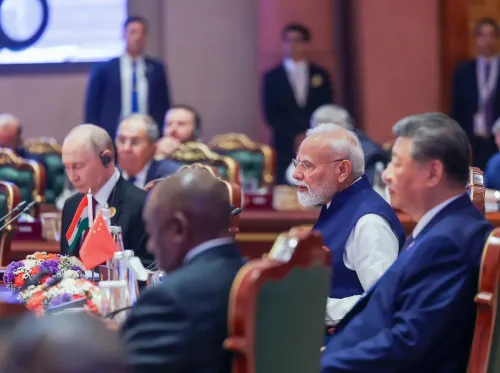
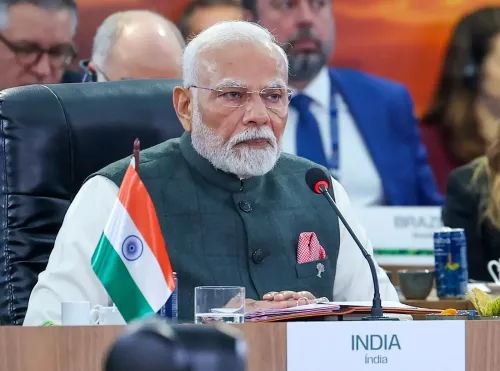
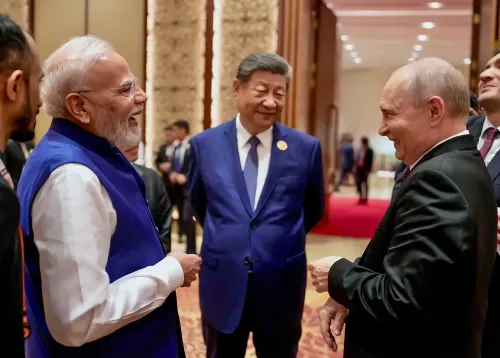
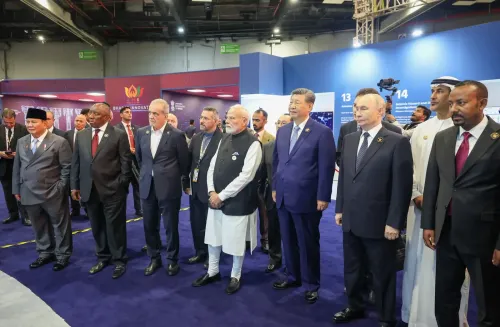
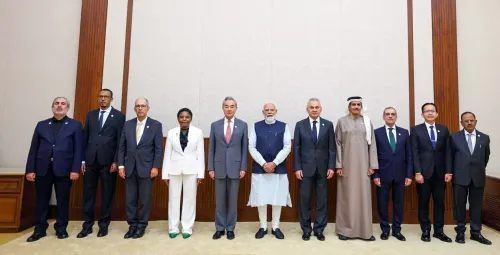
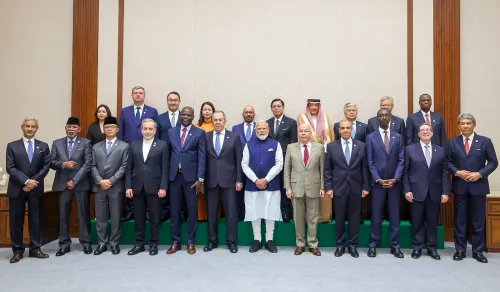
India has pursued a slow, calibrated strategy within BRICS, one that carries a distinctly Southeast Asian imprint. By reinforcing its approach to mobilising the Global South, New Delhi is increasingly positioned to shape how ASEAN — as a regional bloc with its own institutional structures — chooses to engage with the grouping, according to a report published by the Australia-based policy journal The Interpreter.
India's BRICS Moment and the G20 Parallel
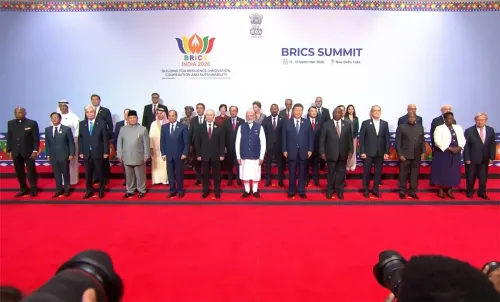
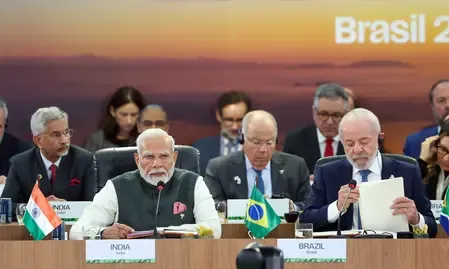
The report draws a pointed comparison between India's hosting of the 18th BRICS Summit and its earlier turn as G20 chair in 2023. 'A certain deja vu accompanied the buzz leading up to India's BRICS Summit held last week — India's turn as G20 chair in 2023 offered similar fanfare and great expectations. The geopolitics might have changed from three years ago, but the same messages about India's convening power and framing a public goods agenda for the organisation carried through,' the report noted.
The New Delhi Declaration adopted at the summit underscored 'the key role of the G20 as the premier global forum for international economic cooperation' — signalling that India views the two multilateral tracks as complementary rather than competing.
Southeast Asia's Deepening BRICS Footprint
The expanding BRICS footprint in Southeast Asia has drawn attention. Indonesia recently joined as a full member, while Malaysia, Thailand, and Vietnam were inducted as partner countries in 2025. That development means four of the 11 ASEAN countries now have formal ties to BRICS — a shift that triggered 'alarm bells' in some quarters, the report acknowledged, particularly given US President Donald Trump's threat of 100 per cent tariffs against BRICS members should they act to undermine the US dollar.
Notably, ASEAN members within BRICS have been careful to signal they are not 'taking a side' against the West — a posture, the report argued, that aligns closely with India's own approach to the grouping.
India's Ties with the West: A Balancing Act
The report stressed that India's commitment to inclusive multilateralism has defined its model of Global South mobilisation, a model that is finding increasing resonance across Southeast Asia. What makes India's position distinctive, it argued, is the country's functional relationships with Western partners — through frameworks such as the Quad, the Indian Ocean Rim Association, and enhanced ties with the European Union — even as its relations with the United States have grown 'increasingly erratic.'
This dual engagement gives New Delhi a credibility that few BRICS members can replicate: it can advocate for the Global South while remaining anchored in Western-led security and economic architectures.
India's Strategic Bilateral Web in Southeast Asia
The report highlighted India's dense network of bilateral partnerships in the region as the structural foundation for this influence. India holds an Enhanced Comprehensive Strategic Partnership with Vietnam, Comprehensive Strategic Partnerships with Indonesia and Malaysia, and a Strategic Partnership with Thailand. These ties have been cultivated deliberately over recent years, spanning cooperation in semiconductors, defence industry, and connectivity.
'India has an Enhanced Comprehensive Strategic Partnership with Vietnam, Comprehensive Strategic Partnerships with Indonesia and Malaysia, and a Strategic Partnership with Thailand. There have been sustained efforts over the last few years at cultivating bilateral relations and making them fit for purpose,' the report stated.
What This Means Going Forward
With four ASEAN nations now formally linked to BRICS and India serving as a bridge between the Global South and Western-led institutions, the coming months will test whether New Delhi can translate diplomatic capital into tangible agenda-setting within the bloc. The trajectory of US tariff threats and evolving ASEAN hedging strategies will be central to how this dynamic unfolds.
Point of View
New Delhi avoids the binary that traps most Global South actors — but this also means it risks satisfying neither camp fully. The real test is not whether India can convene; it has demonstrated that twice now, at the G20 and BRICS. The test is whether it can convert convening power into durable agenda outcomes — on debt restructuring, technology access, or currency arrangements — that Southeast Asian partners can point to as concrete gains. So far, the record is one of impressive positioning but modest deliverables.
NationPress
19 Sept 2026
Frequently Asked Questions
What is India's strategy within BRICS?
India has pursued a slow, calculated approach within BRICS focused on mobilising the Global South while maintaining functional ties with Western partners through frameworks like the Quad and the EU. This positions New Delhi as a credible bridge between emerging and developed economies.
Which Southeast Asian countries have joined BRICS?
Indonesia joined BRICS as a full member, while Malaysia, Thailand, and Vietnam were inducted as partner countries in 2025. This means four of the eleven ASEAN nations now have formal ties to the grouping.
Why is the US concerned about ASEAN countries joining BRICS?
US President Donald Trump has threatened 100 per cent tariffs against BRICS members if they act to undermine the US dollar. The entry of multiple ASEAN nations into BRICS has heightened these concerns, though those countries have been careful to signal they are not taking sides against the West.
What was decided at the 18th BRICS Summit?
The New Delhi Declaration adopted at the 18th BRICS Summit reaffirmed the G20 as the premier global forum for international economic cooperation, signalling India's view that BRICS and G20 are complementary multilateral tracks rather than rivals.
How does India's bilateral engagement support its BRICS influence in Southeast Asia?
India holds an Enhanced Comprehensive Strategic Partnership with Vietnam, Comprehensive Strategic Partnerships with Indonesia and Malaysia, and a Strategic Partnership with Thailand. These relationships, spanning semiconductors, defence industry, and connectivity, give India structural leverage in shaping how ASEAN members approach BRICS.