Expanded BRICS gives India wider Global South reach and diplomatic leverage
Synopsis
An enlarged BRICS is both an opportunity and a stress test for India. The expanded grouping hands New Delhi a wider Global South platform and greater institutional bargaining power — but managing a more contradictory, less cohesive bloc will demand a level of diplomatic precision that goes well beyond summit optics.
Key Takeaways
Expanded BRICS Plus offers India a broader platform across the Middle East , Africa , Asia , and the wider Global South .
The grouping can amplify India's core foreign policy vocabulary: strategic autonomy, multipolarity, and reformed multilateralism.
Enlargement has also 'imported more contradictions' into an already non-cohesive forum, making coalition management harder.
India should deepen ties with pragmatic middle powers such as the UAE while resisting further expansion that could weaken the bloc.
BRICS Plus strengthens India's case for reform of global institutions whose structures inadequately reflect current economic and demographic realities.
The report argues the real test is whether India can make a larger, more contradictory grouping work for a multipolar order that preserves Indian autonomy .
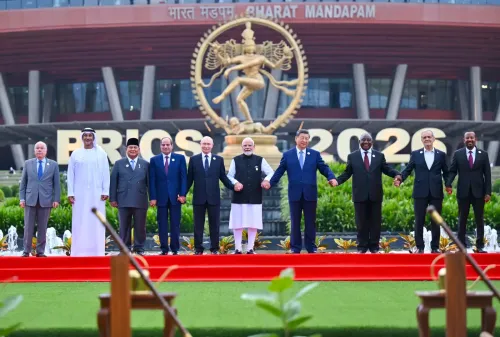
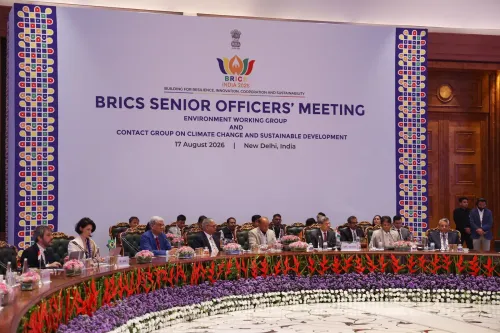
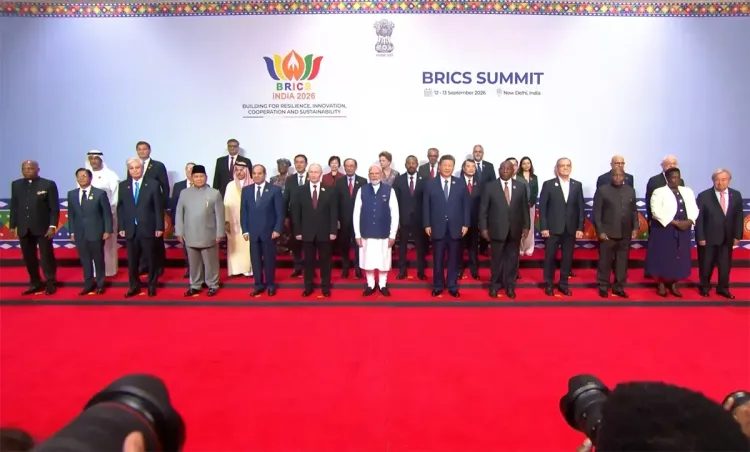
India's role in an expanded BRICS Plus extends well beyond the outcomes of the New Delhi summit, with the enlarged grouping offering New Delhi a broader Global South constituency — while simultaneously presenting a far more complex exercise in coalition management, according to a recent analytical report.
Why Enlargement Can Work in India's Favour
The report notes that while the original five-member BRICS gave India a distinctive and relatively manageable platform for engagement among emerging economies, an expanded BRICS provides New Delhi with reach across the Middle East, Africa, Asia, and the broader Global South. The report says India stands to benefit from deepening ties with pragmatic middle powers such as the UAE and other newer members — provided continued enlargement does not dilute the grouping's coherence.
'BRICS plus can amplify India's preferred vocabulary: strategic autonomy, multipolarity, sovereign equality, reformed multilateralism, and greater representation for developing countries,' the report states. It draws a key distinction: India does not need BRICS to dismantle the existing international order — it needs BRICS to strengthen its bargaining power within that order.
The Contradictions Enlargement Has Imported
The report is candid about the tensions the expanded format has introduced. 'BRICS is no longer the compact five-member forum that India helped build around the politics of emerging economies. Enlargement has given it a much broader geographic reach, greater demographic and economic weight, and an increasingly powerful claim to represent dissatisfaction with the existing international order. But expansion has also imported more contradictions into a grouping that was never particularly cohesive to begin with,' it observes.
Notably, BRICS now includes members with sharply divergent foreign policy orientations, making consensus on contentious issues harder to engineer. Managing these fault lines without fracturing the bloc will test India's diplomatic agility.
India's Platform for Multilateral Reform
According to the report, an enlarged BRICS Plus strengthens India's case for reforming global institutions — including the United Nations and international financial bodies — whose structures, critics argue, inadequately reflect current economic and demographic realities. The grouping also provides a platform for India to advance its Global South agenda on development financing, climate justice, technology access, food and energy security, resilient supply chains, and digital public infrastructure.
This aligns with a broader pattern in Indian foreign policy: using multilateral forums to build normative consensus rather than formal alliances, thereby preserving strategic flexibility.
The Statecraft Test Ahead
The report advises New Delhi to treat BRICS Plus neither as its primary foreign policy platform nor as an inconvenient legacy arrangement. Instead, it recommends India view the grouping as one pillar of a broader strategy aimed at advancing multipolarity without sliding into bloc politics.
'The central point, then, is not whether BRICS plus is stronger than the old BRICS. It is whether India can make a larger and more contradictory grouping work in favour of a multipolar order that preserves Indian autonomy,' the report concludes. While India's chairmanship can showcase its diplomatic leadership, what follows, it argues, will be a genuine test of its statecraft.
Frequently Asked Questions
How does an expanded BRICS benefit India?
An expanded BRICS Plus gives India a broader platform to engage important nations across the Middle East, Africa, and Asia, amplifying its core foreign policy positions — strategic autonomy, multipolarity, and reformed multilateralism. It also strengthens India's case for restructuring global institutions to better reflect current economic and demographic realities.
What challenges does India face in the enlarged BRICS?
The enlarged grouping has imported more contradictions into a forum that was never particularly cohesive, making consensus harder. India will need to manage diverse and sometimes conflicting member interests while preventing further expansion from diluting the bloc's effectiveness.
What is India's recommended approach to BRICS Plus, according to the report?
The report advises India to treat BRICS Plus as one pillar of a broader multipolar strategy — neither its primary foreign policy platform nor an inconvenient legacy arrangement. New Delhi should deepen ties with pragmatic middle powers like the UAE while engaging newer members carefully.
What issues can India advance through BRICS Plus?
India can use BRICS Plus to push its Global South agenda on development financing, climate justice, technology access, food and energy security, resilient supply chains, and digital public infrastructure, according to the report.
What does the report say about India's BRICS chairmanship?
The report says India's chairmanship can demonstrate its diplomatic leadership, but cautions that what follows will be the real test of its statecraft — specifically, whether it can make a larger and more contradictory grouping work in favour of a multipolar order that preserves Indian autonomy.