BJP's Mukhtar Abbas Naqvi Critiques Mamata Banerjee's Governance in Bengal
Synopsis
In a fervent critique, BJP leader Mukhtar Abbas Naqvi lambasts West Bengal's Chief Minister Mamata Banerjee, claiming the state's law and order has crumbled and predicts her political downfall. Naqvi emphasizes the urgent need for accountability and governance reform.
Key Takeaways
BJP leader Mukhtar Abbas Naqvi criticized Mamata Banerjee's governance.
Claims law and order in West Bengal has collapsed.
Predicts Banerjee's political exit is certain.
Accuses the state government of weakening constitutional institutions.
Calls for accountability and a review of governance after a decade in power.
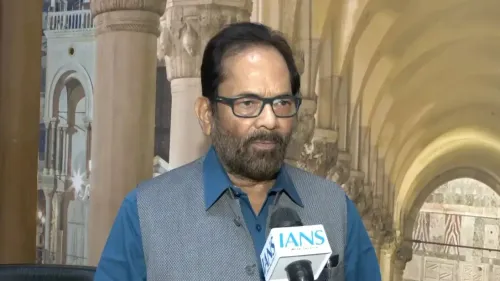
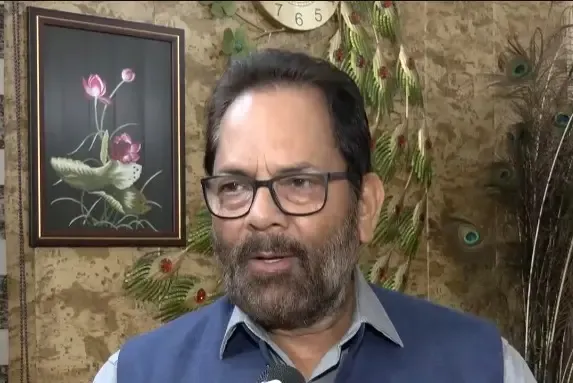
New Delhi, April 3 (NationPress) Senior Bharatiya Janata Party (BJP) figure Mukhtar Abbas Naqvi has sharply criticized West Bengal's Chief Minister Mamata Banerjee, asserting that the state's law and order has entirely deteriorated and declaring her political exit as inevitable this time.
In an interview with IANS, Naqvi expressed that Banerjee's current political standing indicates a rise in public discontent, emphasizing that such a state of affairs is intolerable in today's political environment.
He pointed out that the alarming law and order situation is underscored by incidents where judicial officials have been targeted in Malda.
"The governance condition is alarming when even those affiliated with the judiciary are at risk," Naqvi remarked, labeling the scenario as deeply unfortunate and accusing the state administration of failing to implement necessary reforms.
Naqvi further claimed that the Trinamool Congress-led government has systematically eroded constitutional institutions, a factor he believes has contributed to the current crisis.
"The current reality of West Bengal is evident to everyone," he added.
Stating that Banerjee is conscious of her looming political defeat, Naqvi indicated that her attempts to target central agencies like the Enforcement Directorate and the Central Bureau of Investigation for political gain represent a misguided strategy that will not succeed.
He asserted that after more than a decade in power, Banerjee has a moral obligation to provide a thorough evaluation of her governance to the people of West Bengal.
In addressing AIMIM Chief Asaduddin Owaisi's recent statements, Naqvi accused some leaders of engaging in so-called secular theatrics during elections.
He criticized them for leveraging the Muslim community for electoral advantage instead of genuinely working towards their empowerment.
"These individuals propagate 'miya-biwi' narratives for their own benefit. They must recognize that no one in India is unsafe—neither 'miya' nor 'biwi'," Naqvi stated, calling for moderation in political discourse.
He noted that while India advances towards inclusive development, certain factions attempt to inject a communal narrative into governance and policy decisions.
"Such divisive political tendencies will be rejected categorically," Naqvi insisted.
Commending the Centre's performance, Naqvi noted that the Union government has responded adeptly during crises and ensured that welfare initiatives are accessible to all segments of society.
He concluded by stating that India continues to prioritize a development-focused approach rather than an expansionist agenda.
Point of View
The commentary by Mukhtar Abbas Naqvi highlights significant concerns regarding governance in West Bengal. His assertions about the law and order situation reflect widespread public sentiment and underscore the challenges facing the current administration. A close examination of the political landscape suggests a potential shift in power dynamics, warranting careful observation.
NationPress
19 Sept 2026
Frequently Asked Questions
What did Mukhtar Abbas Naqvi say about Mamata Banerjee?
Naqvi criticized Banerjee for the deteriorating law and order in West Bengal, claiming her political exit is inevitable.
Why does Naqvi believe Banerjee is facing political defeat?
He argues that the growing public frustration and her failure to address law and order issues indicate her imminent political downfall.
What does Naqvi suggest regarding the state government's handling of institutions?
He accused the Trinamool Congress-led government of systematically undermining constitutional institutions.
How does Naqvi view the current political narrative in Bengal?
He believes that certain political figures are exploiting communal narratives for electoral gain rather than promoting genuine empowerment.
What is Naqvi's stance on the central government?
He praised the Union government's performance in crisis management and emphasized its commitment to inclusive development.