BJP accuses Karnataka govt of ₹14.95 crore ADCL fraud via fake accounts
Synopsis
The Enforcement Directorate has filed a supplementary PMLA complaint against five accused over the alleged siphoning of ₹14.95 crore from Karnataka's Ambedkar Development Corporation — welfare money for Scheduled Castes diverted through forged documents and a fictitious bank account. BJP's R. Ashoka has seized on the case to mount a fresh offensive against the Congress-led state government, drawing parallels to the earlier Valmiki Corporation scandal.
Key Takeaways
Ashoka alleged ₹14.95 crore in SC welfare funds was siphoned from the Dr.
Ambedkar Development Corporation (ADCL) in Karnataka .
The Enforcement Directorate filed a supplementary prosecution complaint against five accused , including Ayub Sayyed , before a special PMLA court in Bengaluru on 5 October 2026 .
Funds were allegedly diverted via a fictitious current account and premature closure of four fixed deposits of ₹5 crore each using forged documents.
An earlier ED complaint on 25 March 2026 targeted 15 accused persons ; assets worth ₹6.02 crore face confiscation proceedings.
Ashoka linked the case to the earlier Maharshi Valmiki Scheduled Tribes Development Corporation scam and challenged Rahul Gandhi on his 'Nyay' pledge.
All allegations of government complicity remain unproven; the Congress government has not issued a formal response.
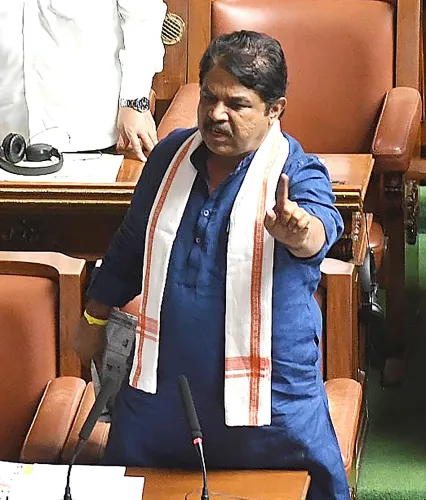
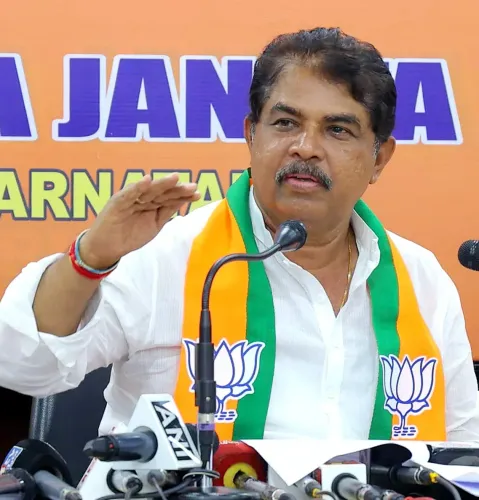
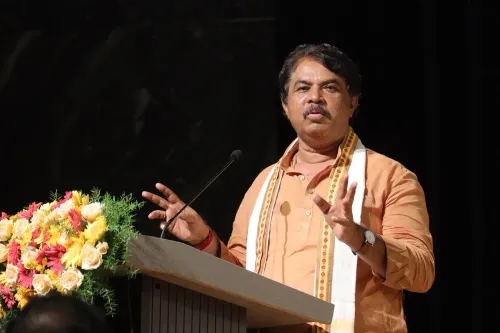
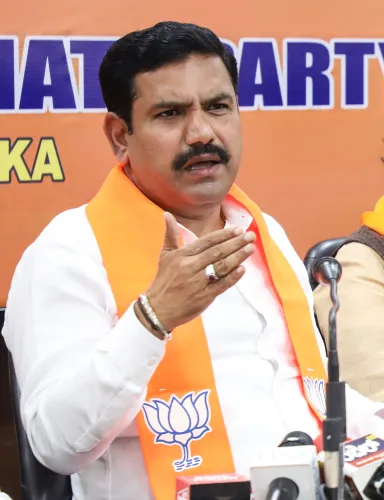
Bharatiya Janata Party (BJP) leader and Leader of the Opposition in the Karnataka Legislative Assembly, R. Ashoka, on Friday, 16 October 2026, alleged serious financial irregularities in the Dr. B.R. Ambedkar Development Corporation (ADCL), accusing the state government of siphoning off ₹14.95 crore meant for the welfare of Scheduled Castes through fictitious bank accounts, forged documents, and premature closure of fixed deposits. The allegations come on the heels of a supplementary prosecution complaint filed by the Enforcement Directorate (ED) before a special court in Bengaluru.
What the ED's Investigation Found
According to the ED, investigators uncovered that a fictitious current account was fraudulently opened in the name of the ADCL at the State Bank of Mysore's HAL II Stage Branch in Bengaluru using forged documents and impersonation. Subsequently, four fixed deposits of ₹5 crore each belonging to the ADCL were prematurely closed using fabricated Term Deposit Receipt/Fixed Deposit Receipt (TDR/FDR) instruments and forged pre-closure letters, allegedly resulting in the diversion of ₹14.95 crore — classified as proceeds of crime under the Prevention of Money Laundering Act (PMLA), 2002.
Further investigation revealed that these proceeds were allegedly routed through multiple bank accounts held by various individuals and entities, followed by layered transfers and cash withdrawals to conceal the funds' origins. Statements recorded under Section 50 of the PMLA indicated that funds were knowingly received, transferred, and withdrawn as part of the alleged money laundering operation, according to the agency.
Legal Action So Far
The ED's Bengaluru Zonal Office filed a supplementary prosecution complaint against five accused persons, including Ayub Sayyed and others, before the Special Court under the PMLA in Bengaluru on 5 October 2026. Notably, this follows an earlier prosecution complaint filed on 25 March 2026 against 15 accused persons and entities, in connection with which the ED had sought confiscation of assets worth ₹6.02 crore. A second Provisional Attachment Order was subsequently issued on 22 July, attaching an immovable property worth ₹24 lakh belonging to one of the accused. The ED's probe was initiated on the basis of an FIR registered by the Central Bureau of Investigation's Anti-Corruption Branch (CBI-ACB) in Bengaluru under sections of the Indian Penal Code and the Prevention of Corruption Act, 1988.
BJP's Political Offensive
Ashoka drew a direct parallel to the earlier alleged scam involving the Maharshi Valmiki Scheduled Tribes Development Corporation, arguing that the ADCL case represented another instance of financial misconduct under the Congress-led Karnataka government. He also turned his sights on Congress leader and Leader of the Opposition in the Lok Sabha, Rahul Gandhi, questioning whether the alleged diversion of welfare funds for Scheduled Castes and Scheduled Tribes was consistent with Gandhi's stated commitment to 'Nyay (justice).'
'While Rahul Gandhi spoke about social justice at the national level, the Congress government in Karnataka was allegedly misusing funds intended for the welfare of Scheduled Castes and Scheduled Tribes,' Ashoka alleged. He also criticised what he called the silence of the Congress leadership on the matter, and pledged that the BJP would continue to demand accountability until those responsible were brought to justice.
Broader Context and What Comes Next
This is the second major SC/ST welfare-fund related controversy to hit the Karnataka government in recent months, raising questions about oversight mechanisms for state-run development corporations. The Congress government in Karnataka has not yet issued a formal rebuttal to the latest allegations. With the special PMLA court now seized of a supplementary complaint and prior confiscation proceedings already underway, the legal process is expected to advance further in the coming weeks. All allegations of political culpability by the state government remain unproven and are contested.
Point of View
But because it targets welfare funds ring-fenced for India's most marginalised communities — a politically explosive dimension the BJP is openly exploiting. The ED's supplementary complaint, coming months after an initial prosecution against 15 accused, signals the probe is widening, not stalling. What is notably absent is any public response from the Karnataka government or the Congress leadership, a silence that the opposition will interpret as confirmation and voters may read as indifference. If the Valmiki Corporation case is precedent, this controversy will outlast the news cycle and feed directly into BJP's 2028 Karnataka electoral narrative.
NationPress
16 Oct 2026
Frequently Asked Questions
What is the ADCL financial fraud case in Karnataka?
The case involves the alleged siphoning of ₹14.95 crore belonging to the Dr. B.R. Ambedkar Development Corporation (ADCL), which administers welfare funds for Scheduled Castes in Karnataka. According to the Enforcement Directorate, the funds were diverted through a fictitious current account and by prematurely closing four fixed deposits of ₹5 crore each using forged documents and impersonation.
What legal action has the Enforcement Directorate taken?
The ED's Bengaluru Zonal Office filed a supplementary prosecution complaint against five accused, including Ayub Sayyed, before the Special PMLA Court in Bengaluru on 5 October 2026. Earlier, on 25 March 2026, the ED had filed an initial complaint against 15 accused persons and sought confiscation of assets worth ₹6.02 crore; a property worth ₹24 lakh was also attached on 22 July.
Why is the BJP raising this issue now?
BJP leader R. Ashoka cited the ED's official press release dated 14 October as the immediate trigger, using the case to allege a pattern of financial misconduct by the Congress-led Karnataka government. He connected it to the earlier Valmiki Corporation scam and challenged Congress leader Rahul Gandhi on his stated commitment to social justice.
How was the money allegedly siphoned from the ADCL?
According to the ED, a fictitious current account was opened in the ADCL's name at the State Bank of Mysore's HAL II Stage Branch in Bengaluru using forged documents and impersonation. Four ADCL fixed deposits of ₹5 crore each were then prematurely closed using fabricated TDR/FDR instruments and forged pre-closure letters, resulting in the alleged diversion of ₹14.95 crore.
Has the Karnataka government responded to the allegations?
As of 16 October 2026, the Congress-led Karnataka government had not issued a formal public response to BJP's allegations or to the ED's supplementary prosecution complaint. All allegations of government complicity remain unproven at this stage.