BJP's Assam and Bengal sweep built on Dalit votes, data shows
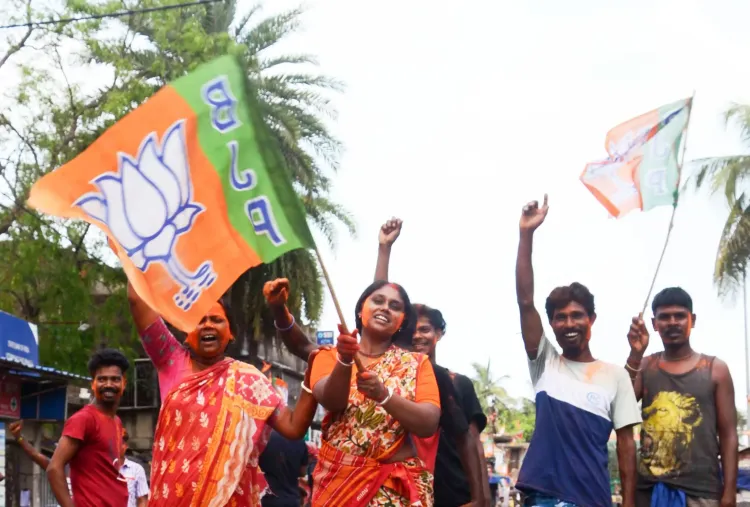
Synopsis
The BJP's sweeping wins in Assam and West Bengal weren't just about Hindutva — they were built on an unprecedented consolidation of Dalit and tribal votes. The party won 67 of 84 SC/ST seats in Bengal and swept all 19 ST seats in Assam, rewriting the narrative of who the BJP's real voter base is.
Key Takeaways
BJP won 67 of 84 SC/ST seats in West Bengal , including all 16 ST seats and 51 of 68 SC seats .
In Assam , the BJP-led NDA swept all 19 ST seats and won 8 of 9 SC seats .
BJP ally AIADMK won 9 of 46 SC seats in Tamil Nadu ; ally AINRC won 2 of 5 SC seats in Puducherry .
The Matua community vote reportedly bolstered BJP's performance in West Bengal 's border regions.
A recent delimitation exercise increased Assam 's ST reserved seats from 16 to 19 — all won by the BJP-led alliance.
BJP 's tally in West Bengal crossed 200 seats — the first time since Independence for any party.
The Bharatiya Janata Party (BJP)'s historic hat-trick in Assam and its unprecedented mandate in West Bengal Assembly elections have largely been framed as a product of Hindutva politics and an alleged anti-minority poll pitch. However, experts argue the real driver lies deeper — in the party's growing connect with grassroots communities, and an overwhelming consolidation of Scheduled Caste (SC) and Scheduled Tribe (ST) votes across multiple states, including Tamil Nadu and Puducherry.
Assam: A Clean Sweep of Reserved Constituencies
Assam, with an Assembly strength of 126 seats, has 28 reserved constituencies — nine for SCs and 19 for STs. The BJP and its alliance partners dominated across the board. The BJP won five of nine SC seats, while allies secured three more, leaving only one SC seat — Nowboicha — to the Indian National Congress (Congress), where candidate Joy Prakash Das prevailed.
In the ST category, the BJP won 14 of 19 seats, with ally Bodoland People's Front (BPF) claiming the remaining five, resulting in the BJP-led NDA sweeping all 19 ST constituencies. Notable SC wins for the BJP included Jagiroad, Raha, Behali, Dholia, and Ram Krisna Nagar, while ally AGP won Barpeta, Hajo-Sualkuchi, and Dimoria. Key ST victories included Goalpara West, Dudhnai, Tamulpur, Dhakuakhana, Dhemaji, Jonai, and Majuli, among others.
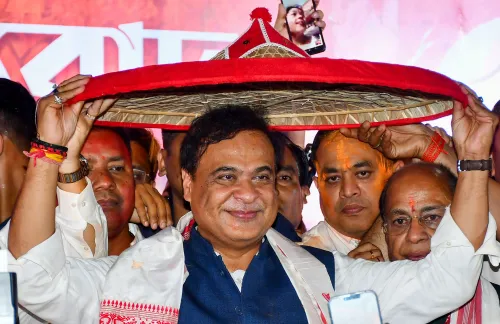
This consolidation of Dalit and tribal votes under Chief Minister Himanta Biswa Sarma proved instrumental in delivering the ruling alliance a thumping mandate. Notably, a recent delimitation exercise — criticised by the opposition — had increased ST-reserved constituencies from 16 to 19 and SC seats from eight to nine; all of them ultimately swayed in favour of the ruling alliance.
West Bengal: BJP Wins 67 of 84 SC/ST Seats
In West Bengal, a constituency-wise reading of results points to a BJP victory built substantially on SC-ST consolidation, alongside a broader surge that pushed its tally past the 200-seat mark — the first time any party has crossed that threshold since Independence.
According to official estimates, the BJP won 51 of 68 SC seats — roughly 75% — leaving just 17 for the ruling All India Trinamool Congress (TMC). In the 16 ST seats, the shift was even sharper: the BJP swept all 16, reflecting a uniform mandate across tribal regions including North Bengal and Junglemahal.
In total, the BJP secured 67 of 84 SC/ST seats, reducing the Mamata Banerjee-led TMC — which had held the state for 15 years — to just 17 such seats. Notable SC wins for the BJP included Coochbehar Uttar, Jalpaiguri, Rajganj, Nabagram, Para, Indus, and Dhanekhali, while TMC retained Basanti, Jaynagar, and Mandirbazar. Key ST victories included Kalchini, Mal, Nayagram, Habibpur, Ranibandh, and Binpur.
The consolidation of Matua community votes also reportedly contributed to the BJP's performance, particularly in border regions where the community is concentrated. This marks a decisive political realignment in segments once considered fragmented and contested.
Tamil Nadu and Puducherry: Allies Carry the Dalit Baton
Beyond the Hindi heartland and the northeast, the BJP's performance in Tamil Nadu and Puducherry — two southern constituencies — underscored the party's expanding footprint, though largely through alliance partners rather than direct wins.
In Tamil Nadu, BJP ally AIADMK won nine of 46 SC-reserved seats and one of two ST-reserved seats. In the Union Territory of Puducherry, ally AINRC won two of five SC-reserved constituencies. Though the BJP itself did not register large independent numbers in the south, experts note the alliance's performance in Dalit constituencies sent a clear signal about the party's expanding social coalition.
The Bigger Picture: Beyond the 'Upper Caste Party' Label
The BJP, long labelled as the party of Brahmins and upper castes, has increasingly sought to consolidate Dalit support under Prime Minister Narendra Modi's outreach framework of 'Sabka Saath, Sabka Vikas aur Sabka Vishwas'. Experts argue the 2021 Assembly election results across these states suggest that pitch has found resonance at the grassroots level, cutting across the party's traditional social base.
This comes amid ongoing political debate over identity, cultural ownership, and welfare delivery — and whether the BJP's electoral inroads into reserved constituencies represent a durable realignment or a one-cycle wave will be closely watched as the country moves toward the next general election.
Point of View
And in some states surpasses, its traditional upper-caste stronghold. The harder question is whether this represents genuine policy delivery — welfare schemes, housing, rations — or electoral mobilisation that will not survive scrutiny. If it is the former, Indian opposition parties face a structural problem that identity politics alone cannot solve.
NationPress
24 Sept 2026
Frequently Asked Questions
How many SC/ST seats did the BJP win in West Bengal?
The BJP won 67 of 84 SC/ST reserved seats in West Bengal — 51 of 68 SC seats and all 16 ST seats — reducing the TMC to just 17 such seats, according to official estimates.
What was the BJP's performance in Assam's reserved constituencies?
In Assam, the BJP-led NDA won 8 of 9 SC-reserved seats and swept all 19 ST-reserved seats. The only SC seat that went to the Congress was Nowboicha, won by Joy Prakash Das.
Did the BJP perform well in Dalit seats in Tamil Nadu and Puducherry?
The BJP itself did not win large numbers directly in the south, but its allies did. AIADMK won 9 of 46 SC seats and 1 of 2 ST seats in Tamil Nadu, while AINRC won 2 of 5 SC seats in Puducherry.
Why is the Dalit vote significant for the BJP's electoral strategy?
The BJP has traditionally been labelled a party of upper castes and Brahmins. A decisive shift of SC/ST votes toward the BJP signals a broader social coalition, strengthening the party's claim that PM Modi's 'Sabka Saath, Sabka Vikas' outreach is gaining grassroots traction beyond its core base.
What role did the Matua community play in West Bengal's results?
The Matua community, concentrated in West Bengal's border regions, reportedly contributed to the BJP's strong performance in those areas, adding to the broader SC/ST consolidation that defined the party's historic win in the state.