Assam BJP's digital blitz: How Congress was branded 'party of minorities' in 2021 polls
Synopsis
Assam BJP's 2021 election win wasn't just a ground-level victory — it was a digital operation. A coordinated campaign using influencers, AI tools, and shadow handles successfully branded Congress as a 'party of minorities', while an SIT probe and CM Sarma's aggressive Hindutva rhetoric sealed the narrative. Congress was left with 19 seats, nearly all from Muslim-majority constituencies.
Key Takeaways
BJP won 82 seats on its own and 102 seats collectively in the 126-member Assam Assembly in the 2021 elections .
Congress was reduced to 19 seats , reportedly winning only in Muslim-majority constituencies with just one Hindu MLA elected.
The Assam BJP's social media team used influencers, shadow handles, and AI tools to label Congress as a 'party of minorities' .
Congress leader Gaurav Gogoi was targeted with the 'Paaijan' label, amplified by video clips purportedly from Pakistan circulated on social media.
The state's SIT alleged links between Pakistani entities and Gogoi's wife, adding institutional weight to the BJP's digital narrative.
CM Himanta Biswa Sarma claimed over 10,000 Bangladeshi Muslim Facebook accounts were used in Congress's digital campaign.
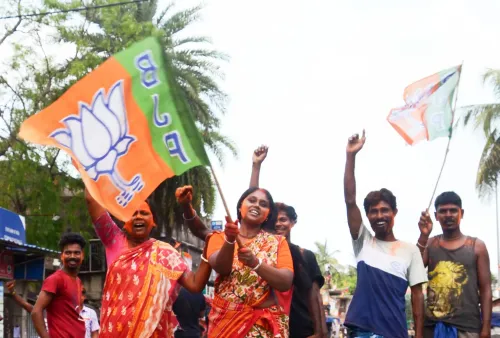
In the 2021 Assam Assembly elections, the Bharatiya Janata Party (BJP) secured a historic third consecutive victory, winning 82 seats on its own and 102 seats collectively in the 126-member Assembly. A central pillar of that triumph, according to political analysts, was a meticulously orchestrated digital campaign that systematically labelled the Indian National Congress (Congress) as a 'party of minorities' — a narrative that resonated deeply with majority-community voters across the state.
The Electoral Landscape
The 4 May 2021 results delivered sweeping mandates across India. While three incumbent governments in Bengal, Tamil Nadu, and Kerala were voted out, Assam bucked the trend, returning the BJP-led alliance to power with a commanding majority. The BJP's allies — Bodoland People's Front (BPF) and Asom Gana Parishad (AGP) — contributed to the alliance's collective tally. Congress, meanwhile, was reduced to just 19 seats, with its ally Raijor Dal winning two additional seats.
Notably, Congress won only in regions with a dominant Muslim population, and reportedly had only one Hindu MLA among its 19 elected legislators — a demographic outcome that BJP's digital machine had anticipated and amplified well before results day.
The Hindutva Narrative and CM Sarma's Campaign
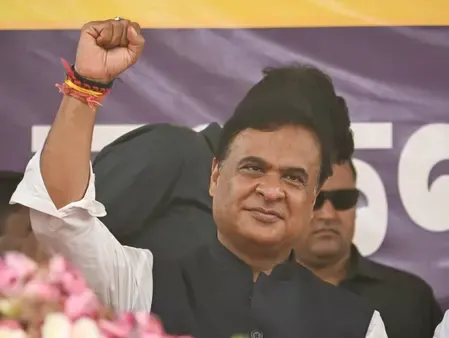
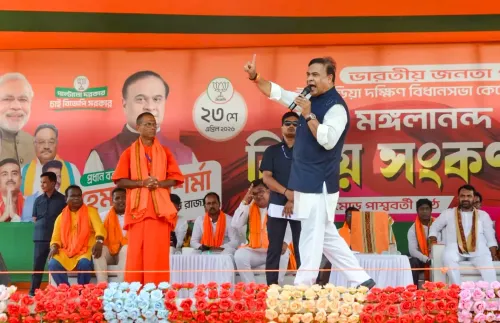
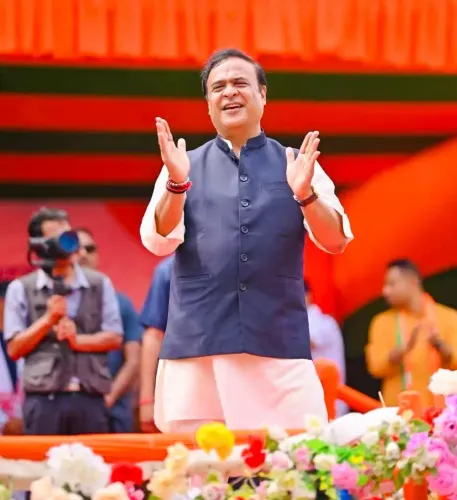
Multiple political watchers described the Assam elections as highly polarised and identity-driven. Chief Minister Himanta Biswa Sarma ran an aggressive campaign centred on the cultural identity of Assam and what he characterised as a threat from infiltrating 'Miya Muslims' — a pejorative term used for Bengali-speaking Muslims of Bangladeshi origin. This rhetoric, critics argue, exacerbated deep-seated resentment among majority-community voters rooted in historical and demographic anxieties specific to the state.
This is not a new fault line. Assam's politics has long been shaped by concerns over illegal immigration and demographic change, going back to the Assam Agitation of the 1980s. The BJP, analysts note, successfully connected those legacy grievances to a contemporary Hindutva framework.
The Digital Campaign: Influencers, Shadow Handles, and AI Tools
Beyond the ground campaign, the Assam BJP's social media team ran a highly targeted digital operation. According to observers, the team used influencers and shadow handles to portray Congress leader Gaurav Gogoi as 'Paaijan' — a label insinuating closeness to Pakistan. Video clips, purportedly originating from Pakistan and showing praise for Gogoi, were reportedly circulated widely on social media to reinforce this messaging.
The campaign also reportedly deployed AI tools to surface past statements and associations of Congress leaders and commentators, labelling them as 'Miya Lovers' and accusing them of minority appeasement. Multiple instances of Congress's outreach to the Muslim community were highlighted and amplified to suggest the party was cultivating a dedicated minority vote bank.
The impact was measurable: posts on Instagram and Facebook depicting Gogoi as 'Paaijan' generated waves of engagement, comments, and shares — broadening the popular discourse that Congress had become a party of minorities.
Government Machinery and the SIT Angle
The state government's Special Investigation Team (SIT) added institutional weight to the BJP's digital campaign. The SIT reportedly unearthed alleged links between Pakistani entities and Gaurav Gogoi's wife — a development that, according to the BJP, lent credibility to its social media narrative.
Chief Minister Sarma also stated in a press conference that more than 10,000 Bangladeshi Muslim Facebook accounts were used in Congress's digital campaign in the run-up to the elections — a claim that, according to the BJP, further emboldened its portrayal of Congress as aligned with minority and foreign interests. Congress has not publicly accepted these characterisations.
What the Results Signal
Congress's near-total decimation in districts dominated by the majority community underscores how effectively the BJP's narrative took hold. Political analysts argue that the combination of a charismatic CM, a charged Hindutva campaign, and a disciplined digital apparatus created a self-reinforcing loop — each element amplifying the other.
For Congress, the results mark a third consecutive loss in a state it once governed for decades, raising fundamental questions about its ability to rebuild a cross-community coalition in Assam. Whether the party can recalibrate its identity politics ahead of the next electoral cycle remains the defining challenge.
Point of View
AI, and state machinery. What is missing from mainstream coverage is the accountability question: when a government's SIT and its party's social media team operate in apparent coordination to shape electoral discourse, the line between state power and partisan campaigning blurs dangerously. Congress, for its part, failed to counter the narrative with anything resembling equal force — a strategic failure as much as an ideological one. The deeper story is Assam's unresolved identity anxieties, which any party seeking power here must address rather than merely exploit.
NationPress
23 Sept 2026
Frequently Asked Questions
How many seats did BJP win in the 2021 Assam Assembly elections?
The BJP won 82 seats on its own and 102 seats collectively with its allies — the Bodoland People's Front and Asom Gana Parishad — in the 126-member Assam Assembly. It was the party's third consecutive victory in the state.
Why was Congress reduced to only 19 seats in Assam?
Congress reportedly won only in Muslim-majority constituencies and had just one Hindu MLA among its 19 elected legislators. Political analysts attribute this to a highly polarised campaign that successfully branded Congress as a 'party of minorities', alienating majority-community voters.
What was the BJP's digital strategy in the 2021 Assam elections?
The Assam BJP ran a targeted social media campaign using influencers, shadow handles, and reportedly AI tools to label Congress as a 'party of minorities' and brand Congress leader Gaurav Gogoi as 'Paaijan'. Video clips purportedly from Pakistan praising Gogoi were also widely circulated.
What role did the SIT play in the Assam election campaign?
The state government's Special Investigation Team reportedly unearthed alleged links between Pakistani entities and Gaurav Gogoi's wife, lending institutional credibility to the BJP's social media narrative about Congress's alleged proximity to minority and foreign interests.
What does the Assam result mean for Congress going forward?
The 2021 result marks Congress's third consecutive loss in a state it once governed for decades. The party's near-total decimation in majority-community districts raises fundamental questions about its ability to rebuild a cross-community coalition in Assam ahead of the next electoral cycle.