BJP wins West Bengal 2026: 8% vote swing, 206 seats in historic first
Synopsis
For the first time since independence, the BJP will govern West Bengal — and the numbers explain why. An eight per cent vote swing pushed the party from 77 seats in 2021 to 206 in 2026, while the Left Front and Congress together managed just three seats. It is a political earthquake that reshapes one of India's most fiercely contested states.
Key Takeaways
BJP won 206 seats in the 2026 West Bengal Assembly elections , up by 129 from 77 in 2021 .
An 8% positive vote swing lifted BJP's vote share from 38% in 2021 to 46% in 2026 , according to the CEO, West Bengal .
Compared to the 2024 Lok Sabha baseline of 90 Assembly segments, BJP improved by 116 seats on a 7% swing .
CPI(M)-led Left Front won 1 seat ; Congress won 2 seats ; combined vote share approximately 8% .
AISF 's Nawsad Siddique retained Bhangar ; new entrant AJUP 's Humayun Kabir won from both Naoda and Rejinagar in Murshidabad .
BJP forms a state government in West Bengal for the first time since independence .
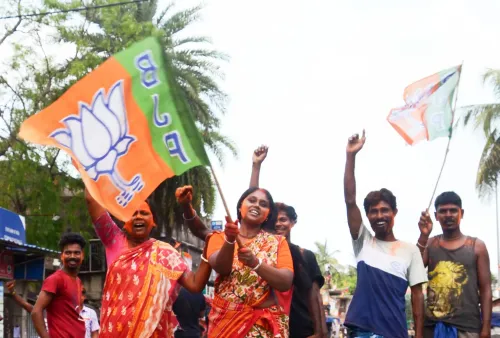
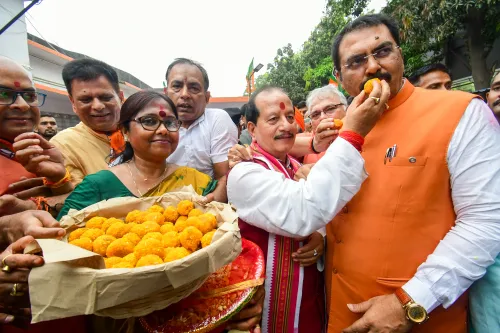
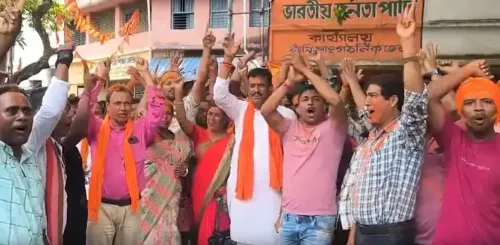
The Bharatiya Janata Party (BJP) has won the 2026 West Bengal Assembly elections, forming the state government for the first time since independence, powered by an eight per cent positive vote swing that lifted its seat tally to 206 constituencies — up by 129 from its 2021 total of 77. According to statistics from the office of the Chief Electoral Officer (CEO), West Bengal, the BJP's vote share climbed from 38 per cent in 2021 to 46 per cent in 2026, a shift that proved decisive.
The Scale of BJP's Seat Surge
The jump from 77 seats in 2021 to 206 seats in 2026 represents the single largest gain by any party in West Bengal's recent electoral history. Compared to the party's performance in the 2024 Lok Sabha elections, where it was ahead in only 90 Assembly segments with a vote share of 39 per cent, the 2026 result reflects an additional seven per cent positive swing — translating into 116 more constituencies than its 2024 baseline. The data, sourced from the CEO's office, underscores that the BJP's momentum built steadily across both general and state election cycles.
Left Front and Congress Reduced to the Margins
The combined vote percentage of the CPI(M)-led Left Front and Congress, contesting independently this time, stands at approximately eight per cent — around five per cent for the Left Front and three per cent for Congress. Notably, Congress managed to send two representatives to the West Bengal Assembly, while the Left Front secured just one seat. This is a marginal improvement from 2021, when neither formation sent a single member to the Assembly despite a combined vote share of just under nine per cent. In the 2024 Lok Sabha elections, the two parties had a seat-sharing arrangement and their combined vote share hovered around eight per cent — nearly identical to their 2026 tally when they contested separately.
Smaller Parties and Surprise Entrants
All India Secular Front (AISF) leader Nawsad Siddique retained his seat from the Bhangar Assembly constituency in South 24 Parganas district, maintaining a foothold for the regional outfit. The most unexpected development, however, was the performance of former Trinamool Congress (TMC) legislator Humayun Kabir, who founded the Aam Janata Unnayan Party (AJUP) ahead of these polls. Kabir was elected from both Naoda and Rejinagar constituencies in the minority-dominated Murshidabad district, signalling a fragmentation of the opposition vote in pockets of the state.
What This Result Means for West Bengal
The BJP's victory ends decades of Left and then Trinamool Congress dominance in West Bengal, marking a seismic shift in the state's political landscape. The party's ability to consolidate its vote share well above the 40 per cent threshold — a benchmark rarely crossed by any single party in the state's multi-cornered contests — suggests a broad-based realignment rather than a narrow swing. With the new government set to take charge, attention will now turn to the BJP's administrative priorities in a state it has long targeted but never governed.
Point of View
Suggesting their voter base has not merely fragmented but largely migrated. The real test for the BJP begins now: governing a state with a complex administrative legacy, a volatile law-and-order record, and minority-concentrated districts where its vote share remains contested. A win at the ballot is one thing; converting it into durable governance credibility in Bengal is another.
NationPress
20 Sept 2026
Frequently Asked Questions
How many seats did the BJP win in the 2026 West Bengal Assembly elections?
The BJP won 206 seats in the 2026 West Bengal Assembly elections, up by 129 from its tally of 77 in the 2021 polls. This gives the party a clear majority and allows it to form the government for the first time since independence.
What was the vote swing in favour of BJP in West Bengal 2026?
The BJP benefited from an eight per cent positive vote swing, with its vote share rising from 38 per cent in 2021 to 46 per cent in 2026, according to the Chief Electoral Officer, West Bengal.
How did the Left Front and Congress perform in the 2026 West Bengal elections?
The CPI(M)-led Left Front and Congress contested independently and together secured approximately eight per cent of the vote — about five per cent for the Left Front and three per cent for Congress. The Left Front won one seat and Congress won two seats.
Who is Humayun Kabir and why is his win significant?
Humayun Kabir is a former Trinamool Congress legislator who founded the Aam Janata Unnayan Party (AJUP) ahead of the 2026 polls. He won from both Naoda and Rejinagar constituencies in Murshidabad district, making him a surprise entrant who signals vote fragmentation in minority-dominated areas.
How does the 2026 BJP result compare to the 2024 Lok Sabha elections in West Bengal?
In the 2024 Lok Sabha elections, BJP was ahead in 90 Assembly segments with a 39 per cent vote share. In 2026, it won 206 segments with 46 per cent — an improvement of 116 seats and seven percentage points, indicating consistent momentum over two election cycles.