Mumbai never sinks, BMC chief Bhide rejects ‘submerged city’ social media visuals

Synopsis
BMC chief Ashwini Bhide is pushing back hard on the 'Mumbai sinks' narrative, arguing that viral clips of a handful of low-lying pockets distort the city's monsoon reality. Her data point: chronic waterlogging spots are down from 200-plus to about 90, with four underground holding tanks and seven STPs in play.
Key Takeaways
BMC Commissioner Ashwini Bhide on 3 June said Mumbai never sinks and rejected social media visuals showing the city as submerged.
Waterlogging spots have been cut from over 200 earlier to around 90 , according to Bhide.
Water in low-lying areas typically clears within two hours , even when heavy rain coincides with high tide, she said.
Four underground holding tanks have been built; seven Sewage Treatment Plants are under construction.
Last year, despite record rainfall, local trains were disrupted for barely an hour, the BMC chief stated.
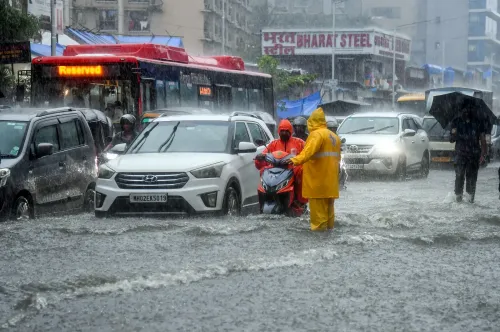
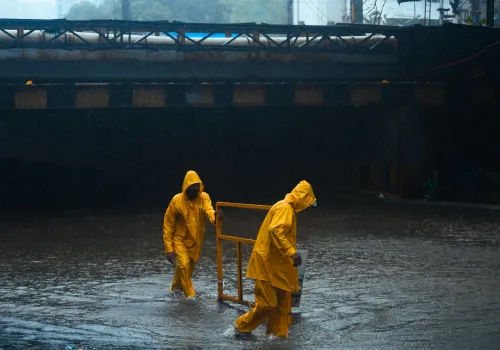
BrihanMumbai Municipal Corporation (BMC) Commissioner Ashwini Bhide on Wednesday rejected the narrative that Mumbai sinks or shuts down during the monsoon, asserting that repeated broadcasting of footage from a few low-lying pockets creates a misleading impression of the entire city being submerged. Speaking to a Marathi news channel on 3 June, Bhide said waterlogging is confined to specific spots and typically clears within two hours.
What the BMC chief said
“Mumbai appears flooded only to those who wish to see it that way. The ground reality is entirely different. Even when heavy rain and high tide occur simultaneously, water accumulates only in low-lying areas, and that, too, does not persist for more than two hours. Projecting a picture that the entire city is submerged by repeatedly broadcasting a few specific low-lying pockets is incorrect. Mumbai never sinks,” Bhide said.
She added that Mumbai remains a “city of dreams” that draws thousands of job-seekers daily, putting pressure on limited space and civic infrastructure.
Why waterlogging happens
Bhide noted that Mumbai is geographically vulnerable — surrounded by the sea on three sides and exposed to exceptionally heavy rainfall. On days when a high tide coincides with torrential downpours, water accumulates in the city's low-lying areas, she explained.
According to the Commissioner, the BMC has reduced chronic waterlogging spots from over 200 earlier to around 90 today, with further reductions expected as remedial works continue.
Infrastructure measures underway
To curb rainwater accumulation, four large underground holding tanks have been built across the city to store and later pump out excess water during heavy spells, Bhide said. Work is also progressing on seven Sewage Treatment Plants for wastewater recycling, alongside large-scale concretisation of roads aimed at a permanent fix for potholes.
Last year's monsoon, in her telling
Bhide pushed back on claims that the city grinds to a halt every monsoon. Despite record-breaking rainfall last year, Mumbai local trains were disrupted for barely an hour and only a few bus routes were diverted as a precaution, she said, crediting pre-monsoon preparations for the improvement.
What's next
The BMC's claims will face their first real stress test as the 2025 southwest monsoon intensifies over the Konkan coast. Civic officials say the count of flooding hotspots is expected to fall further in coming seasons as drainage upgrades, holding tanks and STP works come online.
Point of View
But the binary of 'sinks vs doesn't sink' misses the point. For a daily commuter in Sion, Hindmata or Andheri Subway, a two-hour standstill is a working day lost — and 90 chronic hotspots is still a large number for a city of Mumbai's stature. The real test of BMC's monsoon readiness is not the optics war on social media but whether the holding tanks, STPs and concretised roads deliver measurable reductions in disruption hours this season. Until that data is published transparently, perception will keep outrunning the civic body's claims.
NationPress
18 Oct 2026
Frequently Asked Questions
What did BMC chief Ashwini Bhide say about Mumbai flooding?
BMC Commissioner Ashwini Bhide said on 3 June that Mumbai never sinks and that visuals projecting the entire city as submerged are misleading. She said waterlogging is confined to a few low-lying pockets and typically clears within two hours.
How many waterlogging spots are there in Mumbai now?
According to Bhide, chronic waterlogging spots in Mumbai have come down from over 200 earlier to around 90 currently. She said this number is expected to drop further as drainage and infrastructure works continue.
What steps has the BMC taken to prevent Mumbai flooding?
The BMC has built four large underground holding tanks to store and pump out excess rainwater during heavy spells. It is also constructing seven Sewage Treatment Plants for wastewater recycling and undertaking large-scale concretisation of roads to address potholes.
Why does Mumbai get waterlogged during monsoon?
Mumbai is geographically surrounded by the sea on three sides and receives exceptionally heavy rainfall, Bhide said. When high tide coincides with torrential downpours, water accumulates in low-lying areas for short durations.
Were Mumbai local trains affected during last year's monsoon?
Bhide said local train services were disrupted for barely an hour last year despite record-breaking rainfall. Only a few bus routes were diverted as a precautionary safety measure.