CM Mohan Yadav: BRICS Agri Ministers Meet in Indore, June 9-13
Synopsis
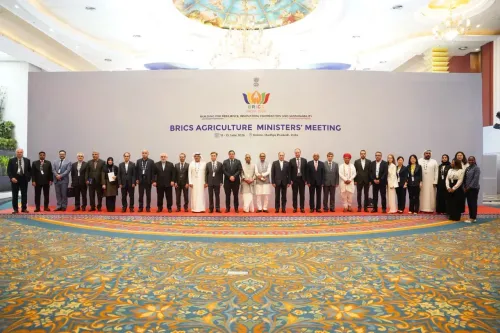
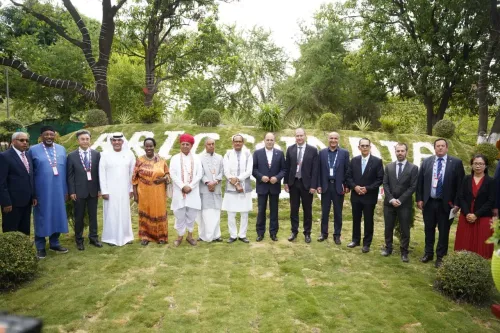
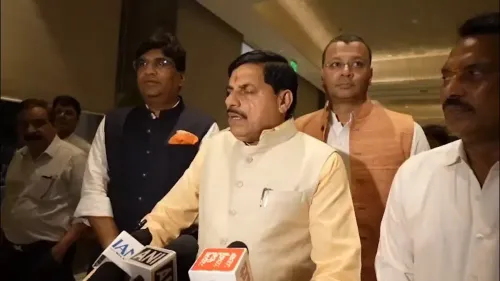
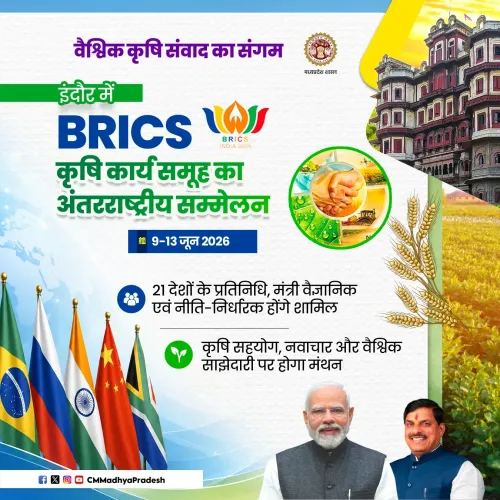
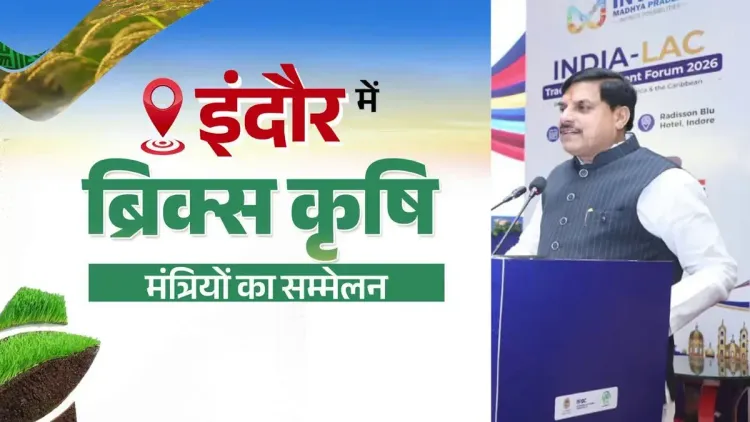
Indore will host BRICS agriculture ministers from 9 to 13 June 2026, the Chief Minister's Office of Madhya Pradesh announced, with CM Dr. Mohan Yadav calling it a landmark moment for global agricultural cooperation and innovation among emerging economies.
Key Takeaways
Indore, Madhya Pradesh will host BRICS nations' agriculture ministers from 9 to 13 June 2026 .
The conference aims to provide new direction to global agricultural cooperation and innovation, according to CM Dr.
BRICS agriculture ministerials have historically addressed food security, climate-resilient farming and agri-technology exchange among Global South nations.
MPIDC is involved in the event's organisation, linking agri-diplomacy to the state's investment-promotion agenda.
Madhya Pradesh is a major producer of soybean, wheat and pulses, giving the state direct stakes in BRICS agricultural outcomes.
A joint declaration and potential bilateral agri-technology agreements are expected to emerge from the five-day meeting.
The Chief Minister's Office of Madhya Pradesh announced on Saturday, 6 June 2026 that Indore will host a significant conference of BRICS nations' agriculture ministers from 9 to 13 June 2026, positioning the event as a milestone in global agricultural cooperation and innovation.
Context
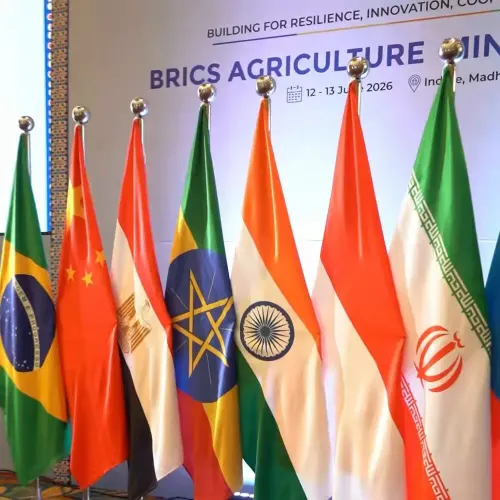
The Chief Minister's Office quoted Chief Minister Dr. Mohan Yadav as saying the conference will provide 'a new direction to global agricultural cooperation and innovation' — ('vaisvik krishi sahyog aur navachar ko nayi disha pradaan karega'). The five-day meeting in Indore, Madhya Pradesh's largest city and commercial hub, will bring together agriculture ministers from the BRICS grouping, which includes Brazil, Russia, India, China and South Africa, along with newer partner nations.
Policy Backdrop
BRICS agriculture ministerial meetings have historically focused on food security, climate-resilient farming practices, supply-chain resilience and the exchange of agricultural technology among Global South nations. India has consistently used BRICS sectoral forums to advance practical cooperation on these themes, hosting multiple ministerial-level engagements to complement summit-level dialogue. The Indore conference continues that tradition, with a stated emphasis on innovation alongside cooperation.
Madhya Pradesh has in recent years positioned itself as a hub for high-profile international conferences and investor summits, with the state government actively leveraging such events to attract investment and showcase its economic capabilities. The involvement of MPIDC — the Madhya Pradesh Industrial Development Corporation — in the event's organisation signals a deliberate linkage between the multilateral agri-diplomacy agenda and the state's broader investment-promotion strategy.
Stakeholders and Impact
The conference is expected to draw participation from senior agriculture policymakers, agri-research institutions and farming-sector representatives across BRICS member and partner nations. For Madhya Pradesh, one of India's largest agricultural states — a major producer of soybean, wheat and pulses — hosting such a forum offers direct visibility among nations that collectively account for a substantial share of global food production and trade.
Farmers, agri-technology firms and research bodies from BRICS nations stand to benefit from any joint declarations or bilateral agreements that emerge from the meeting. Discussions on climate-resilient agriculture and innovation pipelines are particularly relevant for India's farming sector, which faces increasing pressure from erratic monsoons and rising input costs.
What's Next
Observers will closely watch for a joint declaration or communiqué from the 9–13 June Indore meeting, as well as any bilateral agricultural technology agreements signed on the sidelines. The outcomes could shape the BRICS agricultural cooperation agenda for the coming year and set the tone for subsequent ministerial calendars. Madhya Pradesh's successful hosting may also strengthen the state's case for future multilateral conference bids, reinforcing CM Dr. Mohan Yadav's outward-facing governance pitch under the 'MP Rising Globally' banner.
Point of View
While simultaneously allowing state governments to claim a stake in multilateral outcomes. For CM Dr. Mohan Yadav, hosting a BRICS ministerial in Indore serves a dual purpose: it burnishes Madhya Pradesh's credentials as an investment and conference destination, and it aligns the state's agricultural identity with a global innovation narrative. The 'MP Rising Globally' framing is deliberate — it signals that state-level actors are no longer passive recipients of central foreign-policy decisions but active participants in shaping India's multilateral engagements. How substantive the outcomes prove will determine whether this event becomes a template for further state-hosted BRICS sectoral meetings.
NationPress
21 Oct 2026
Frequently Asked Questions
When and where is the BRICS agriculture ministers conference in India 2026?
The BRICS agriculture ministers conference is scheduled from 9 to 13 June 2026 in Indore, Madhya Pradesh , as announced by the Chief Minister's Office of Madhya Pradesh.
What is the BRICS agriculture ministers meeting about?
The meeting focuses on advancing global agricultural cooperation and innovation among BRICS nations, with expected discussions on food security, climate-resilient farming practices and agricultural technology exchange.
Who is organising the BRICS agriculture conference in Indore?
The conference is being organised with the involvement of the Madhya Pradesh government and MPIDC (Madhya Pradesh Industrial Development Corporation), under the leadership of CM Dr. Mohan Yadav .
Which countries are part of BRICS agriculture talks?
BRICS originally comprises Brazil, Russia, India, China and South Africa . The grouping has expanded to include partner nations, and agriculture ministerial meetings bring together senior policymakers from all member and partner countries.
Why is Madhya Pradesh hosting BRICS ministerial meetings?
Madhya Pradesh, one of India's largest agricultural states and a major producer of soybean, wheat and pulses, has been actively positioning itself as a venue for international conferences to attract investment and showcase its capabilities under the 'MP Rising Globally' initiative.