CM Mohan Yadav hosts BRICS Agriculture meet in Indore

Synopsis
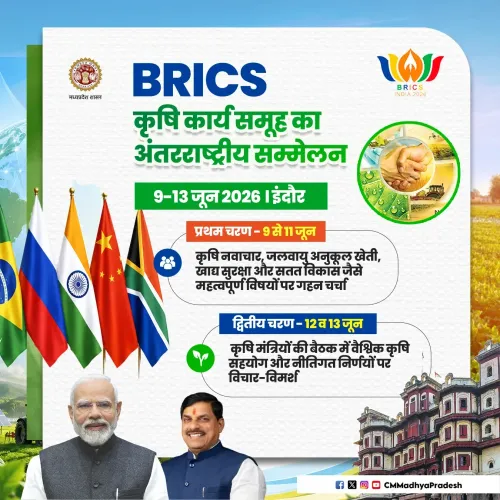
Indore is hosting a five-day BRICS Agriculture Working Group international conference, with agriculture ministers from BRICS nations gathering to deliberate on food security, farming innovation, and sustainable agriculture under India's 2026 BRICS chairship and Madhya Pradesh's Krishak Kalyan Varsh 2026.
Key Takeaways
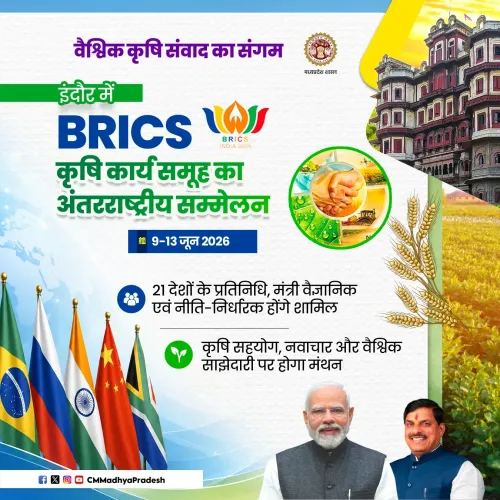
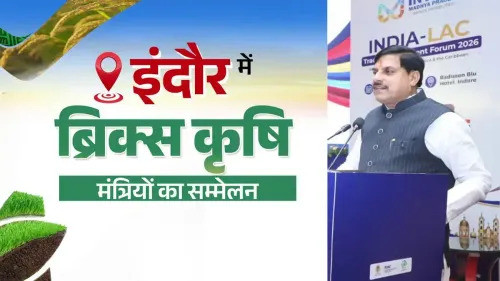
Indore, Madhya Pradesh is hosting a five-day international conference of the BRICS Agriculture Working Group.
Agriculture ministers from BRICS nations will deliberate on agricultural development, food security, and sustainable farming.
The event is held under BRICS India 2026 , India's current BRICS chairship year.
The conference aligns with the Madhya Pradesh government's declared Krishak Kalyan Varsh 2026 (Farmers' Welfare Year).
Both Chief Minister Dr.
Mohan Yadav and the Union Ministry of Agriculture and Farmers Welfare are coordinating on the event.
Outcomes may shape the agricultural cooperation agenda ahead of the 2026 BRICS leaders' summit .
The Chief Minister's Office of Madhya Pradesh announced on Tuesday, 9 June 2026 that Indore is hosting an international conference of the BRICS Agriculture Working Group, bringing together agriculture ministers from BRICS nations to deliberate on farming development, food security, and the future of sustainable agriculture.
Context
The post, shared by the official handle of the Chief Minister's Office, describes the gathering as a 'kṛiṣhi navācār aur vaiśvik sānjhedārī kā saṅgam' — a 'confluence of agricultural innovation and global partnership.' The five-day conference convenes agriculture ministers and senior officials from the BRICS grouping, with Chief Minister Dr. Mohan Yadav and the Union Ministry of Agriculture and Farmers Welfare both tagged, signalling close coordination between the state and central governments.
The event is being held under the banner of BRICS India 2026, India's current BRICS chair year, and falls within the state government's declared Krishak Kalyan Varsh 2026 (Farmers' Welfare Year), reflecting a deliberate alignment of international diplomacy with domestic agricultural priorities.
Policy Backdrop
The BRICS Agriculture Working Group has served as a specialised forum since the early years of the grouping, with agriculture ministers meeting periodically to coordinate on food security, farming innovation, and rural development. A dedicated BRICS Agricultural Research Platform was established around 2016–2017 to institutionalise cooperation on crop science and agri-technology among member nations.
India has consistently used its BRICS engagements to advance Global South priorities, particularly sustainable agriculture and supply-chain resilience. Hosting a working-group conference at the sub-national level — in Indore, Madhya Pradesh's commercial and agrarian hub — reflects a broader pattern of drawing state governments into multilateral diplomatic and economic processes.
The choice of Indore is strategically significant: the city sits at the heart of one of India's most productive agricultural belts, and its infrastructure has made it a preferred venue for high-profile national and international events in recent years.
Stakeholders and Impact
The primary beneficiaries of outcomes from this conference are farmers across BRICS nations, who stand to gain from any joint action plans on food security, climate-resilient farming techniques, and agri-research collaboration. For Madhya Pradesh specifically, hosting the event positions the state as a key node in India's international agricultural diplomacy.
State agriculture departments, agri-research institutions, and farming cooperatives across member nations are all stakeholders in the working group's deliberations. Any joint declarations or bilateral project announcements emerging from the five-day session could shape agricultural cooperation frameworks ahead of the broader 2026 BRICS leaders' summit.
What's Next
Attention will focus on any joint statements, action plans, or new multilateral projects announced at the conclusion of the Indore conference. Such outcomes would feed directly into the agenda of the 2026 BRICS leaders' summit, where heads of state are expected to endorse sectoral cooperation frameworks including agriculture.
The Madhya Pradesh government's framing of the event within Krishak Kalyan Varsh 2026 suggests that state officials will seek to translate international commitments into tangible local programmes for farmers, making the post-conference implementation phase equally important to watch.
Point of View
Positioning a state-level venue at the centre of India's multilateral agricultural agenda during its BRICS chairship year. For Chief Minister Dr. Mohan Yadav, the event serves a dual purpose: reinforcing his government's farmer-welfare credentials domestically while projecting Madhya Pradesh as a capable host for high-stakes international forums. The framing within Krishak Kalyan Varsh 2026 suggests the state intends to convert any multilateral commitments into local policy wins. The broader pattern — of sub-national governments being drawn into BRICS-level diplomacy — reflects India's evolving multi-alignment strategy, where Global South priorities like food security are advanced through both central and state channels.
NationPress
23 Oct 2026
Frequently Asked Questions
What is the BRICS Agriculture Working Group conference in Indore?
It is a five-day international conference hosted in Indore, Madhya Pradesh, where agriculture ministers from BRICS nations are meeting to discuss agricultural development, food security, and sustainable farming under India's 2026 BRICS chairship.
When is the BRICS agriculture conference in Indore 2026?
The conference was announced on 9 June 2026 by the Chief Minister's Office of Madhya Pradesh. The exact start and end dates of the five-day event were not specified in the official post.
Why was Indore chosen for the BRICS Agriculture Working Group meeting?
Indore is Madhya Pradesh's largest city and sits at the heart of one of India's most productive agricultural belts. Its infrastructure and agricultural significance made it a suitable venue for a multilateral farming conference.
What is Krishak Kalyan Varsh 2026?
Krishak Kalyan Varsh 2026, or Farmers' Welfare Year 2026, is a declared initiative by the Madhya Pradesh government aimed at prioritising farmer welfare, within which the BRICS agriculture conference is being framed.
What outcomes are expected from the BRICS agriculture meet in Indore?
Observers will watch for joint statements, action plans, or new multilateral agricultural projects that could feed into the broader 2026 BRICS leaders' summit agenda on food security and sustainable farming.