CM Mohan Yadav Welcomes BRICS Agriculture Meet to Indore
Synopsis
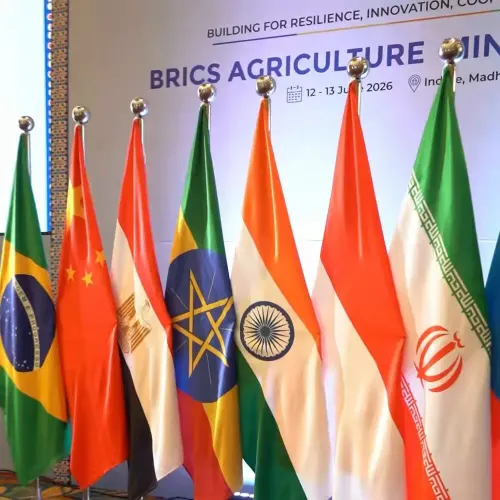
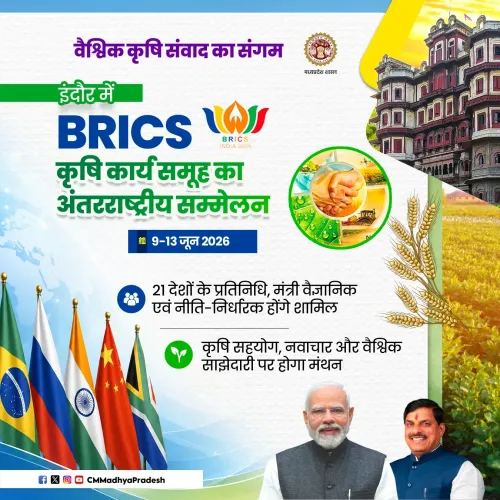
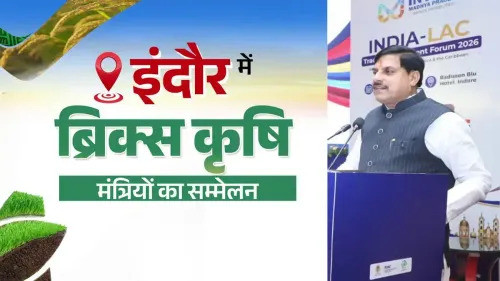
Madhya Pradesh CM Dr. Mohan Yadav welcomed BRICS nations' ministers, diplomats, and ambassadors to Indore on June 12, 2026 for the BRICS Agriculture Conference, framing the event as part of India's broader multilateral cooperation drive under PM Modi during what he called the 'agriculture year'.
Key Takeaways
Madhya Pradesh CM Dr.
Mohan Yadav extended a formal welcome to BRICS delegates arriving in Indore for the BRICS Agriculture Conference on June 12, 2026 .
The conference brings together ministers, diplomats, and ambassadors from BRICS member nations to discuss agricultural cooperation, food security, and technology exchange.
Indore , Madhya Pradesh's commercial capital, was selected as the host city, reflecting the government's policy of distributing international engagements across Indian states.
India has framed the current year as an 'agriculture year' within the BRICS cooperation calendar, signalling a sectoral priority for the grouping's agenda.
Outcomes to watch include any joint declaration or pilot projects on agricultural technology and supply-chain resilience at the conference's conclusion.
The event continues a pattern established since the 2016 BRICS Summit in Goa , which produced a joint food-security declaration from agriculture ministers.
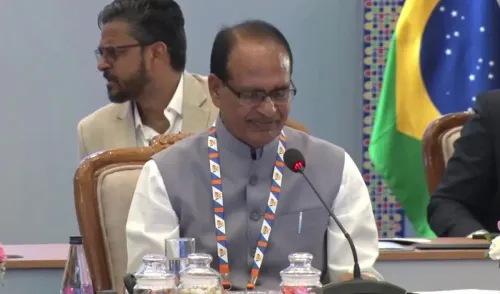
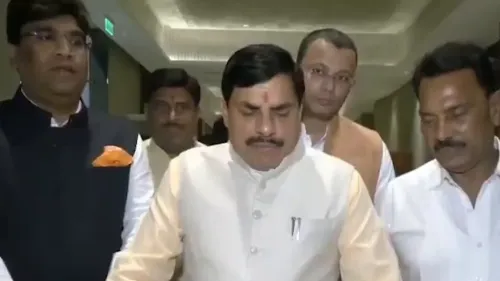
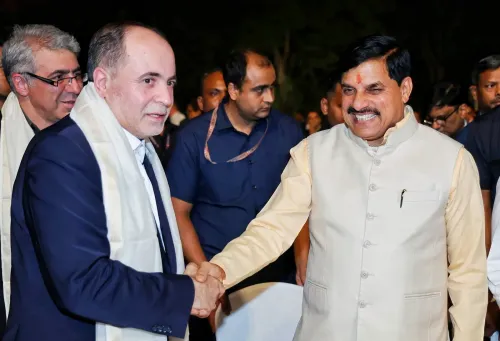
Madhya Pradesh Chief Minister Dr. Mohan Yadav on Friday, June 12, 2026 welcomed ministers, diplomats, ambassadors, and delegates from BRICS nations to Indore for the BRICS Agriculture Conference, underscoring India's commitment to multilateral cooperation under Prime Minister Narendra Modi.
Context
Posting in Hindi on X, Dr. Yadav stated: 'कृषि वर्ष में, इंदौर में ब्रिक्स कृषि सम्मेलन हो रहा है' ('In the agriculture year, the BRICS Agriculture Conference is being held in Indore'). He described India as working 'with a spirit of mutual cooperation with the world' under Modi's leadership, and extended a warm welcome to all participating nations' representatives arriving in Madhya Pradesh.
The conference brings together agricultural ministers, diplomats, and senior officials from BRICS member states to discuss cooperation on food security, agricultural technology, and supply-chain resilience — themes that India has championed within the grouping since its early working groups in 2011.
Policy Backdrop
BRICS, the intergovernmental grouping of major emerging economies, has maintained an agriculture ministers' track as a core strand of its annual engagement calendar. India hosted the 8th BRICS Summit in Goa in 2016, which included an agriculture ministers' session and a joint declaration on food security, establishing a template for subsequent ministerial-level agricultural dialogues.
The choice of Indore — Madhya Pradesh's commercial capital and a city that has consistently ranked among India's cleanest urban centres — as the venue reflects the current government's practice of distributing high-profile international engagements across states, rather than concentrating them in New Delhi. This approach gives state governments a visible role in India's foreign-policy outreach.
India's framing of the current year as an 'agriculture year' in the context of BRICS signals a deliberate prioritisation of the sector within the grouping's cooperation agenda, aligning with broader national goals around rural development and farm-sector modernisation.
Stakeholders and Impact
The primary stakeholders are the BRICS member nations, whose agriculture ministers and senior officials are convening to explore joint initiatives on seed technology, irrigation, post-harvest management, and food-supply resilience. For Madhya Pradesh — one of India's largest agricultural states, producing wheat, soybeans, and pulses at scale — hosting such a conference carries both diplomatic visibility and potential for bilateral agricultural tie-ups.
Farmers, agri-tech firms, and food-processing industries across BRICS economies stand to benefit if the conference produces concrete pilot projects or technology-exchange frameworks. Civil-society groups focused on food security and smallholder farming will also watch outcomes closely.
What's Next
Attention will now turn to the substantive outcomes of the BRICS Agriculture Conference in Indore — specifically, whether delegates adopt a joint declaration, launch pilot programmes on agricultural technology transfer, or establish new working mechanisms on supply-chain resilience. Any such agreements would mark a tangible deliverable from India's hosting of the event and could shape the BRICS agriculture agenda for the coming cycle.
As the conference concludes, Dr. Mohan Yadav's government will seek to leverage the international spotlight on Indore to project Madhya Pradesh as a destination for agri-investment and global partnerships.
Point of View
The event is an opportunity to position Madhya Pradesh, one of India's largest farm-produce states, as a node in global agricultural cooperation networks. Within the BRICS framework, India's 'agriculture year' framing is a bid to anchor the grouping's agenda around food security and rural development — areas where New Delhi sees comparative leverage among the expanded membership. The conference's real test will be whether it produces actionable deliverables, such as technology-transfer pilots, or remains a diplomatic showcase.
NationPress
26 Oct 2026
Frequently Asked Questions
What is the BRICS Agriculture Conference in Indore?
The BRICS Agriculture Conference is a ministerial-level meeting held in Indore, Madhya Pradesh, bringing together agriculture ministers, diplomats, and ambassadors from BRICS member nations to discuss food security, agricultural technology exchange, and supply-chain cooperation.
Why is the BRICS Agriculture Conference being held in Indore?
Indore was selected as the host city as part of the Indian government's approach of distributing high-profile international engagements across states, giving Madhya Pradesh diplomatic visibility while leveraging the city's standing as a major commercial and clean-city hub.
What did CM Mohan Yadav say about the BRICS conference?
CM Dr. Mohan Yadav posted on X welcoming BRICS nations' ministers, diplomats, and ambassadors to Indore, describing India as working with a 'spirit of mutual cooperation with the world' under PM Modi's leadership and calling the event significant in the context of the 'agriculture year'.
What is India's history with BRICS agriculture cooperation?
India has championed agricultural cooperation within BRICS since the grouping's early working groups in 2011. The 2016 BRICS Summit in Goa included an agriculture ministers' track that produced a joint declaration on food security, setting a precedent for subsequent ministerial-level meetings.
What outcomes are expected from the Indore BRICS Agriculture Conference?
Key outcomes to watch include the possible adoption of a joint declaration on food security, launch of pilot projects on agricultural technology transfer, and new frameworks for supply-chain resilience among BRICS member nations.