CM Office Applauds BRO's RINKY Drive in Tawang
Synopsis
The Chief Minister's Office of Arunachal Pradesh has appreciated 763 BRTF of Project Vartak for launching RINKY in Tawang — a surplus winter clothing initiative letting residents take what they need. The drive reflects BRO formations' longstanding tradition of combining infrastructure work with community welfare in India's high-altitude border districts.
Key Takeaways
763 BRTF , a unit of Project Vartak under the Border Roads Organisation , launched the RINKY initiative in Tawang .
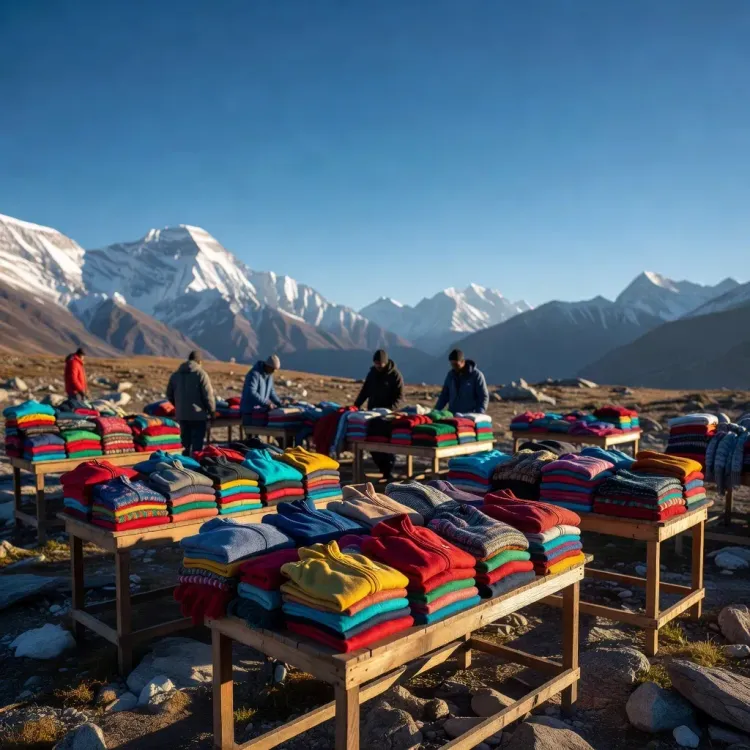
RINKY redistributes surplus winter clothing to local residents under the principle 'Take What You Need, Keep What You Can.' The Arunachal Pradesh Chief Minister's Office publicly appreciated the drive on 5 November 2026 .
Tawang borders Bhutan and China and faces extreme high-altitude winters, making warm clothing critical for residents.
BRO units in Arunachal Pradesh have undertaken similar community welfare activities alongside engineering work since the 1960s .
The low-cost, bureaucracy-free model could be replicated by other high-altitude BRO formations ahead of peak winter.
As winter tightens its grip on the high-altitude passes of Tawang, a quiet act of community care is unfolding on the border. 763 Border Roads Task Force (BRTF) of Project Vartak has launched RINKY — a surplus winter clothing initiative that invites residents to take what they need and keep what they can, turning spare gear into warmth for those who need it most. The Chief Minister's Office of Arunachal Pradesh acknowledged the effort on 5 November 2026, calling it 'a thoughtful initiative promoting kindness.'
What RINKY is, and why Tawang needs it
RINKY is a community clothing-sharing drive run by 763 BRTF to redistribute surplus winter garments to local residents in need. The name and the guiding principle — 'Take What You Need, Keep What You Can' — frame the initiative as one of quiet dignity rather than charity. Tawang, perched at high altitude on the borders of Bhutan and China, experiences some of the harshest winters in northeast India, making adequate clothing a genuine survival necessity for many families in remote villages.
Project Vartak's long record of building more than roads
Project Vartak is the Border Roads Organisation (BRO) formation responsible for road and bridge construction across western Arunachal Pradesh — strategically critical terrain close to the Line of Actual Control. BRO units in the region have periodically combined hard engineering work with community welfare activities since the 1960s, a tradition that reflects the dual role these formations play in India's most remote border districts. 763 BRTF is one of the units within that project, and RINKY fits a broader pattern of military-civilian engagement in the Northeast — small-scale, locally rooted, and aimed at building genuine goodwill in communities that live alongside defence infrastructure every day.
A model other high-altitude formations may follow
With peak winter approaching across Arunachal Pradesh's high-altitude districts, the RINKY model could find traction with other BRO projects facing similar conditions. The simplicity of the concept — no bureaucracy, no eligibility forms, just surplus clothing made available to whoever needs it — makes it replicable at low cost. Whether other formations act on that cue before the coldest months set in will be worth watching.
In a region where defence and community life are inseparable, the warmest thing 763 BRTF may be building this winter isn't a road.
Point of View
But it carries strategic subtext: BRO formations in sensitive border districts have long understood that engineering goodwill among local communities is as important as engineering roads. The Chief Minister's Office amplifying the drive signals that the state government sees visible military-civilian welfare gestures as an important part of its governance narrative in Arunachal Pradesh. At a time when high-altitude border districts remain geopolitically sensitive, low-cost, dignity-first initiatives like RINKY quietly reinforce the bonds between defence establishments and local populations. If other BRO projects replicate the model, it could become a soft-power template for winter outreach across India's northeastern frontier.
NationPress
5 Nov 2026
Frequently Asked Questions
What is the RINKY initiative in Tawang?
RINKY is a surplus winter clothing drive launched by 763 BRTF of Project Vartak in Tawang , Arunachal Pradesh. It allows residents to take warm garments they need from a shared pool, following the principle 'Take What You Need, Keep What You Can.'
What is Project Vartak and 763 BRTF?
Project Vartak is a Border Roads Organisation (BRO) project responsible for road and bridge infrastructure in western Arunachal Pradesh . 763 BRTF is a Border Roads Task Force unit within Project Vartak operating in the Tawang sector.
Why is winter clothing important in Tawang?
Tawang is a high-altitude district in Arunachal Pradesh bordering Bhutan and China . It experiences extreme winters, making adequate warm clothing a basic necessity for many families in remote communities.
Does the BRO regularly undertake welfare activities in Arunachal Pradesh?
Yes. Border Roads Organisation units in Arunachal Pradesh have periodically combined their core infrastructure work with community welfare activities since the 1960s , as part of a broader tradition of military-civilian engagement in India's Northeast.
Could the RINKY model be adopted elsewhere in Arunachal Pradesh?
It is possible. The initiative's simplicity — no eligibility criteria, no paperwork, just surplus clothing made available — makes it easy to replicate. Other BRO formations in high-altitude districts could launch similar drives ahead of peak winter months.