Jairam Ramesh: Business tycoons shocked as Modi echoed Congress at FICCI
Synopsis
Congress MP Jairam Ramesh seized on PM Modi's unusually candid FICCI address — where the PM pressed Indian Inc. on jobs and wages — to argue that the Prime Minister had finally repeated what the Congress has said for years, while allegedly stopping short of blaming his own government's policies for the very problems he raised.
Key Takeaways
PM Modi questioned Indian Inc. at the FICCI Annual Convention on whether corporate tax cuts had translated into more jobs and higher wages.
Congress MP Jairam Ramesh said, in an X post on 20 November 2026 , that Modi had 'repeated the very points' the Congress raised in its 2024 Lok Sabha manifesto.
Ramesh alleged Modi 'did not tell the whole truth,' saying the PM failed to acknowledge that BJP policies caused the economic stress.
The Congress leader accused the Centre of fostering 'unprecedented concentration of economic power' and creating 'fear and intimidation' that weakened investor confidence.
Ramesh blamed GST and the 2016 demonetisation for harming small businesses, calling demonetisation 'self-destructive.' He called on the PM to admit that after 12 years in power, inflation is uncontrolled, jobs are inadequate, and private investment growth remains sluggish.
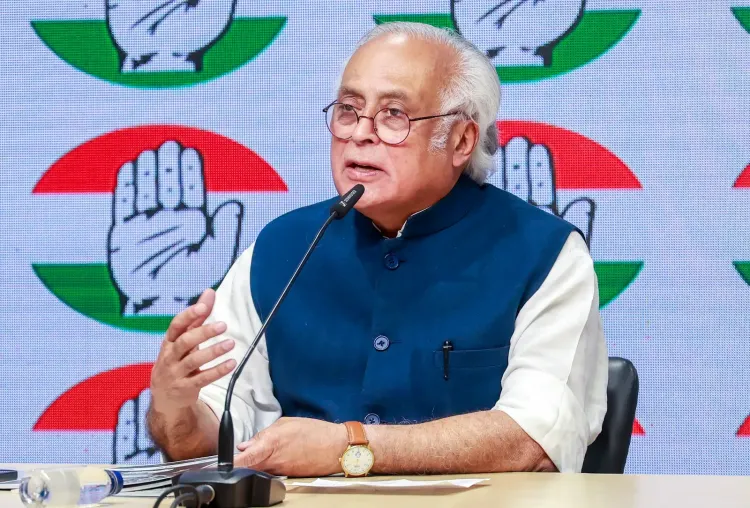
Congress MP Jairam Ramesh on Friday, 20 November 2026, said that India's leading business tycoons attending the FICCI Annual General Meeting and Annual Convention on Thursday could not have anticipated Prime Minister Narendra Modi himself acknowledging employment and wage concerns — points the Congress has long championed. Ramesh, however, was quick to add that the Prime Minister 'did not tell the whole truth.'
What Modi Said at FICCI
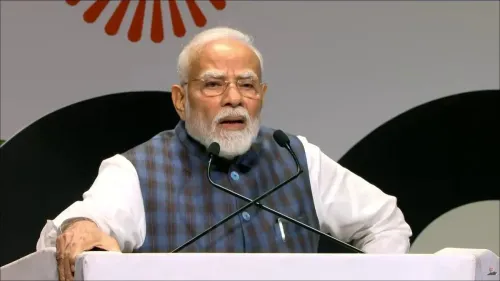
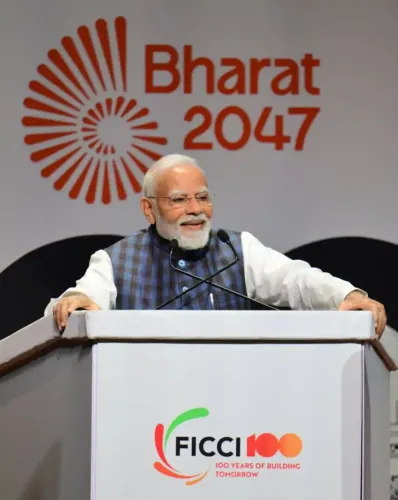
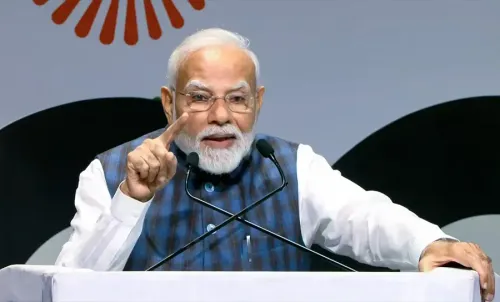
Addressing the FICCI convention on Thursday, PM Modi questioned Indian Inc. on whether it had created more employment and raised employee incomes following corporate tax reductions and other economic reforms undertaken by the government to boost industry and ease the conditions for doing business. The remarks were widely seen as unusually direct — a sitting Prime Minister publicly pressing industry on outcomes rather than just welcoming its growth.
Ramesh's Reaction: 'The First Time in 12 Years'
In a post on X, Jairam Ramesh said: 'Prime Minister repeated the very points that the Indian National Congress has been raising for a long time. In fact, these issues were prominently highlighted in the Congress manifesto for the 2024 Lok Sabha elections. At that time, our concerns were dismissed as being detached from reality.'
Ramesh listed the specific concerns he said the Prime Minister had echoed: wages have not increased; tax rates have been cut but investment has not boomed; and jobs are simply not expanding at the desired rate. 'The captains of industry must have been taken aback and shocked,' he said, while insisting Modi stopped short of a full reckoning.
Congress Blames BJP Policies for Economic Stress
Going beyond the FICCI moment, Ramesh alleged that the Bharatiya Janata Party (BJP)-led Centre's own policies are responsible for the 'difficulties' currently facing the Indian economy. He accused the government of allowing 'unprecedented concentration of economic power in industry after industry' and of creating an atmosphere of 'fear and intimidation' that has, according to him, 'weakened' investor confidence.
'When businesses do not have faith in government's policies and actions, how can they be expected to invest?' he asked.
The Congress leader also alleged that India's trade deficit with China has 'directly harmed' millions of small and medium-sized enterprises, saying, 'Many small industries are on the verge of closure, and the livelihoods of lakhs of people have been adversely affected.' He further blamed GST and the 2016 demonetisation — which he called 'self-destructive' — for the challenges faced by small business owners.
Ramesh's Challenge to the Prime Minister
Rather than 'complaining' to industrialists, Ramesh argued, PM Modi should acknowledge his government's own record. 'After 12 years of his government's rule, inflation remains out of control, sufficient employment opportunities are not being created, and growth of private investment remains sluggish,' he alleged.
'Prime Minister, the economy cannot run merely through speeches and advice to industrialists. It requires sound policies, an atmosphere of trust, and an accountable government,' Ramesh added.
The government has not yet formally responded to Ramesh's remarks. With the economy debate heating up ahead of several upcoming state elections, the exchange at and around the FICCI convention is likely to sharpen the political battle over India's growth narrative.
Point of View
He attempts to reframe the opposition's economic narrative from 'ignored warning' to 'vindicated prescription.' What mainstream coverage may underplay is that the real audience for Modi's FICCI remarks may not be industrialists at all — it could be voters in upcoming state elections who have heard the jobs-and-wages grievance for years. If the PM is now voicing it publicly, the political calculus has shifted more than any policy announcement.
NationPress
20 Nov 2026
Frequently Asked Questions
What did PM Modi say at the FICCI event that drew Congress's reaction?
At the FICCI Annual General Meeting and Annual Convention on Thursday, PM Modi questioned Indian Inc. on whether it had created more employment and raised employee incomes following corporate tax reductions and other economic reforms. Congress MP Jairam Ramesh said these remarks echoed what his party has been saying for years, particularly in its 2024 Lok Sabha election manifesto.
What is Jairam Ramesh's criticism of PM Modi's FICCI speech?
Ramesh said Modi 'did not tell the whole truth' — while the PM acknowledged that wages are stagnant, investment has not picked up, and jobs are not expanding at the desired rate, he allegedly stopped short of attributing these problems to his own government's policies. Ramesh blamed BJP-era GST, the 2016 demonetisation, and what he called an atmosphere of 'fear and intimidation' for the economic stress.
Why does Congress say Modi's FICCI remarks validate its 2024 manifesto?
Congress had prominently raised concerns about stagnant wages, sluggish private investment, and insufficient job creation in its 2024 Lok Sabha election manifesto, which the ruling side dismissed at the time as being 'detached from reality.' Ramesh's argument is that Modi raising the same concerns at FICCI confirms that Congress's diagnosis was correct all along.
What specific economic failures does Jairam Ramesh allege?
Ramesh alleged that the Centre allowed unprecedented concentration of economic power, that India's trade deficit with China has harmed lakhs of small and medium enterprises, and that demonetisation and GST disrupted small businesses. He also claimed that after 12 years of the Modi government, inflation is uncontrolled, employment creation is insufficient, and private investment growth remains sluggish.
What is the broader political context of this exchange?
The public sparring over jobs, wages, and private investment at and around the FICCI convention intensifies the opposition's economic accountability narrative ahead of upcoming state elections. It is notable that PM Modi chose to press Indian Inc. publicly rather than privately, suggesting a deliberate political signalling exercise — something the Congress is now seeking to exploit.