CM Yogi's UP exam law: life term, ₹1 cr fine for paper leaks
Synopsis
Uttar Pradesh has enacted a strict anti-cheating law targeting exam mafias and paper leakers, prescribing life imprisonment and fines up to ₹1 crore. CM Yogi Adityanath announced the measure, framing it as a decisive step to restore credibility in state recruitment examinations and protect millions of job aspirants.
Key Takeaways
The Uttar Pradesh Public Examination (Prevention of Unfair Means) Act prescribes life imprisonment for the most serious exam fraud offences.
Financial penalties reach up to ₹1 crore , targeting the economic incentive behind organised paper-leak networks.
The law specifically covers exam mafias , paper leakers, and those who rig recruitment examinations.
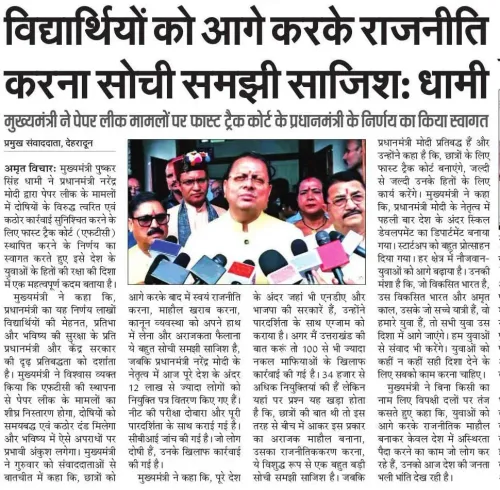
The legislation follows multiple paper-leak scandals in state recruitment exams around 2023 that disrupted the aspirations of hundreds of thousands of candidates.
CM Yogi Adityanath has governed UP since 2017 , with law-and-order reform as a consistent administrative priority.
Enforcement in forthcoming recruitment examinations will be the real test of the law's deterrent effect.
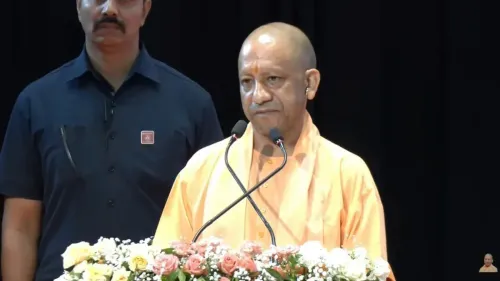
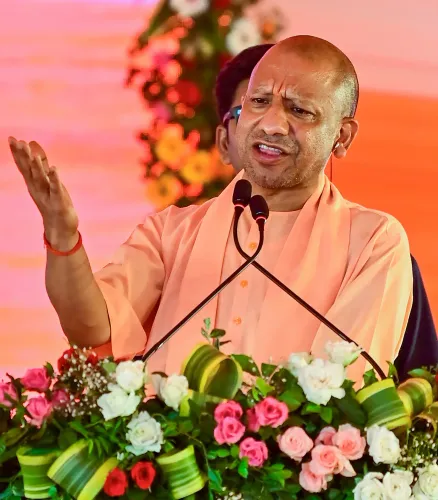
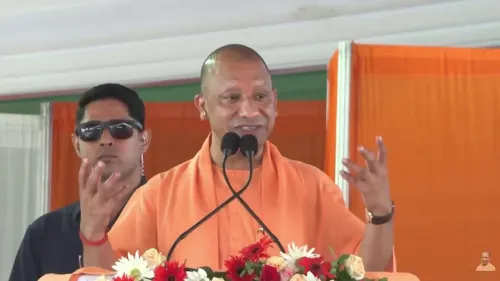
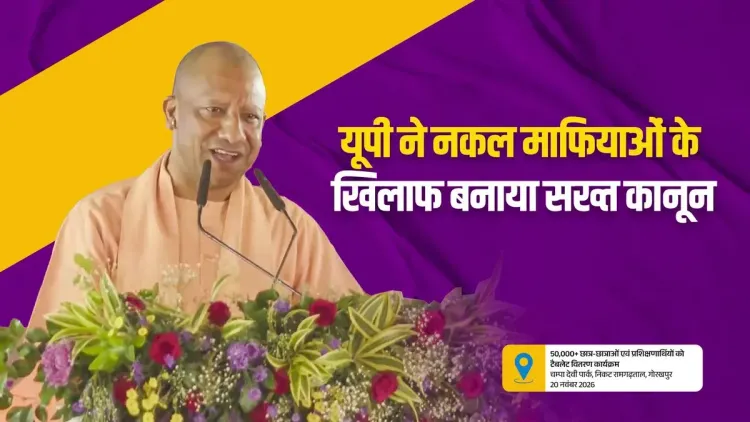
Uttar Pradesh has drawn a hard line against the exam-cheating industry. Chief Minister Yogi Adityanath, through the Chief Minister's Office of Uttar Pradesh, announced on Friday, 20 November 2026 that the state has enacted a law imposing life imprisonment and fines of up to ₹1 crore on those who operate paper-leak networks, cheat syndicates, and recruitment-exam fraud rings.
Quoting the Chief Minister directly: 'हमने नकल माफियाओं, पेपर लीक करने वालों और भर्ती परीक्षाओं में धांधली करने वालों के खिलाफ सख्त कानून बनाया।' ('We have enacted a strict law against exam mafias, paper leakers, and those who rig recruitment examinations.') The penalty structure — life imprisonment at the top end and a seven-figure financial sanction — signals that the state intends to treat organised exam fraud as a serious organised crime, not an administrative nuisance.
The law that answers years of outrage
The legislation in focus is the Uttar Pradesh Public Examination (Prevention of Unfair Means) Act, introduced in the wake of multiple paper-leak scandals that rocked state recruitment exams around 2023. Those incidents devastated the aspirations of millions of young people preparing for government jobs — the very demographic that invests years, sometimes decades, in competitive exam preparation.
What set those incidents apart was not just the leaks themselves, but the organised machinery behind them: brokers, middlemen, corrupt officials, and technology-aided cheating networks. The new law takes aim at all of them. By anchoring the maximum penalty at life imprisonment, the state has categorically elevated exam fraud to the same legal gravity as serious felonies.
Why UP's crackdown resonates nationally
Uttar Pradesh is India's most populous state, and its government recruitment pipeline is among the largest in the country. When exams are compromised here, the fallout is felt by hundreds of thousands of aspirants. The state's move has also arrived in a broader national context: several other Indian states have faced their own exam-integrity crises, and legislative responses have been uneven.
CM Yogi Adityanath has positioned law-and-order reform as a central pillar of his administration since 2017. Extending that logic to white-collar, organised exam fraud — historically treated as a softer category of crime — is a meaningful escalation. The ₹1 crore fine, in particular, is calibrated to strip the economic incentive that makes running a paper-leak operation profitable.
What enforcement will determine
Legislation alone does not clean up an examination system. The real test will come in forthcoming major recruitment drives — whether investigators pursue and prosecute the network operators, not just the foot soldiers. Any early prosecutions under the new act will be watched closely by aspirants, legal observers, and rival states alike.
For the crores of young people across UP who sit recruitment exams hoping for a fair shot at a government job, the promise is stark and simple: the mafia now faces life behind bars. Whether the courts and enforcement agencies make that promise real is the chapter still being written.
Point of View
The Yogi government is making an explicit political bet: that job aspirants — one of UP's largest and most restless voter blocs — will reward decisive legislative action over incremental administrative fixes. The move fits neatly into a broader BJP governance narrative that frames strongman law-and-order not just as policy but as identity. The genuine policy question is whether the law's severity translates into prosecutorial will, or whether, as has happened with similar statutes elsewhere, the harshest provisions stay dormant while lower-rung offenders take the fall. The national resonance is real — UP's legislative template could pressure other states to escalate their own exam-integrity frameworks.
NationPress
20 Nov 2026
Frequently Asked Questions
What is the UP exam paper leak law?
The Uttar Pradesh Public Examination (Prevention of Unfair Means) Act is a state law that criminalises paper leaks, exam fraud, and cheating in recruitment examinations, with penalties including life imprisonment and fines up to ₹1 crore.
What is the punishment for paper leak in Uttar Pradesh?
Under UP's anti-cheating law, the maximum punishment is life imprisonment along with a financial fine of up to ₹1 crore for those found guilty of paper leaks or organising exam fraud.
Why did UP pass the exam fraud law?
The law was introduced following multiple paper-leak scandals in state recruitment examinations around 2023 , which derailed the careers of thousands of job aspirants and exposed organised cheating networks operating in the state.
Does Yogi Adityanath's new exam law apply to all UP recruitment exams?
The law covers public examinations and recruitment processes conducted by the Uttar Pradesh government; its application to specific upcoming exams will depend on enforcement notifications and prosecutorial action.
Which other Indian states have similar anti-paper-leak laws?
Several Indian states have enacted or proposed exam-integrity legislation following high-profile paper leaks, though the specific penalty structures vary; UP's law is among the most stringent in prescribing life imprisonment as a maximum sentence.